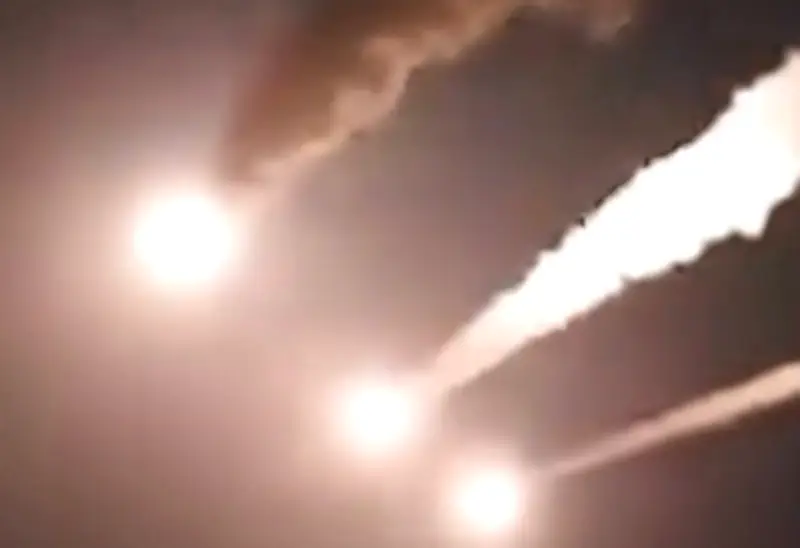
The United States and Iran engaged in retaliatory strikes on Tuesday night following the downing of an American Apache helicopter near the Strait of Hormuz, further escalating tensions in the Middle East. The US strikes targeted Iranian air defense systems, ground control stations, and surveillance radar sites near the strategic waterway, in response to the Iranian attack that brought down the helicopter.
Trump vows strong response
President Donald Trump described the downing as unacceptable and emphasized the necessity of a robust response. In an interview with ABC News, he stated, "The United States must, of necessity, respond to this attack. This is a response to what they did with our helicopter last night, and I believe the response should be very strong, very powerful, and that's what this one is." He reiterated his longstanding belief in responding forcefully, adding that while a deal with Iran had been beneficial, the attack demanded a decisive reaction.
US Central Command statement
The US Central Command posted on X that the mission was a proportional response to unjustified Iranian aggression. The strikes were aimed at deterring further attacks and ensuring the safety of US forces in the region.
Iran retaliates with missiles and drones
In retaliation, Iran launched missiles and drones at US bases in the Middle East, targeting the US Fifth Fleet in Bahrain and an airbase in Jordan. According to Al Jazeera, the Iranian military claimed its missiles struck and destroyed four critical targets, including F-35 fighter jet hangars and a primary command and control center. Iran framed the missile strike as the completion of a broader retaliatory operation, which also included the downing of a US MQ-9 drone over Iranian airspace.
Ceasefire at risk
The strikes occurred during a ceasefire that both sides had agreed to following a war that began on February 28 when the US and Israel attacked Iran. A peace agreement between the US and Iran, which President Trump had earlier claimed would be finalized in a few days, now hangs in the balance. Trump had previously expressed reluctance to allow any action that could jeopardize the deal, but the US military response poses a significant threat to the peace process.
Previous exchanges and accusations
Iran and Israel had traded strikes on Monday before deciding to end the violence, with reports attributing the decision to Trump's intervention. However, the Islamic Revolutionary Guard Corps (IRGC) accused the US and Israel of failing to meet their commitments and violating the ceasefire by repeatedly attacking Iranian shores and vessels in the Strait of Hormuz, the Sea of Oman, and the Indian Ocean.
Iranian foreign minister warns US
On Wednesday morning, Iranian Foreign Minister Abbas Araghchi posted on X, stating that the US had chosen to test Tehran's determination despite its defeat on the battlefield. He warned that Iran's armed forces would leave no attack or threat unanswered. "Leave our region if you want to be safe. History of the Persian Gulf has many chapters on the dire fates of intruding outsiders," he said.