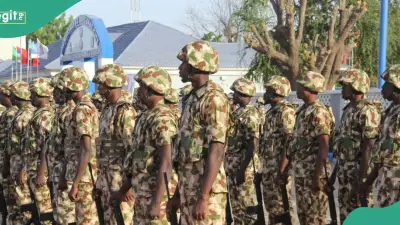
The United States has highlighted Nigeria and the wider Lake Chad Basin as critical areas in its 2026 counterterrorism strategy, warning that extremist groups across Africa continue to pose a growing threat to global security.
ISIS Remnants Shift to Africa
According to the strategy document, regions such as West Africa, the Sahel, the Lake Chad Basin, Mozambique, Sudan, and Somalia have witnessed a resurgence of terrorist activity following the collapse of ISIS strongholds in Iraq and Syria. The report noted that remnants of the Islamic State and affiliated jihadist groups had relocated to Africa and Central Asia, exploiting ungoverned spaces and weak security structures.
“President Trump unleashed the greatest fighting force the world has ever seen, and within a matter of weeks, a Jihadi insurgency which controlled vast territories across Iraq and Syria was gone. Subsequently, the surviving remnants of the world’s most dangerous terrorist group of the modern age were forced to relocate to Africa and Central Asia, in turn exploiting the ungoverned spaces there,” the document stated.
Nigeria and the Lake Chad Basin
The strategy specifically referenced Nigeria, praising recent actions taken by President Donald Trump over attacks on Christians in the country. “With the decisive action President Trump recently took in Nigeria, he made it clear that the slaughter of Christians will not go unchecked,” it read.
On Christmas Day, December 25, 2025, Trump was quoted as saying: “I have previously warned these terrorists that if they did not stop the slaughtering of Christians, there would be hell to pay, and tonight, there was.” The US stressed that its major objective in Africa is to prevent extremist groups from establishing operational bases capable of launching attacks against American interests.
Partnership with African Governments
The document emphasized Washington’s commitment to working with African governments to strengthen counterterrorism efforts. “We will continue to work together with governments threatened by groups like ISIS and al Qaeda affiliates who threaten us as well, and assist them with actionable intelligence and CT partner-force development until our shared foes no longer pose a serious threat to either them or us,” it said.
It also declared that the protection of Christians targeted by terrorist groups would remain a key priority of the administration. The US plans to rebuild bilateral counterterrorism relations with African governments while reducing direct military deployments on the continent, maintaining instead a “light military footprint” and expecting regional partners to shoulder more of the burden.
Criticism of Previous Policies
The strategy criticized previous US foreign policies under former President Joe Biden, claiming they weakened counterterrorism efforts and allowed extremist organizations to regroup across Africa. In contrast, the current administration argues that African nations possess “almost limitless potential” if governments can exercise effective territorial control and deny safe havens to terrorist organizations.