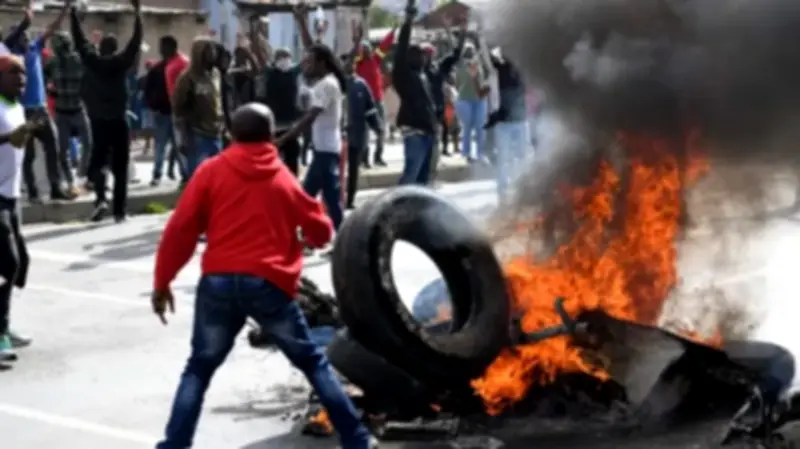
Relations between South Africa and several African countries, including Ghana, Nigeria, Kenya, and Malawi, have become strained over the past weeks due to a resurgence of xenophobic attacks. The latest wave of violence began in April, with online videos showing South Africans wielding sticks as they chased and beat Black foreigners, demanding they leave the country. These anti-immigrant protests and violence have reignited a troubling trend that has persisted for decades.
Background of Xenophobic Violence
Attacks on African migrants, refugees, and asylum seekers prompted the United Nations to warn in 2022 that South Africa was "on the precipice of explosive xenophobic violence." The global body called for concrete government action against racism, racial discrimination, xenophobia, and related intolerance directed at migrants and minority groups. These attacks are often led by groups that scapegoat African foreigners, blaming them for the country's economic woes, poor service delivery, and high crime rates, although studies have disproven these claims.
The current violence continues a pattern seen in South Africa. In 2019 and 2015, attacks on foreign-owned businesses and migrants led to diplomatic tensions between South Africa and other African countries. One of the most brutal outbreaks occurred in May 2008, when South Africans targeted foreign migrants from Zimbabwe, Mozambique, Malawi, and Somalia residing in areas such as Johannesburg, Durban, Cape Town, the Free State, and the Eastern Cape. Shops, homes, and businesses owned by foreigners were looted, burned, or destroyed. At least 60 people were killed, hundreds were injured, and thousands were displaced.
In the latest wave, at least 12 African immigrants have been killed over the last three months, including two Nigerians, five Mozambicans, and five Ethiopians. The Nigerians were reportedly beaten to death by officials of the South African National Defence Force in Port Elizabeth in April, while the Mozambicans died in June.
Diplomatic Reactions
African countries have reacted strongly. Ghana, Nigeria, Kenya, Malawi, Zimbabwe, and Lesotho issued security advisories warning citizens to be cautious or to suspend non-essential travel to South Africa. In April and May, Ghana and Nigeria summoned South Africa's High Commissioners to express displeasure over the violence. Nigeria demanded a thorough investigation into the deaths of its citizens allegedly killed by security operatives.
The most prominent diplomatic response has been the repatriation of citizens from South Africa. This led to a televised address by South African President Cyril Ramaphosa, who condemned groups inciting tension and taking the law into their own hands. He emphasized that while concerns over illegal migration are valid, only authorized government officials can act against violations of the law.
Repatriations by African States
Ghana
Ghana became the first African country to organize evacuations in May, repatriating around 300 citizens from Johannesburg to Accra. On Monday, the country announced it had evacuated about 1,000 Ghanaians, fulfilling its pledge to protect citizens. Ghana's Foreign Affairs Minister, Samuel Ablakwa, stated, "We kept our promise. No Ghanaian has been abandoned in harm's way." The government also introduced a job initiative for returnees.
Mozambique
Mozambique has repatriated about 700 citizens, starting last week after five Mozambicans were killed. Local media reported that 169 citizens, including 16 minors, were repatriated on Tuesday. The country is also working to bring home the bodies of those killed. Earlier, about 300 citizens had returned on their own, and preparations are underway for more repatriations.
Malawi
Around 171 Malawians arrived in Lilongwe on Tuesday as the first group of returnees, including 115 men, 43 women, and 13 children. They had sought refuge in temporary shelters in Mossel Bay after violence and door-to-door harassment forced them out. The trip was by road, through Zimbabwe and Mozambique. After processing at Kamuzu Stadium in Blantyre, they traveled to their local destinations. The government pledged to continue providing transit and consular support.
Zimbabwe
Zimbabwe has also repatriated citizens, with around 139 nationals evacuated in recent days. The first set arrived on Sunday, followed by a group of 35 adults and 30 children on Monday. Returnees recounted experiences of violence and intimidation targeting everyone regardless of legal status.
Nigeria
Nigeria will begin repatriating over 1,000 citizens on Wednesday evening, with the first batch expected in Lagos on Thursday. Authorities prepared for this in May after two Nigerians were killed. Citizens registered for voluntary exit, and verification and screening began on Sunday, conducted jointly by the Nigerian High Commission in Pretoria and South Africa's Department of Home Affairs. Over 1,000 citizens have been screened, and the government will provide aircraft for their return. Nigeria has vocally condemned the xenophobia. Foreign Affairs Minister Bianca Odumegwu-Ojukwu said Nigeria is "unhappy" with South Africa and may consider retaliatory measures, though a decision must be made at the highest level.
South Africa's Response
President Ramaphosa condemned the violence but focused on illegal migration, claiming it is the root cause. He announced plans to send envoys to African countries to pursue long-term solutions targeting the root causes of migration, including conflict, instability, and economic hardship. He emphasized working with African countries to implement measures to control illegal migration.