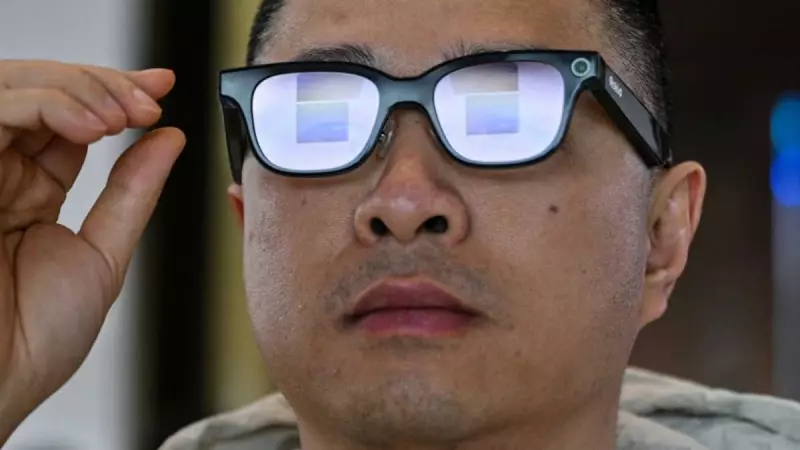
Fueled by rapid advances in artificial intelligence, Chinese technology companies are making a major push to conquer the global market for smart glasses, directly challenging the dominance of US giant Meta. After years of unfulfilled potential, AI is breathing new life into the wearable eyewear sector, with Chinese firms leveraging domestic manufacturing power and innovative features to win customers at home and abroad.
China's Home Advantage and Soaring Domestic Market
The domestic landscape in China provides a formidable launchpad for its smart glasses manufacturers. Companies like Alibaba, Xiaomi, Rokid, and XREAL operate in a market where Meta's services are blocked, giving them a clear field. This, combined with China's deeply digitised daily life where QR code payments are ubiquitous, creates a perfect testing ground.
Market intelligence firm IDC estimates that smart glasses sales in China grew by a staggering 116 percent year-on-year in 2025. "The ecosystem and its supply chain are all in China, and China produces a lot," Rokid CEO Misa Zhu told AFP, highlighting the structural advantage. He also noted that China's internet-based infrastructure for payments is "already more developed than in Europe and the United States."

Flora Tang, an analyst at Counterpoint Research, pointed out that Xiaomi has emerged as a "dark horse" in the sector. Its debut AI glasses became the third best-selling model globally in the first half of 2025 after being on sale for only about a week.
Strategic Moves to Win Over Global Users
To compete internationally, Chinese firms are adopting flexible strategies that contrast with Western rivals. Unlike Meta, which limits available apps, Rokid has designed its glasses to work with Chinese apps domestically and a different suite internationally. Crucially, the company is also avoiding locking users into a single AI model.
"We are very open that we use OpenAI, and can also connect with Llama, Gemini, and Grok," CEO Zhu stated, arguing this openness is a key selling point. The glasses also boast features like real-time translation, displaying subtitles directly on the lenses.
Design and comfort are critical battlegrounds. Rokid emphasises that its models are among the world's lightest, a vital factor for all-day wear. "Appearance remains the top priority -- it has to make people actually want to wear it," explained 25-year-old customer Wu Tianhao. This focus on fashion led Rokid to announce a new collaboration with eyewear brand Bolon, which is owned by Ray-Ban's parent company, EssilorLuxottica.
Challenges on the Road to Global Adoption
Despite the momentum, Chinese companies face significant hurdles. Meta commanded a 73 percent share of the global smart glasses market in the first half of 2025, largely thanks to its fashionable Ray-Ban Meta Smart Glasses. Shattering this dominance will be difficult.
Industry experts note a technology gap. "Overseas brands still hold an advantage in hard tech like full-colour displays and optical waveguides," said analyst Zhu Dianrong. Rokid's vice president Gary Cai acknowledged an "obvious gap" in available chip technology, though he believes the difference in AI model capabilities "has narrowed considerably."
Broader industry challenges also persist. Will Greenwald of PCMag noted that across all brands, the user experience needs more polish. "I don't think anyone has really made it a smooth experience just yet," he said. Furthermore, privacy concerns about devices that could discreetly record near-constantly present a major regulatory and consumer trust hurdle.
Nevertheless, Chinese manufacturers are confident about the future. "Today, our AI glasses are phone peripherals," said Rokid's Zhu. "But in the near future... phones will become accessories to the glasses." The battle for your face is heating up, and Chinese tech is determined to be in the frame.