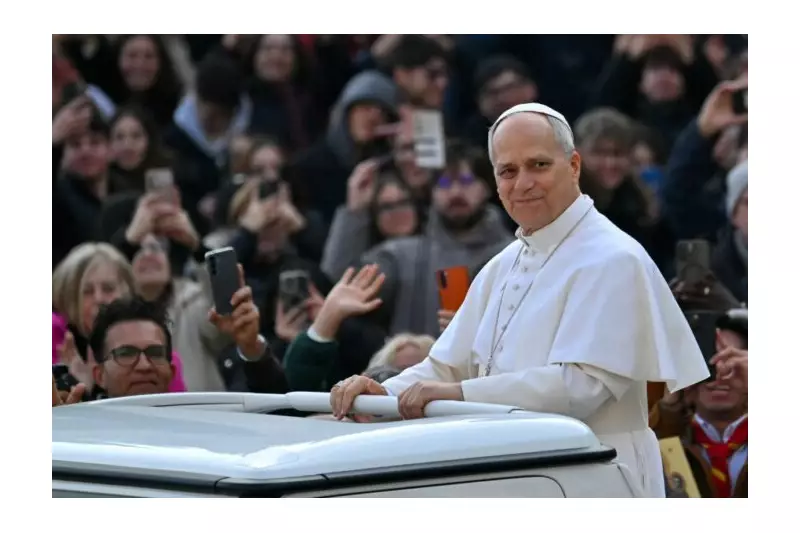
Pope Leo XIV, the head of the Catholic Church, has issued a powerful warning against the increasing use of artificial intelligence in military operations. In his first message for World Peace Day, the pontiff declared that letting machines decide over life and death is a dangerous and destructive path for humanity.
A Stark Warning on World Peace Day
The Pope's strong remarks were published on Thursday, December 18, ahead of the Catholic Church's observance of World Peace Day on January 1. He expressed deep concern about how modern warfare is being transformed by new technologies. "Further technological advances and the military implementation of artificial intelligence have worsened the tragedy of armed conflict," he stated.
His central criticism focused on a troubling trend among world leaders. "There is even a growing tendency among political and military leaders to shirk responsibility, as decisions about life and death are increasingly 'delegated' to machines," the Pope said. He believes this shift marks a profound failure to uphold human values.

The Core Betrayal of Human Principles
Pope Leo XIV framed this issue as a fundamental moral crisis. He argued that relying on autonomous systems for warfare represents "an unprecedented and destructive betrayal of the legal and philosophical principles of humanism that underlie and safeguard every civilisation." For the Pope, this is not just a technical issue but a direct assault on the ethical foundations of society.
This message is part of a consistent focus for the 70-year-old pontiff, who is the first American pope in Catholic history. Since his election in May, he has repeatedly called for the ethical development and use of artificial intelligence. His latest comments come at a critical time, as nations worldwide rapidly deploy AI-driven military tools.
The Global Context of AI Warfare
The Pope's warning addresses a very real and expanding global reality. Several countries are now actively integrating AI into their defence strategies. The technologies raising alarm include:
- Automated surveillance and reconnaissance systems.
- Advanced cyber defence tools.
- Autonomous weaponry like drones that can select targets.
- Missile defence systems powered by predictive algorithms.
These developments have sparked intense debate among ethicists, legal experts, and governments about where to draw the line. The Pope's intervention adds a significant moral voice to these growing concerns about accountability and the sanctity of human life in conflict.
Broader Critique of Power and Religion
In the same wide-ranging peace message, Pope Leo XIV also criticised other forces that threaten global harmony. He took aim at the misuse of faith for political ends, noting, "Unfortunately, it has become increasingly common to drag the language of faith into political battles, to bless nationalism, and to justify violence and armed struggle in the name of religion."
Furthermore, he challenged the very concept of military power, particularly the strategy of nuclear deterrence. He described such approaches as irrational, rooted not in justice but in fear. International relations built "not on law, justice and trust but on fear and domination by force" are unsustainable, he concluded.
The Pope's comprehensive message for World Peace Day serves as a urgent call for reflection. It urges global leaders to prioritise human dignity and ethical responsibility over technological capability, especially in matters of war and peace.