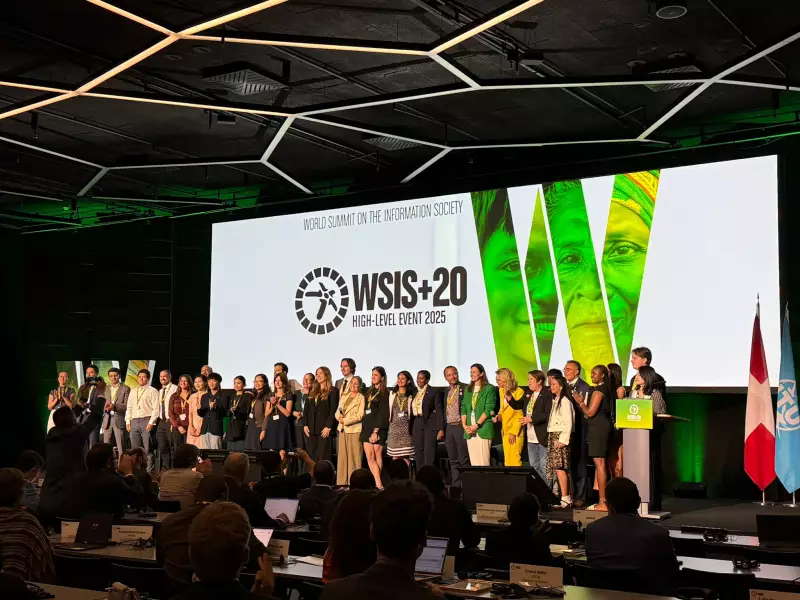
The global community has issued a renewed and forceful call to action for nations like Nigeria to close persistent digital gaps, both within their borders and compared to other countries. This urgent appeal emerged from the two-decade review of the World Summit on the Information Society (WSIS+20), which underscored that despite global connectivity reaching around 68% of the world's population, a staggering 2.6 billion people remain offline, with the majority in the Global South.
A Multidimensional Crisis for Nigeria
For Nigeria, the challenge is not simply about laying cables or building towers. Experts at a significant side event during the WSIS+20 High-Level Meeting at the UN Headquarters in New York described a multidimensional digital exclusion crisis. This crisis extends beyond basic infrastructure to include critical gaps in affordability, digital literacy, gender equality, and access to advanced technologies like artificial intelligence. These combined barriers threaten Nigeria's ability to meet its Sustainable Development Goals (SDGs) and participate meaningfully in the global digital economy.
The event, themed "Re-imagining Digital Cooperation for Sustainable Development: from WSIS+20 Vision to Local Action," was moderated by Dr. Jimson Olufuye of AfICTA. It featured key stakeholders including Nigeria's Data Protection Commission (NDPC) CEO, Dr. Vincent Olatunji, and the Director-General of NITDA, Kashifu Abdullahi, represented by Dr. Dime Wariowei.
Expert Insights and African Progress
In her opening remarks, IMSB Co-convenor Ms. Jennifer Chung stressed that closing the broadband divide is essential for growth and reaping digital transformation benefits, with affordability and meaningful connectivity remaining critical issues. Stephen Saboke, Vice Minister for Kenya Broadcasting, noted shared goals with Nigeria and emphasized that digital transformation must deliver tangible results and close divides through global collaboration.
Dr. Vincent Olatunji of the NDPC highlighted Africa's rapidly changing landscape, driven by digital transformation and AI. He revealed a significant milestone: 36 African countries now have data protection laws. He stressed the imperative of protecting citizens online and balancing privacy in the AI era. Olatunji also noted that about 16 nations, including Nigeria, have developed AI strategies and are prepared for regional collaboration to ensure equitable transformation.
Speaking on identity management, Lanre Yusuf, representing the DG of the National Identity Management Commission (NIMC), stated that digital transformation starts with verifiable identity. He confirmed that NIMC has issued 126 million National Identification Numbers (NINs) and is confident of achieving 95% coverage by 2030.
Governance, Inclusion, and Partnership
Mrs. Martha Alade, Executive Director of Women in Technology in Nigeria (WITIN), argued that participation must evolve into meaningful influence. She proposed governance models focused on foundation, mechanism, and action, calling the multistakeholder model the cornerstone of operational digital governance. Alade urged governments to deliberately extend sandboxing to harness technical communities, especially women and girls in underserved regions.
Echoing the need for holistic approaches, Prof. Jokthan emphasized that bridging the digital divide requires more than just infrastructure; access without capacity creates new gaps. She highlighted the necessity of development, capacity building, and infrastructure build-out, with public-private partnerships (PPP) being key to scalability and impact.
The NITDA representation reinforced this, stating that tackling affordability and literacy issues cannot be done by government alone, hence the critical need for PPPs to build infrastructure. There was a unanimous call for urgent digital cooperation among African countries to ensure an even and inclusive transformation across the continent.