
CBN Mandates Automated Anti-Money Laundering Systems for Nigerian Financial Institutions
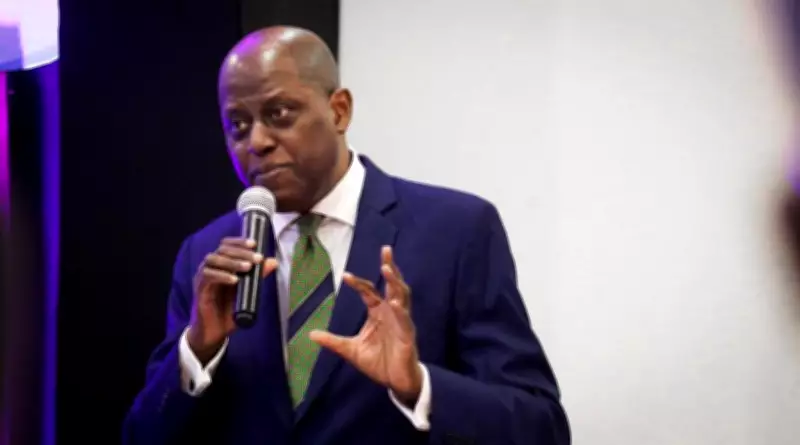
The Central Bank of Nigeria (CBN), under the leadership of Governor Olayemi Cardoso, has introduced stringent new baseline standards that mandate all financial institutions in the country to implement automated anti-money laundering (AML) systems. This directive targets banks, mobile money operators, international money transfer operators, and other financial entities, aiming to bolster financial crime detection and compliance mechanisms across the sector.
Enhanced Financial Crime Prevention
The CBN's new guidelines are designed to strengthen the framework for implementing automated AML, Combating the Financing of Terrorism (CFT), and Countering Proliferation Financing (CPF) solutions. The primary objective is to improve the ability of financial institutions to detect and report suspicious transactions in real time, thereby enhancing the overall integrity of Nigeria's financial system.
In a circular co-signed by CBN Director of the Banking Supervision Department, Akinwunmi, Olubukola, and Olubunmi Ayodele-Oni of the CBN Compliance Department, the bank emphasized that these standards are intended to enhance compliance with existing AML, CFT, and CPF regulations. The circular also encourages the adoption of emerging technologies to strengthen financial crime risk management.
Implementation Timeline and Requirements
The implementation of these guidelines takes effect immediately from the date of issuance. Financial institutions are expected to begin deploying automated systems to support transaction monitoring and regulatory reporting without delay.
Under the new framework, deposit money banks have been given an 18-month deadline to fully comply with the requirements. Other financial institutions, including fintech companies and payment service providers, have a more extended period of 24 months to complete implementation.
The CBN has directed all affected institutions to submit detailed implementation roadmaps to its Compliance Department within three months of the circular's issuance. These roadmaps must outline how each institution intends to transition to the new automated AML systems, ensuring a structured and compliant approach.
Expert Insights and Technological Integration
Experts in the field have praised this move, noting that it is intended to improve the speed and accuracy of detecting suspicious financial activities. By reducing the risks of money laundering, terrorism financing, and proliferation financing, the automated systems are expected to enhance the overall security of the Nigerian financial system.
Automated AML systems typically utilize advanced analytics, data monitoring tools, and artificial intelligence to track large volumes of transactions. These technologies can flag unusual patterns and generate alerts that compliance teams can investigate promptly. The baseline standards will support financial institutions in deploying such technologies in a structured manner while ensuring alignment with regulatory expectations.
Broader Implications and Global Recognition
The CBN has disclosed that it will continue to monitor developments within the financial system and may issue additional guidance where necessary to ensure effective implementation of the new framework. The circular stated, "All stakeholders are required to ensure strict compliance with the guidelines and all other regulations," highlighting that this measure is part of the CBN's broader efforts to promote financial system stability and integrity.
This initiative comes on the heels of a significant milestone for Nigeria: the Financial Action Task Force (FATF) recently removed the country from its grey list of nations with money laundering and terrorist financing risks. Commenting on this development, Governor Cardoso said, "The FATF's decision to remove Nigeria from the grey list is a strong affirmation of our reform trajectory and the growing integrity of our financial system. It reflects a clear policy direction and the coordinated efforts of key national institutions working together to deliver sustainable, standards-based reforms."
Cardoso added that Nigeria's priority now is to consolidate these gains, ensuring that compliance, innovation, and trust continue to advance hand in hand to reinforce financial stability and strengthen the country's global credibility.
Global Context and Future Prospects
The FATF, a 40-member body backed by the World Bank Group and the International Monetary Fund (IMF), leads global action to tackle money laundering, terrorist financing, and proliferation financing. Its decision to delist Nigeria represents substantial progress for the nation's financial system, as it works to restore investor confidence, reduce the cost of capital, and enhance financial system credibility.
Other countries removed from the FATF grey list include South Africa, Mozambique, and Burkina Faso. By closing gaps in regulatory oversight and enhancing enforcement against illicit financial flows, these nations have met the FATF's requirements for delisting, boosting their standing among global financial institutions and capital markets.
Dr. Aminu Gwadabe, President of the Association of Bureaux De Change Operators of Nigeria (ABCON), remarked, "The recent announcement of the Financial Action Task Force on the exit of Nigeria from its Grey list, known as the Dirty Money list, shows Nigeria's commitment to achieving the 40 FATF recommendations. The move has tremendously induced confidence and removed tension in the financial market."
Fintech Ecosystem and Economic Growth
The rapid expansion of Nigeria's fintech ecosystem presents a strategic opportunity to drive inclusive economic growth, deepen financial resilience, and strengthen the country's position within the evolving global digital economy. Fintech offers a powerful mechanism for extending access to underserved and excluded populations, with mobile phone penetration far outpacing access to traditional financial services.
The CBN's recent Fintech Report, titled "Shaping the Future of Fintech in Nigeria: Innovation, Inclusion and Integrity," highlights several persistent barriers, such as limited identity verification systems, affordability issues, and infrastructure gaps, that constrain broader inclusion. Addressing these barriers is central to unlocking inclusive financial sector growth.
Governor Cardoso emphasized, "Nigeria is undergoing a rapid and significant financial evolution. Over the past decade, our nation's fintech landscape has grown from a handful of startups into one of Africa's most vibrant innovation ecosystems. Even amid global economic headwinds, Nigerian fintech firms continued to attract investment and drive change."
He further explained that with improved stability of Nigeria's currency and domestic economy, it is clearer than ever that financial innovation can advance inclusion at scale. The report reflects the CBN's commitment to fostering a thriving fintech landscape while safeguarding the stability of the financial system, based on extensive engagement between regulators and industry stakeholders.
By surveying fintech operators, financial institutions, and policymakers, the CBN has gathered candid insights on current challenges and opportunities, from modernizing regulatory frameworks and payments infrastructure to supporting startups in reaching unbanked communities. This comprehensive approach underscores Nigeria's potential to lead not only in adoption but also in the design of the global fintech future.




