
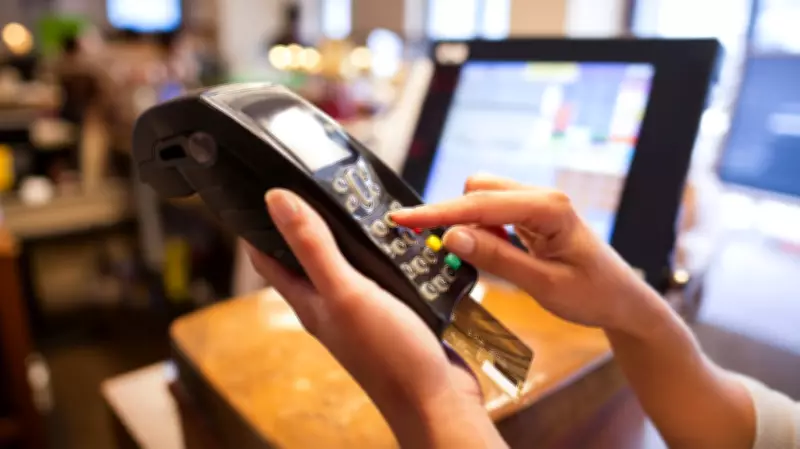
How POS Terminals Became Nigeria's De Facto Retail Banking Cash Hubs
Millions of Nigerians are increasingly turning to neighborhood agent banks, popularly known as POS operators, to deposit and withdraw cash, cementing the role of these informal hubs as the country's most accessible retail cash 'banks'. Under revised cash management guidelines that commenced on January 1, 2026, individuals are restricted to a maximum weekly withdrawal of N500,000 across all banking channels, while corporate entities are capped at N5 million, with transactions above these thresholds attracting additional charges.
Daily withdrawals from automated teller machines (ATMs) are also limited to N100,000, with all withdrawals, whether through ATMs, bank counters, or POS terminals, counted within the cumulative weekly cap. Industry operators say the combined effect of these measures has deepened reliance on POS agents, positioning them as critical intermediaries between formal banking institutions and a largely cash-dependent population.
The Rise of POS Operators as Cash Hubs
Across urban and semi-urban neighborhoods, POS outlets have increasingly become the first point of call for customers seeking cash, particularly where ATMs dispense limited amounts or bank branches experience shortages. For operators, however, sustaining operations depends largely on their ability to source cash often through informal and decentralized supply chains that include traders, transport operators, fuel stations, and, in some cases, banks themselves.
A Lagos-based operator, Shittu Babatunde, explained that many small businesses now serve as key sources of liquidity for POS agents, as they seek alternatives to the time and cost associated with daily bank deposits. "Many business owners do not have the time or energy to go to the bank every day. So, they bring their cash to us, and we transfer the equivalent amount into their accounts. That becomes the cash we use to serve customers," he said.
Similarly, commercial transport operators have emerged as a steady source of physical cash, often exchanging their daily earnings directly with POS agents for transfers. "Bus drivers and transporters handle large volumes of cash daily. Instead of going through the stress of bank deposits, some of them prefer to exchange the cash with us," another operator noted. In addition, filling stations and retail merchants who receive significant cash payments from customers but require electronic transfers for business transactions have become important nodes within this informal liquidity network.
Strategies to Navigate Regulatory Limits
Despite these alternative channels, banks remain a critical source of cash for operators, though access is often constrained by regulatory limits. To navigate this, some agents have adopted strategies to maximize withdrawals within the regulatory framework. Josephine Abel, a POS operator, disclosed that she maintains multiple bank accounts across different financial institutions, enabling her to withdraw up to N500,000 from each account weekly.
By distributing withdrawals across five accounts, she can mobilize as much as N2.5 million in cash weekly to sustain her operations. "Because of the withdrawal limits, many of us now operate multiple accounts. If you withdraw N500,000 from one bank, you cannot exceed that for the week; so we spread it. With five accounts, you can raise N2.5 million to serve customers," she explained.
Pricing and Competition in the POS Market
Across Lagos and other major cities, POS operators typically charge between N100 and N200 for withdrawals of around N5,000, while transactions between N6,000 and N10,000 attract fees ranging from N200 to N300, depending on the location. Higher-value transactions come with steeper charges: withdrawing N50,000 may cost as much as N700, while N100,000 can attract fees of N1,000 or more.
Operators note that pricing varies significantly across locations, influenced by competition, proximity to banking infrastructure, and the ease of accessing cash. In areas with high POS density and relatively better access to banks, fees tend to be lower. Conversely, in underserved locations where cash is scarce, charges are typically higher.
Drivers of POS Preference Over ATMs
The growing preference for POS withdrawals is also being driven by rising ATM transaction costs and operational constraints. Third-party ATMs charge N100 (plus VAT) for every N20,000 withdrawn or less. The fee is N500 for off-site ATMs, that is, machines located outside bank premises. Compounding this is the dispensing limit on many ATMs, which restricts withdrawals to N20,000 or, in some cases, N10,000 per transaction.
As a result, customers seeking larger sums must carry out multiple transactions, each attracting separate charges. This includes other transaction costs, such as transportation, which makes POS services comparatively more convenient. A Lagos resident, Blessing Akpan, noted that withdrawing N100,000 from an ATM could require up to five transactions, each incurring a fee. "If you add up the ATM charges after multiple withdrawals, it can even exceed what a POS operator would charge for the same amount. With POS, you get the full amount at once," she said.
Banks, Regulation, and the Push for Digital Payments
Banking executives insist that financial institutions are fully compliant with the CBN's withdrawal limits, noting that transaction monitoring systems have been upgraded to enforce the caps across all channels. "The system tracks withdrawals across platforms. Once a customer reaches the weekly limit, further withdrawals are automatically restricted," a bank official said.
Banks are also intensifying efforts to promote electronic payment channels, including mobile transfers, card payments, and internet banking as part of a broader strategy to reduce dependence on physical cash. Another banker described POS agents as a vital extension of the formal banking system, particularly in underserved areas. "These agents bring financial services closer to people where bank branches are limited. They support financial inclusion and improve convenience," the official said, while acknowledging that cash demand remains high among small businesses and informal traders.
Regulatory Attention and Future Outlook
As the sector expands, regulatory attention has intensified. The CBN has introduced stricter guidelines governing agent banking operations, including transaction thresholds, customer identification requirements, and enhanced reporting obligations aimed at improving transparency. At the same time, the apex bank is seeking to address persistent concerns over cash access through expanded ATM deployment.
Under a recent directive, banks are required to maintain a minimum ratio of one ATM for every 7,500 payment cards issued. Compliance is to be achieved in phases – 30 percent by 2026, 60 percent by 2027, and full compliance by 2028. The framework also mandates improved service standards, including instant reversal of failed transactions within the same bank and resolution of interbank ATM disputes within 48 hours.
Balancing Digital Adoption and Cash Access
The rapid rise of POS operators underscores a deeper structural tension within Nigeria's financial system – the push towards digital payments on one hand and the persistent reliance on cash on the other. While policymakers continue to advocate a transition to a cash-lite economy, for millions of Nigerians, physical cash remains the most accessible and trusted medium of exchange.
POS agents, operating at the intersection of formal banking and everyday commerce, have effectively become the bridge between these two realities. Their kiosks now function as decentralized micro-banking hubs, distributing cash across communities where traditional banking infrastructure remains insufficient. Financial experts argue that the immediate challenge for policymakers lies in balancing the drive for digital adoption with the need to ensure adequate access to cash.
Expanding ATM networks and improving cash distribution efficiency within banks could help ease the pressure currently placed on POS operators. Stronger collaboration between banks and agent networks may also enhance liquidity management across the system, some stakeholders have said.




