
Nigeria's Economic Reforms: Navigating Hardship Toward Measurable Progress
For countless Nigerians, the term reform evokes complex emotions ranging from deep skepticism to cautious hope. Between late 2023 and mid-2025, the implementation of bold policy changes including fuel subsidy removal, foreign exchange unification, and fiscal consolidation triggered a dramatic surge in living costs that tested household resilience across the nation.
The Initial Shock: 2023-2024 Economic Turmoil
When petrol subsidy removal and exchange-rate unification policies took effect in mid-2023, the impact on household budgets was immediate and severe. Nigeria's heavy reliance on imported food staples, agricultural inputs, and intermediate goods meant that price pressures spread rapidly throughout the economy. Inflation accelerated sharply across both urban centers and rural communities, creating particularly devastating consequences for low-income families who allocate most of their earnings to basic necessities.
During this period, many households faced impossible choices between food, rent, medicine, and transportation. Families reduced meal portions, withdrew children from schools due to unpaid fees, slashed protein consumption, and increasingly relied on credit from local vendors as a survival mechanism rather than convenience. The period from late 2023 through much of 2024 represented what many experienced as existential hardship, creating a public narrative dominated by seemingly endless suffering without visible relief.
Gradual Stabilization Emerges in 2025
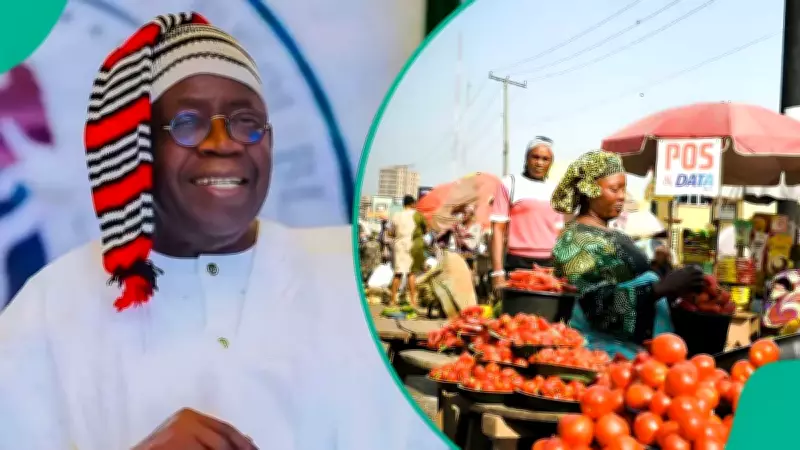
By mid-to-late 2025, however, a more nuanced economic picture began to emerge. Prices of essential food staples showed sustained declines from their 2024 peaks, indicating that the earlier price surge was not necessarily a permanent new baseline. In practical terms that reflect how most Nigerians actually shop, a Derica cup of rice that sold for approximately ₦600 before reforms spiked to roughly ₦1,600 in early 2025 before stabilizing closer to ₦1,000 later in the year.
Similarly, beans that peaked at ₦1,800–₦2,000 per Derica eased toward ₦1,000, while a full bottle of palm oil declined from around ₦3,000 to about ₦2,000. Garri prices dropped from ₦2,500–₦3,000 to nearer ₦1,000–₦1,200 in many local markets. For households where every naira is carefully allocated, these reductions represented meaningful breathing room and demonstrated that the commodity price shock was not an irreversible upward spiral but rather a painful spike that began to taper as supply chains adjusted, domestic harvests improved, and markets adapted to a more stable exchange-rate environment.
Government Interventions and Social Support
Alongside easing staple prices, the government introduced fiscal and social interventions aimed at cushioning households and restoring productive capacity. Reports indicate that palliative support reached approximately 35 million Nigerians, with plans to expand toward 50 million recipients. While questions remain about targeting effectiveness and adequacy, this scale of intervention represents a significant departure from previous reform cycles.
The Nigerian Education Loan Fund disbursed substantial sums to educational institutions and students, with the University of Lagos reportedly receiving ₦1.33 billion and UNAAB receiving over ₦840 million. These funds provided critical support for families struggling with rising school fees and living costs. The national minimum wage was raised to ₦70,000, offering some relief to formal-sector workers despite inflationary pressures eroding purchasing power. Federal allocations to states tripled in certain periods, enhancing subnational capacity to deliver services and invest in infrastructure.
Nigeria's debt-to-GDP ratio, which once exceeded 90 percent, has eased toward approximately 40–50 percent, signaling progress in fiscal consolidation and debt sustainability. While these measures cannot erase the scars of the initial shock phase—during which savings were depleted, businesses closed, and household stability fractured—they mark a discernible shift from reactive crisis management toward tentative structural adaptation.
Regional Variations in Reform Experience
Economic reforms have never been experienced uniformly across Nigeria's diverse geography. Urban informal workers in major cities like Lagos and Abuja bore the brunt of inflation in transportation, housing, and utility costs. While easing food prices have provided marginal relief, high fixed expenses continue to dominate household budgets in urban centers.
Rural farmers initially faced significant pressure from higher input costs but later benefited from improved yields and greater predictability as exchange-rate volatility eased. Students and parents in states with substantial tuition burdens experienced uneven but tangible benefits from educational funding initiatives. Small traders and market women, often overlooked in macroeconomic narratives, absorbed early shocks from currency unification but regained some stability as staple prices stabilized in 2025. This demonstrates that reform represents not a single national event but rather a differentiated, position-dependent process with varying impacts across different segments of society.
Communication Challenges and Public Perception
Perhaps the most persistent failure of the reform era has been communication. Government messaging frequently relied on technocratic language and abstract macroeconomic logic that remained detached from lived realities. Phrases such as pain is necessary for rebirth rang hollow when not accompanied by credible explanations of who would benefit, how benefits would materialize, and when relief might arrive.
This communication gap produced a profound perception lag, with many citizens struggling to distinguish between ongoing hardship, transitional adjustment, and genuine policy progress. When memories of 2023–2024 suffering dominate public consciousness and improvements are not meaningfully narrated, the feeling that nothing has changed overwhelms public discourse, regardless of measurable economic indicators.
Reform Fatigue Versus Measurable Progress
Even into 2026, reform is widely perceived as a single, unending punishment rather than a sequence of policy phases with varying impacts. This fatigue is legitimate and understandable given the depth of initial hardship. However, it should not entirely eclipse accumulating evidence of gradual relief and institutional shifts.
The decline in staple prices does not restore pre-2023 affordability levels, but it marks a clear improvement from peak distress periods. Fiscal discipline and debt reduction, though politically unpopular, create necessary space for future social investment. Expanded state allocations and education funding initiatives contribute to building longer-term human capital capacity.
If a person loses both legs and later receives a wheelchair, it is accurate to call that progress—mobility has been restored. But the individual remains without legs. For millions of Nigerians, reform inflicted irreversible damage including wiped-out savings, collapsed enterprises, and fractured economic security. To those living this reality, stabilizing prices can feel less like recovery and more like a slower version of hardship.
Beyond Simplistic Narratives of Success or Failure
Nigeria's reform journey defies simplistic binaries of success or failure. Meaningful narrative must connect policy to everyday life, distinguish shock from adjustment, highlight regional variation, and explain adaptation beyond the familiar mantra of pain now, gain later.
What is needed is a grounded, empathetic discourse that honors the suffering of 2023–2024, situates 2025's progress in lived experience, interrogates communication failures, and offers hope grounded in evidence rather than nostalgia. Nigeria's reform path has been bumpy, contested, and deeply felt, but it is not a linear story of pain without progress. Real signposts of adaptation and resilience deserve articulation, even as hardship persists for many citizens.
Economic reform represents a process rather than a single event. Interpreting this complex journey demands nuance, honesty, and moral clarity from policymakers, commentators, journalists, and citizens alike. Only through such comprehensive understanding can Nigerians collectively judge whether this era represents needless suffering or the difficult scaffold of a more stable, inclusive future.




