
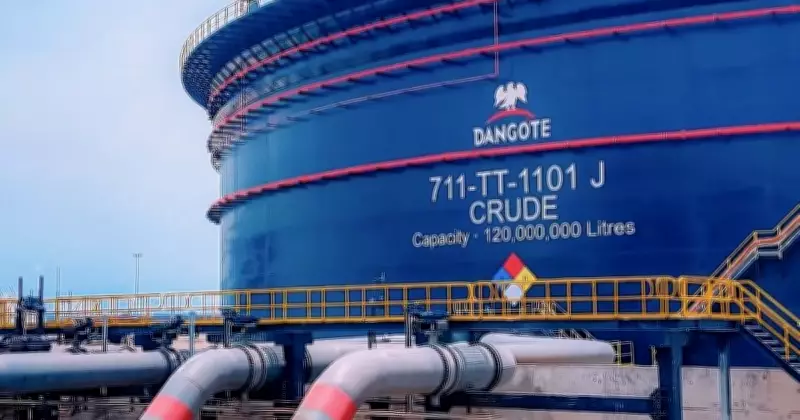
Dangote Refinery Raises Fuel Price to ₦995 per Litre, Sparking Nationwide Cost Surge
Nigerians are bracing for a significant nationwide increase in the cost of premium motor spirit (PMS), commonly known as fuel, following Dangote Petroleum Refinery's decision to raise its gantry price to ₦995 per litre. This adjustment represents the second price hike implemented by the refinery within a mere four-day period, signaling a rapid escalation in fuel costs that is expected to ripple across the economy.
Rapid Price Increases and Global Market Pressures
The refinery initially increased its fuel price from ₦774 to ₦874 per litre earlier in the week, and the latest jump to ₦995 per litre adds another ₦121, culminating in a total increase of ₦221 over four days. This sharp rise is directly linked to the ongoing geopolitical tensions between Iran and the United States, which have severely disrupted oil production and supply chains in the Middle East.
In a press release addressing the price adjustments, Dangote Refinery cited a 26% surge in the global cost of sourcing crude oil, which now stands at $84 per barrel. The refinery, which imports a substantial portion of its crude oil from international markets, explained that these escalating costs have compelled it to implement measured price increases to offset growing production expenses.
Implications for Nigeria's Economy and Consumers
The immediate consequence of this price hike is that fuel prices across Nigeria are likely to surpass the ₦1,000 per litre threshold, placing additional financial strain on consumers and businesses alike. This development is anticipated to trigger a corresponding increase in the prices of goods and services that rely on PMS for transportation and operation, potentially exacerbating inflationary pressures in the country.
Dangote Refinery, with its impressive production capacity of 650,000 barrels per day, is one of the largest refineries in the world and is capable of meeting Nigeria's daily fuel consumption needs while maintaining export capacity. The company has reiterated its commitment to serving as a stabilizing force in Nigeria's energy sector, despite the volatile international oil market conditions.
Geopolitical Context and Global Oil Supply Disruptions
The escalation of tensions between the US and Iran has resulted in collateral economic damage across Middle Eastern states, where oil production capacity has been significantly hampered. In retaliation for US and Israeli strikes that resulted in the death of its Supreme Leader, Ayatollah Ali Khamenei, Iran launched attacks on oil production facilities in Saudi Arabia, the United Arab Emirates, Qatar, and Oman—all key American allies in the region.
These developments have led to the closure of the Strait of Hormuz by Iran, a critical chokepoint for global oil distribution, further constraining the flow of crude oil to international markets. The Middle East currently accounts for nearly 20% of the global daily oil supply, with major producers like Saudi Arabia, UAE, Qatar, Kuwait, Oman, Iran, and Iraq exporting oil to Eastern Asia, Europe, and African nations.
With Middle Eastern oil supplies disrupted, the global economy—including Nigeria—is poised to continue experiencing the adverse effects in the form of rising pump prices for PMS and increased inflation across various sectors. Dangote Refinery's price adjustments reflect its efforts to navigate these challenging market conditions while maintaining its operations and supporting Nigeria's energy stability.




