
Nigerian Journalist's Solar Power Journey in Enugu Village
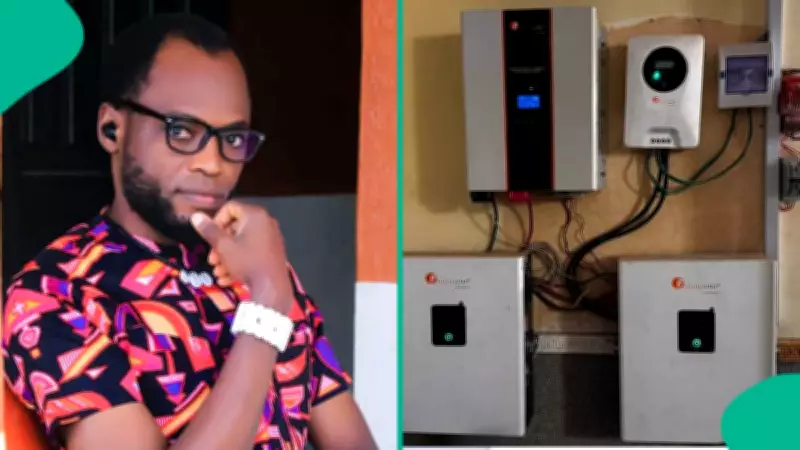
A Nigerian journalist and human rights advocate, Charles Ogbu, has publicly shared his remarkable three-year experience with solar power installation in his village home located in Enugu State. In a detailed Facebook post published on March 6, Ogbu highlighted how his decision to embrace solar energy has transformed his daily life while simultaneously criticizing the deteriorating electricity situation across Enugu.
The Solar Setup That Changed Everything
According to Ogbu, one of the most impactful decisions he made three years ago was installing a comprehensive solar power system. This system includes twelve pieces of 500-watt solar panels, a substantial 10-kilowatt-hour lithium-ion battery, and a robust 5kVA inverter. He emphasized that this installation serves as a critical alternative to the unreliable national grid, which he described as being at its "worstest worst" for over a month, despite Enugu being classified under the premium Band A electricity category.
The journalist revealed that Nigeria, with its population exceeding 200 million people, struggles to generate a mere 4,000 megawatts of electricity, with frequent grid collapses exacerbating the crisis. He pointedly mentioned that even the Presidential Villa in Abuja has resorted to solar installations, highlighting the widespread nature of the power problem.
Practical Benefits and Daily Operations
Ogbu's solar system delivers impressive practical benefits. With just two solar panels, he efficiently pumps water from his borehole. The entire setup comfortably powers three freezers simultaneously and provides electricity to two of his tenants operating nearby shops, who use basic appliances like fans and light bulbs. Additionally, the system supports two air conditioning units, though these are used only during daylight hours to conserve energy.
"For the past 3 years, this inverter installation pumps my borehole, comfortably carries 3 freezers, gives light to two of my tenants, and carries two ACs during the day," Ogbu wrote. He noted that the solar panels typically recharge the batteries to full capacity by 2:00 PM daily, except during rainy or heavily cloudy weather conditions.
Financial Investment and Market Warnings
When questioned about the cost, Ogbu estimated his total investment at approximately 6 million Nigerian naira. He provided specific price ranges: 500-watt solar panels costing between ₦120,000 and ₦130,000 each, and the 5-kilowatt-hour batteries purchased for about ₦1.4 million per unit. However, he cautioned that prices in the solar market are notoriously unstable.
Ogbu issued serious warnings about rampant fraud in Nigeria's solar energy sector. He stated that many inverters, panels, and batteries sold in the market are counterfeit, with products often mislabeled—for instance, 200-watt panels fraudulently branded as 350-watt units. He also criticized inexperienced installers who provide unrealistic quotations without properly assessing household energy loads, leading to systems that fail prematurely.
Public Reactions and Broader Context
The journalist's post sparked significant reactions from Nigerians facing similar power challenges. Favour Okechukwu commented on the unbearable heat and food spoilage due to electricity shortages, while Nelson Ejiofor expressed fear about investing in solar due to the high costs and potential for being scammed.
This story reflects a growing trend across Nigeria, where individuals and businesses are turning to solar power as a reliable alternative. In a related development, Legit.ng previously reported on a landlord preventing a tenant from installing solar panels on a roof, illustrating the regulatory and social hurdles sometimes faced by those adopting renewable energy solutions.
Charles Ogbu's experience serves as both an inspiration and a cautionary tale for Nigerians considering solar power, emphasizing the importance of careful research, genuine products, and professional installation to achieve sustainable energy independence in the face of persistent national grid failures.




