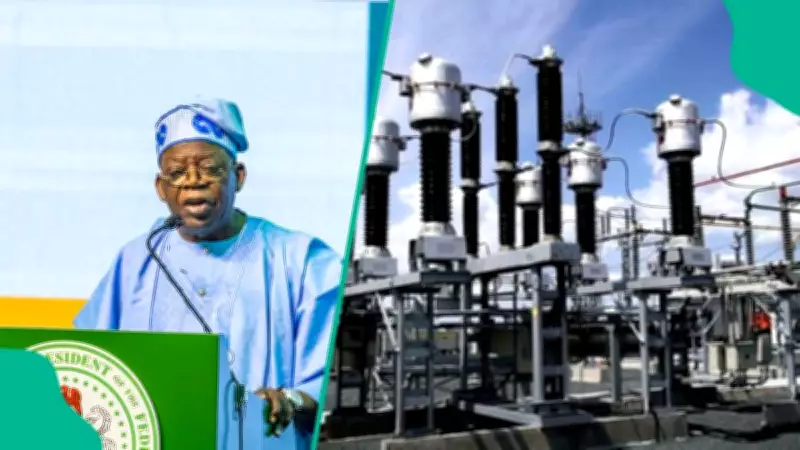
President Tinubu Inaugurates Committee for Grid Management Company to Boost Power Supply
President Bola Tinubu has taken a significant step to address Nigeria's persistent electricity challenges by inaugurating an 11-member committee tasked with establishing the Grid Asset Management Company Limited (GAMCO). This initiative, approved by the Federal Executive Council earlier in the week, aims to improve electricity transmission and tackle the issue of stranded power across the nation.
Committee to Oversee Establishment of GAMCO
According to a statement released by Bayo Onanuga, the President's Special Adviser on Information and Strategy, the committee was officially inaugurated on Friday. Representing President Tinubu, Chief of Staff Femi Gbajabiamila emphasized that this move is a crucial part of the administration's strategy to strengthen Nigeria's power sector, with a particular focus on enhancing the transmission network.
Gbajabiamila stated, "The proposed establishment of GAMCO is one of the revolutionary steps taken by Mr President and this administration in the all-important power sector." He further explained that the company is expected to support reforms aimed at improving electricity generation, evacuation, and resolving long-standing challenges affecting the national grid.
Comprehensive Review of Electricity Sector Framework
The committee has been assigned several key responsibilities, including conducting a thorough review of the laws, regulations, and institutional frameworks governing Nigeria's electricity value chain. This encompasses generation, transmission, distribution, and market operations.
- Members will examine the implications of the Electricity Reform Laws 2025 and identify any potential conflicts or overlaps with the proposed GAMCO framework.
- The committee is also expected to assess the legal status and operational structure of assets under the Niger Delta Power Holding Company and the National Integrated Power Project.
- These assets include the Omotosho Power Plant, Olorunsogo Power Plant, and Ihovbor Power Plant, which will serve as pilot facilities for the initiative.
Additional responsibilities involve evaluating the relationship between GAMCO and the Nigerian Electricity Regulatory Commission, as well as analyzing the financial implications of the proposal, including market liquidity and subsidy exposure.
Focus on Stranded Power and Grid Expansion
The primary objective of GAMCO is to recover stranded power generation and enhance transmission efficiency, particularly along the Benin–Lagos corridor. This corridor supplies electricity to major industrial and commercial hubs in Ogun State and Lagos State.
During the pilot phase, the company will concentrate on optimizing power output from three NIPP plants with a combined installed capacity exceeding 1,700 megawatts:
- Omotosho Power Plant: 513MW
- Olorunsogo Power Plant: 754MW
- Ihovbor Power Plant: 508MW
The government aims to recover at least 1,600 megawatts of electricity within 18 to 24 months while also developing a new 330KV double-circuit transmission line along the same corridor.
Ownership and Operational Structure
The Federal Government will fully own GAMCO as a commercial entity, with shares held through the Ministry of Finance Incorporated. Under the proposed arrangement, the Niger Delta Power Holding Company will grant concession and lease rights for the three power plants to GAMCO.
Meanwhile, the Transmission Company of Nigeria will permit the company to develop and operate a new high-capacity transmission line along the Benin–Lagos axis. This initiative is expected to improve electricity reliability, attract private investment, and strengthen industrial productivity.
Officials have highlighted that the project aligns with the administration's Renewed Hope Agenda, which seeks to enhance economic competitiveness and improve living standards for Nigerians.
Current Power Generation Challenges
This development comes at a critical time, as electricity generation in Nigeria has recently fallen below 4,000 megawatts due to persistent gas supply shortages affecting thermal power plants. According to the Nigerian Independent System Operator (NISO), total electricity generation on the national grid stood at 3,940.53 megawatts as of 5:00 a.m. on March 5, 2026, with the situation worsening shortly after as several generating units were forced to shut down.
The establishment of GAMCO represents a proactive effort by the Tinubu administration to address these challenges and pave the way for a more stable and efficient power sector in Nigeria.