Kebbi Government Reverses Teacher's Suspension After Public Outcry
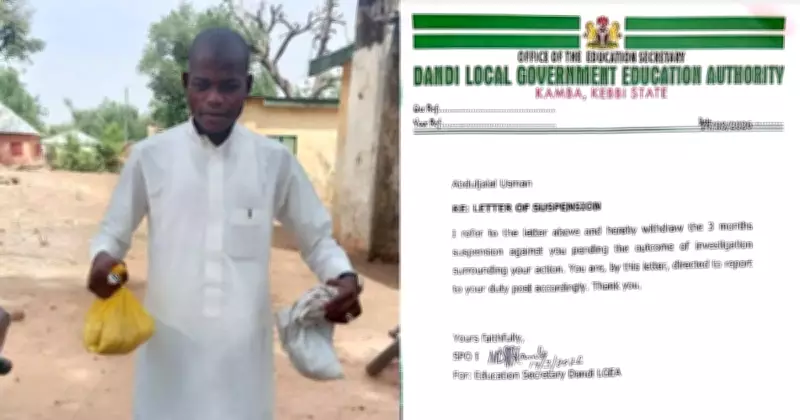
In a significant reversal, the Education Secretary of Dandi Local Government in Kebbi State has withdrawn the three-month suspension of classroom teacher AbdulJalal Usman. This decision comes after a massive wave of public criticism and social media outrage over the initial suspension, which was issued for what authorities described as negligence and defaulting to duty.
Background of the Controversy
The controversy began when Mr. Usman shared a viral video on social media rejecting a Ramadan palliative package distributed by the government. The package consisted of one bowl of rice and one bowl of millet, which Usman criticized as insensitive to the plight of the masses. His actions led to a three-month suspension without pay, a move that quickly drew widespread condemnation from observers who labeled it as high-handed and an abuse of power.
Withdrawal of Suspension
Following the public backlash, the local government has now lifted the suspension pending further investigation. In a letter addressed to Usman, the Education Secretary stated, I refer to the letter above and hereby withdraw the 3-month suspension against you pending the outcome of the investigations surrounding your actions. You are, by the letter, directed to report to your duty post accordingly. This reversal highlights the power of public opinion in holding authorities accountable.
Public Reaction and Implications
The suspension had sparked intense reactions online, with many citizens viewing it as an attempt to suppress the right to demand better governance. Social media users celebrated the withdrawal as a victory for accountability, with one observer noting, We won. As the issue remains of public interest, the outcome of the ongoing investigations will be closely watched. Any finding that deems Usman guilty could face further criticism, given the strong public support for the teacher.
This incident underscores the growing influence of social media in shaping government actions and the importance of transparency in public service. It also raises questions about the adequacy of welfare packages and the treatment of civil servants who voice dissent.