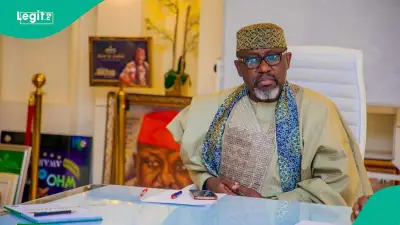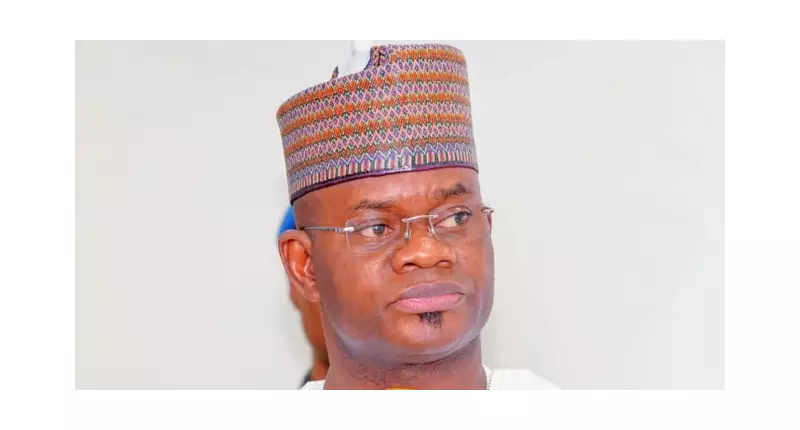
The high-profile corruption trial of former Kogi State Governor, Yahaya Bello, took a significant turn on Thursday as the Economic and Financial Crimes Commission (EFCC) presented a fresh set of bank records as evidence. The case, centered on an alleged N110.4 billion fraud, is unfolding at the Federal Capital Territory High Court in Maitama, Abuja.
Fresh Financial Evidence Presented in Court
During the resumed hearing before Justice MaryAnne Anenih, the prosecution team, led by Senior Advocate of Nigeria Kemi Pinheiro, continued its examination of witnesses. The sixth prosecution witness (PW6), Mashelia Bata, a compliance officer with Zenith Bank, was cross-examined by defence counsel Joseph Daudu (SAN).
Bata provided details from bank statements already admitted as evidence. He explained transactions listed in the records, which included a N10 million cheque issued to co-defendant Abdulsalami Hudu on January 20, 2016, and a payment of N2,454,400 to Halims Hotels and Tours in Lokoja. The witness clarified that while he could confirm the transactions, he did not know the specific purposes for which the funds were used.
The prosecution also called two other bank officials. Gabriel Ocha (PW8), a compliance officer with FCMB, presented documents related to Kunfayakun Global Limited from 2018 to 2024. His testimony highlighted transactions including a N30 million debit to the American International School and multiple N10 million web transfers. Furthermore, A.D. Ojoma (PW9) from Sterling Bank tendered the account statement of Bespoke Business Solutions Limited, identifying several large credit entries from the Kogi State Internal Revenue Service amounting to hundreds of millions of naira in 2019.
Justice Anenih subsequently adjourned the case to Friday, January 16, 2026, for the continuation of the trial. Yahaya Bello is facing 16 charges alongside Umar Oricha and Abdulsalami Hudu, related to criminal breach of trust and money laundering.
Calls for Radical Judicial and Penal Reforms
Parallel to the court proceedings, prominent voices have raised urgent concerns about Nigeria's justice system and the penalties for corruption. The Serving Overseer of the Citadel Global Community Church, Pastor Tunde Bakare, delivered a powerful keynote address at the 22nd Chief Gani Fawehinmi Annual Lecture in Ikeja.
Bakare, a lawyer-turned-pastor, issued a stark warning, stating that a deficit of integrity among judges and lawyers has turned the justice system into a "haven of corruption." He called for immediate personal and institutional reforms, arguing that without deliberate ethical changes, the country risks remaining in perpetual bondage. He pointed to political interference in judicial appointments and contradictory court judgments as major challenges.
In a separate but related development, the Rector of Kogi State Polytechnic, Lokoja, Professor Salisu Usman, proposed an even more drastic measure. While delivering the 37th Inaugural Lecture Series at the Federal University, Lokoja, the political science professor advocated for capital punishment for individuals convicted of corruption.
Usman argued that classifying corrupt practices as a capital offence would serve as a stronger deterrent against a trend that has caused havoc and setbacks to national growth. He lamented that the scarcity of basic amenities like clean water has created a fertile ground for corruption, where projects like boreholes are politicized as "democracy dividends."
A Nation at a Crossroads
The unfolding trial of a former governor and the simultaneous, forceful calls for systemic overhaul highlight a critical moment for Nigeria's anti-corruption fight. The presentation of detailed financial evidence demonstrates the EFCC's ongoing efforts to prosecute high-profile cases. However, the powerful critiques from figures like Bakare and Usman underscore a widespread belief that legal proceedings alone are insufficient.
The consensus emerging from these events is clear: tackling corruption requires not only prosecuting alleged offenders but also fundamentally reforming the institutions meant to deliver justice and enacting punishments severe enough to deter the crime. The nation watches as the court case continues, and the debate on the future of Nigeria's integrity deepens.