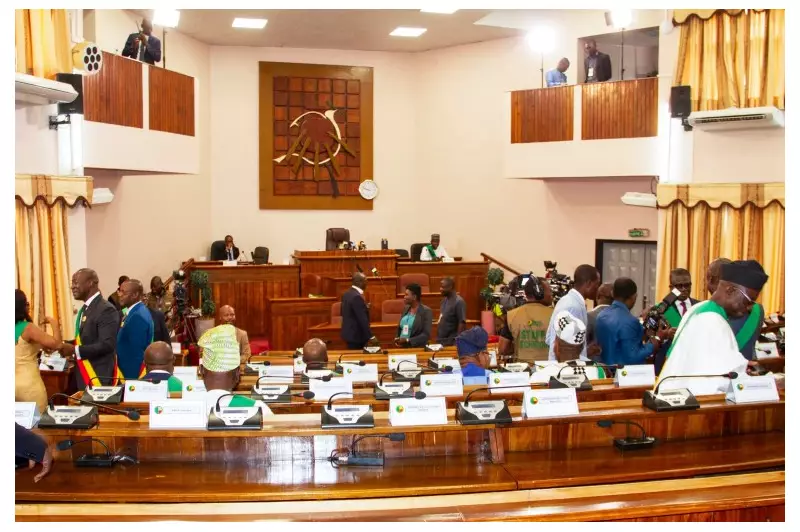
The political landscape in Benin Republic has undergone a significant transformation following a landmark constitutional amendment approved by the National Assembly. Lawmakers have voted to extend the presidential term from five to seven years while establishing an upper house of parliament.
Historic Vote Changes Presidential Term Limits
In a decisive session held on Saturday, the National Assembly of Benin overwhelmingly approved the constitutional changes with 90 votes in favor against 19 opposing. The reform fundamentally alters the country's political structure by setting the presidential term at seven years, renewable only once.
The amended Article 42 now clearly states: "The President of the Republic is elected by direct universal suffrage for a term of 07 years, renewable only once. No one can, in his lifetime, exercise more than two terms as President of the Republic."
The legislative process required meeting a high threshold for approval. According to Article 154, the proposal first needed to secure a three-quarters majority during preliminary voting. Deputies achieved this requirement with 87 votes for and 22 against before proceeding to the final secret ballot that sealed the amendment.
Introduction of Bicameral Legislature
One of the most substantial changes involves the creation of a bicameral parliamentary system. The updated Article 79 grants legislative powers and government oversight to both the existing National Assembly and a newly established Senate.
"Beyond this major change, Parliament—under the amended Article 79—exercises legislative power and oversees government action. It is now composed of two chambers: the National Assembly and the Senate," the official statement clarified.
The constitutional reform represents a comprehensive overhaul of Benin's governance structure. The Assembly confirmed that 15 new articles were created and 18 existing articles amended during this extensive revision process.
Extended Terms Across Government Levels
The changes extend beyond the presidency and parliamentary structure. Under Article 80, deputies' terms are now set at seven years, renewable. The amendment includes a significant clause stating that any deputy who resigns from the party that sponsored them during legislative elections will automatically lose their mandate.
The reformed Article 113.1 defines the Senate as an institution responsible for regulating political life and safeguarding "national unity, development, territorial defence, public security, democracy, and peace."
The law also extends the tenure of mayors and municipal councillors to seven years, making the extended term length consistent across multiple levels of government. This sweeping reform comes ahead of the crucial 2026 elections and marks one of the most significant constitutional changes in Benin's recent political history.