
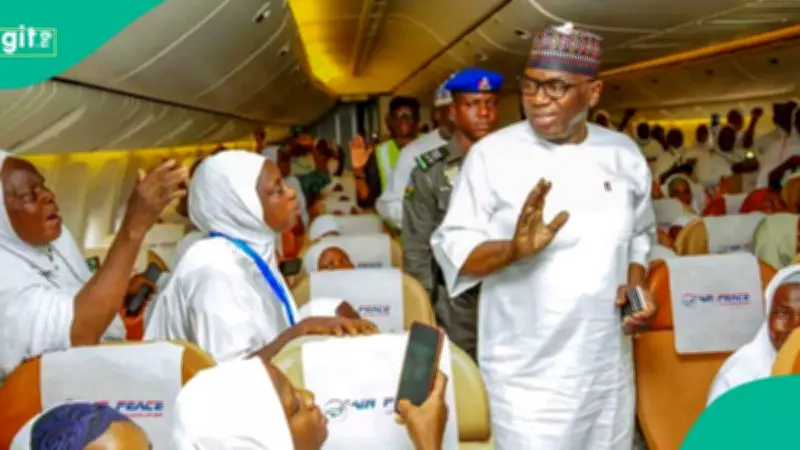
The Saudi Arabian Ministry of Hajj and Umrah has officially announced that the issuance of visas for the 2026 Hajj season, corresponding to 1447 AH, will commence on February 8. This significant development specifically applies to Nigerian pilgrims alongside other international participants, marking a crucial step in the annual Islamic pilgrimage preparations.
Operational Calendar and Early Preparations
This announcement forms part of the detailed operational calendar released by the Hajj affairs office, reflecting the ministry's ongoing efforts to enhance service readiness and streamline logistical preparations well in advance of pilgrims' arrival in the Kingdom. According to reports from GulfNews, preparations for the 2026 pilgrimage have been underway since as early as June 8, 2025, which corresponds to 12 Dhu Al Hijjah 1446 AH, when preliminary planning documents were issued to Hajj affairs offices worldwide.
Nigeria's Hajj Fare Structure for 2026
In related developments, the National Hajj Commission of Nigeria (NAHCON) has established the fare for Nigerian Muslims intending to perform the 2026 Hajj at N8.5 million. The commission made this announcement through social media channels on Wednesday, August 20, specifying that interested pilgrims should make deposits to state pilgrims' welfare boards, accredited Hajj tour operators, or through the Hajj Saving Scheme via accredited banks.
This substantial fare adjustment reflects ongoing currency challenges, with NAHCON citing exchange rate fluctuations as a primary factor. The commission has explained that the rate of N1,474 to a dollar necessitated this adjustment, contrasting sharply with the previous rate of N897 to a dollar that applied when approximately 49,000 prospective pilgrims under the public quota had initially paid N4.9 million.
State-Level Interventions and Subsidies
Amid these rising costs, the Kano state government has taken proactive measures to support pilgrims from the state by implementing a subsidy of N500,000 per pilgrim. This initiative followed a sudden increase of N1.9 million in Hajj fare announced by NAHCON, as confirmed by the state governor in a March 2024 statement.
This pattern of government intervention is not unprecedented, as both federal and some state governments previously subsidized fares for pilgrims ahead of the 2025 Hajj season. However, Kano's specific subsidy announcement represents a significant commitment to supporting religious observance despite economic pressures.
Administrative Challenges and Oversight
The Hajj preparation process has not been without administrative controversies. Vice President Kashim Shettima has reportedly accused NAHCON Chairman Professor Abdullahi Saleh-Usman of acting as a sole administrator, warning against alleged violations of procurement processes, sidelining of commission members, gross misconduct, and illegal appointments.
Professor Saleh-Usman's appointment by President Bola Tinubu in August 2024 followed the removal of former chairman Jalal Arabi, placing him at the helm of an organization facing both logistical challenges and internal scrutiny as it prepares for the 2026 pilgrimage season.
As Nigerian Muslims begin their preparations for the 2026 Hajj, these developments highlight the complex interplay between international religious obligations, economic realities, and administrative oversight that characterizes the annual pilgrimage process for Nigerian citizens.




