
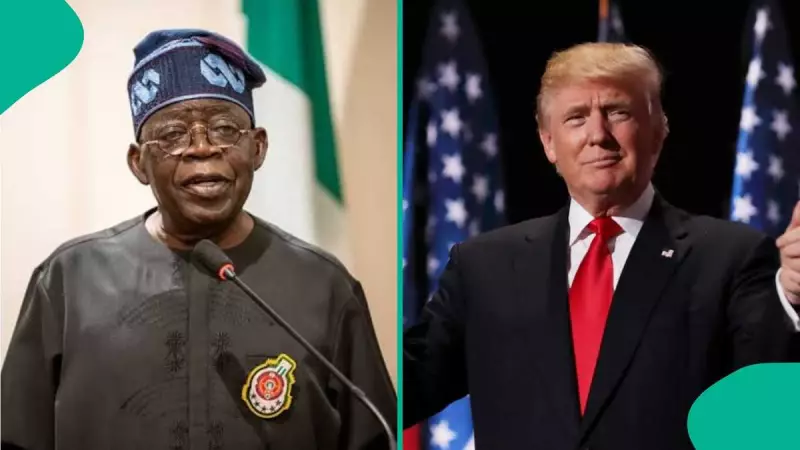
Secessionist Campaign Targets US Policy Makers
Recent disclosures from the United States Department of Justice have uncovered how pro-Biafra advocacy organizations successfully influenced former President Donald Trump's controversial decision to label Nigeria as a Country of Particular Concern. According to official documents, these diaspora groups deliberately targeted American conservative political circles that maintain strong alliances with Trump, ultimately shaping US policy toward Nigeria.
Document Reveals Coordinated Lobbying Strategy
The Justice Department filings, registered under the Foreign Agents Registration Act, detail how the United States of Biafra coalition systematically approached US policymakers. This coalition comprises the Biafra De Facto Government in the Homeland and the Biafra Republic Government in Exile. Their strategic campaign, which ran from February to November 2024, culminated in declaring the restoration of the United States of Biafra with forty confederating states.
Among the key figures identified in the documents is Simon Ekpa, a Finnish citizen who positions himself as the transition government's coordinator. Ekpa, recently sentenced to six years imprisonment in Finland for terrorism-related charges and financial offenses, was a signatory to the declaration signed in Lahti, Finland on December 2, 2024. Other signatories included US citizens Diane Emeh and Dr Ngozi Orabueze, who hold leadership positions within the movement.
Amplifying the Genocide Allegation
The groups strategically framed their campaign around claims that Nigeria was committing what they termed a genocidal onslaught against Christians and Biafrans. They argued that supporting Biafra would protect Christians in Nigeria and counter Chinese influence in Africa. This narrative found resonance with prominent US politicians, particularly Senator Ted Cruz, who publicly amplified allegations of Christian persecution in Nigeria.
The documents further reveal that the groups plan to build legitimacy primarily outside Nigeria, detailing their internal activities including diaspora leadership, humanitarian works, fundraising efforts, public announcements, and appointments. Their targeted approach specifically focused on conservative American audiences aligned with President Trump's political base.
This development comes amid controversy surrounding US Congressman Riley M. Moore's inaccurate claim linking the abduction of Kebbi schoolgirls to Christian persecution, despite the incident occurring in a Muslim-dominated area. The revelation underscores the effectiveness of coordinated diaspora advocacy in influencing international policy perceptions toward Nigeria.




