
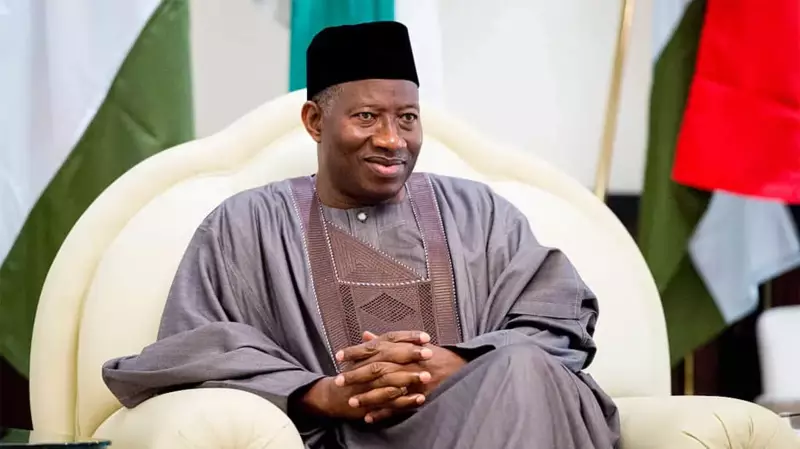
Former Nigerian President Goodluck Jonathan has characterized the recent political turmoil in Guinea-Bissau as a "ceremonial coup" rather than a conventional military takeover. Jonathan made this declaration on Friday in Abuja after returning from Guinea-Bissau, where he had been temporarily trapped during the political crisis.
Strange Circumstances Surrounding Coup Announcement
The former president described the bizarre events surrounding the coup announcement by sitting President Umaro Mbalo as particularly unusual. "What happened in Guinea-Bissau, I wouldn't call it a coup. It was not a coup. Maybe some people would describe it as such for want of a better word—I would say maybe it was a ceremonial coup," Jonathan stated.
He highlighted two peculiar aspects: President Mbalo himself announced the coup, and later military officials addressed the world claiming they were in charge, despite Mbalo having already made the announcement. Even more strangely, Mbalo was using his phone and addressing international media organizations during the supposed coup, claiming he had been arrested.
Jonathan, drawing from his experience as ECOWAS mediator during Mali's military takeover, emphasized that in genuine coups, soldiers don't allow ousted presidents to hold press conferences or comment on their arrest. "Who is fooling who?" he questioned rhetorically.
Election Interruption and Regional Implications
Jonathan was in Guinea-Bissau as part of the West African Elders Forum (WAEF) election observer mission. He revealed that all observer missions believed the election had been peaceful, with results from the nine regions ready for collation in the capital.
"When they were almost through, and we were all waiting for the results to be announced, then Mbalo announced that there is coup that they have taken over. They have arrested him. But from all indications, nobody arrested him," Jonathan explained.
The former president expressed that the situation was more painful to him than when he called Muhammadu Buhari to concede defeat in the 2023 presidential election. He warned that the development appears to be taking Guinea-Bissau back to "those dark days" when the military acted with impunity.
Call for Action and Regional Leadership
Jonathan strongly urged ECOWAS and African Union officials to proceed with tallying and announcing the election results. "My conviction and my charge to ECOWAS and AU is that they must announce their results. They have the results, because AU and ECOWAS officials were at all regions when the results were collated," he emphasized.
He referenced the 2010 crisis in Côte d'Ivoire, where as ECOWAS chair he ensured the internationally recognized winner Alassane Ouattara was sworn in, stating that "democracy is about majority."
Jonathan expressed particular disappointment with President Mbalo, who until recently chaired ECOWAS. "That is the most painful thing. President Mbalo just yesterday was the chair of the authority of heads of state and government of ECOWAS. One would expect him, as a president of Guinea-Bissau, to do his best," he said.
Regarding ECOWAS suspending Guinea-Bissau, Jonathan called the move "traditional" and necessary to maintain the bloc's democratic principles. He predicted that countries currently under military rule would return to civil governance within ten years and rejoin ECOWAS.
The former president also demanded the immediate and unconditional release of main opposition leader Fernando Diaz, who remains in custody without any justified offense. He advised the military not to take Guinea-Bissau backwards to the dark days of 2011 to 2014.




