
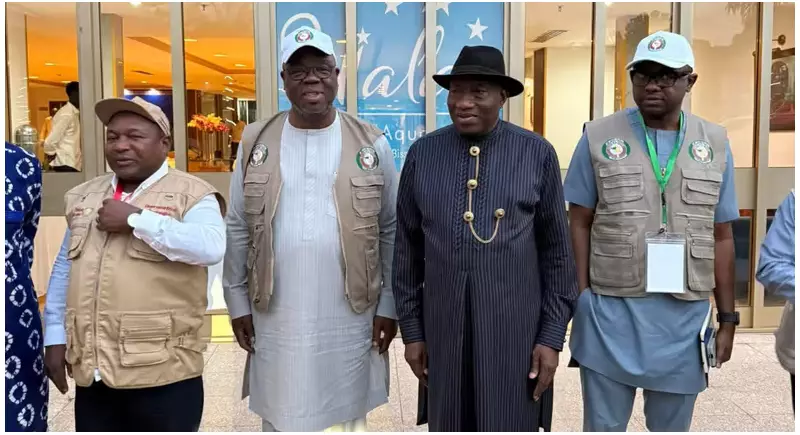
Former Nigerian President Goodluck Jonathan and a team of international election observers have found themselves stranded in Guinea-Bissau after the country's armed forces seized power in a sudden coup d'état on 27 November 2025.
Military Seizes Control, Halts Elections
The political crisis erupted when heavy gunfire was reported near the presidential palace in the capital. The armed forces swiftly announced they had taken total control of the country, immediately suspending the ongoing presidential and legislative electoral process and closing all of the nation's borders.
In a televised statement, General Denis N'Canha, the head of the presidential military office, read the military's declaration while seated at a table and surrounded by armed soldiers. He justified the intervention by claiming it was necessary to thwart an alleged plan to destabilise the country, which he said involved national drug lords and the introduction of weapons intended to alter the constitutional order.
Reports confirm that incumbent President Umaro Sissoco Embaló was deposed. Furthermore, key political figures, including opposition leader Domingos Simoes Pereira and senior electoral officials, were detained by the military junta.
International Observers Trapped and Regional Condemnation
The coup has left a significant number of foreign election observers, including the mission led by Goodluck Jonathan, trapped within the country. Jonathan, who chairs the West African Elders Forum election observation mission, had been in Guinea-Bissau to monitor the polls when the military seized power.
Attempts by several observer groups to leave via the airport were unsuccessful due to the complete closure of all flights. While the safety of the former Nigerian president has been confirmed by his associates, according to Business Africa Insider, he remains unable to exit the nation.
In a swift response, the African Union (AU) and the Economic Community of West African States (ECOWAS) issued a joint statement condemning the military takeover. They noted that the announcement came shortly after observer missions had met with both leading presidential candidates, who had assured them of their willingness to respect the outcome of the vote.
The regional bodies called for the immediate release of the detained electoral officials to allow the democratic process to continue.
Calls for Calm and a History of Instability
The stranded election observers also released a statement, urging the population to remain calm and reaffirming their commitment to supporting Guinea-Bissau's democratic journey. They expressed deep concern over the arrests of top officials, including those managing the electoral process, and called for their immediate release.
The statement read in part: We call on the people of Guinea-Bissau to remain calm, and we affirm our commitment to supporting the country on its democratic path.
This latest military intervention underscores the longstanding political instability in Guinea-Bissau, a nation that has experienced multiple coups since gaining its independence. As the military consolidates its control, imposing a nationwide curfew and suspending all media programming, the international community watches with apprehension.




