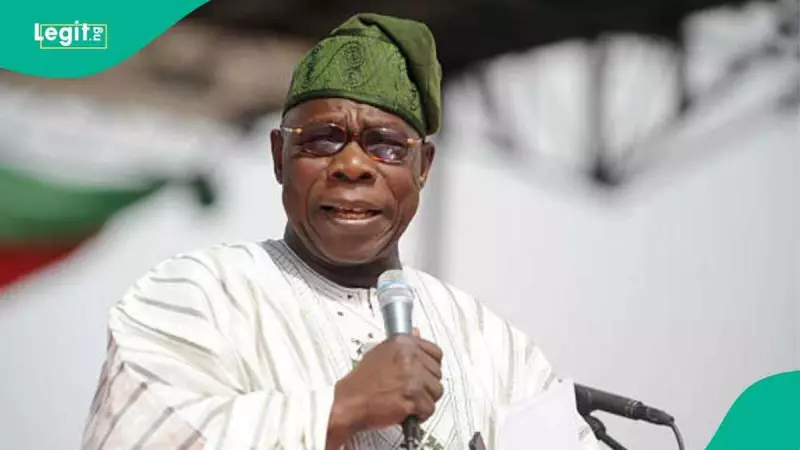
Former Nigerian President Olusegun Obasanjo has made a significant revelation about Nigeria's diplomatic influence during his tenure, claiming the United States would not take any action in Africa without first consulting his administration.
Historical Diplomatic Influence Revealed
The 88-year-old statesman disclosed this crucial information during the Presidential Youth Mentorship Retreat (6.0) organized by the Youth Development Centre, an arm of the Olusegun Obasanjo Presidential Library in Abeokuta, Ogun State. Obasanjo specifically highlighted his relationship with late American President Jimmy Carter, emphasizing the respect America showed Nigeria during that period.
Obasanjo tactfully recalled how the United States under President Carter held Nigeria in high esteem, creating a diplomatic environment where African policies were discussed collaboratively between the two nations.
Nigeria's Rising Global Status
The former president provided context for Nigeria's influential position, tracing it back to the country's independence era. "At Independence, the world saw Nigeria as a giant coming up," Obasanjo stated, acknowledging that this perception was temporarily lost but restored during the administration of General Murtala Mohammed and himself.
Obasanjo revealed that three American presidents visited Nigeria during his tenure without losing anything they were seeking from the country. This demonstrated the mutual respect and strategic importance of Nigeria-US relations during that era.
"When I was military head of state, President Jimmy Carter was the president of America, he would not do anything in Africa without informing us," Obasanjo explained. "They are not taking permission from us but they will tell us that they are doing this."
Contemporary Context and Reactions
Obasanjo's comments come amid current tensions between Nigeria and the United States under President Donald Trump, who has threatened invasion over alleged Christian genocide. While the former president didn't directly address the ongoing controversy, his remarks provide historical perspective on the typically collaborative nature of US-Nigeria relations.
The Nigerian Supreme Council for Islamic Affairs has strongly condemned the US decision to label Nigeria a "country of particular concern," describing the designation as politically driven and misleading. NSCIA secretary-general Ishaq Oloyede emphasized that Nigeria's security challenges stem from poor governance and criminality rather than religious conflict.
Contrastingly, the Pentecostal Fellowship of Nigeria has expressed support for President Trump's position, asserting that Christian genocide is undeniable and urging President Bola Tinubu to cooperate with the American administration. However, the PFN clarified that the violence is perpetrated by radical elements rather than Muslims in general.
Obasanjo's revelation serves as a reminder of Nigeria's historical diplomatic strength and the importance of maintaining collaborative international relationships while addressing domestic security challenges through comprehensive governance solutions.