
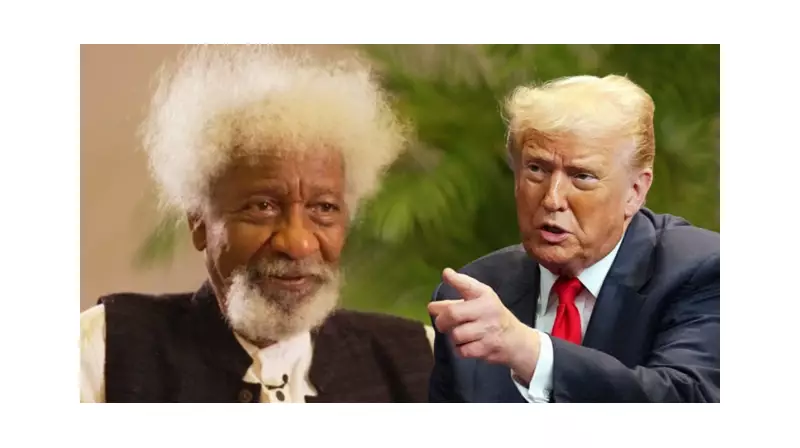
Nobel Laureate Professor Wole Soyinka has delivered a sharp critique of United States President Donald Trump over what he describes as reckless and simplistic comments about the killings of Christians in Nigeria.
Soyinka Condemns Trump's Aggressive Rhetoric
The renowned playwright and activist expressed strong disapproval of President Trump's recent statements, which included a pledge to intervene in Nigeria's security situation with what the American leader characterized as a "fast, vicious, and swift" approach involving "guns ablazing."
In his response, Soyinka questioned the appropriateness of such language from a world leader. "You don't just open your mouth and say 'I'm coming to help you whether you like it or not and I'm coming with violence,' with poor analysis of the complexities of what the problem is," Soyinka stated. "Is that the language of someone whose head is correct?"
Concerns Over Diplomatic Approach
Soyinka emphasized that while the primary responsibility of any government is to protect citizens' lives, the manner in which international partners communicate matters profoundly. He argued that cooperation cannot be built on threats or condescension, particularly when addressing sensitive issues like religiously motivated violence.
"You say you are coming to help, and you are coming with that tone. There should be respect," Soyinka stressed, highlighting the importance of diplomatic decorum in international relations.
The literary icon faulted both the tone and substance of President Trump's warning, maintaining that no responsible world leader should address a sovereign nation in such a manner. According to Soyinka, the American president's comments demonstrated a concerning lack of understanding of Nigeria's complex security challenges.
Broader Context of Nigeria's Security Crisis
Soyinka's criticism comes at a time when the killing of Christians in various parts of Nigeria has attracted significant international attention and heightened political tensions. Human rights organizations and religious bodies have repeatedly called for more decisive action from the Nigerian government to address the escalating violence.
This is not Soyinka's first involvement in advocacy concerning Nigeria's security situation. Years earlier, he actively participated in the Bring Back Our Girls movement, consistently warning about the country's deepening security crisis and urging authorities to take stronger measures to protect citizens.
His latest remarks reflect growing concern not only about the insecurity within Nigeria but also about the implications of foreign leaders attempting to insert themselves into the country's internal affairs using aggressive and undiplomatic language.
The exchange highlights the delicate balance between international cooperation and respect for national sovereignty, particularly when addressing complex security challenges that require nuanced understanding and collaborative solutions.




