
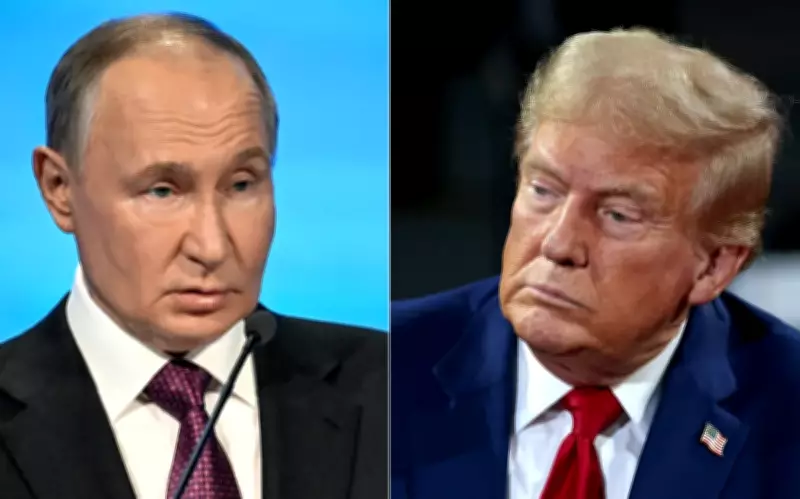
In a significant development for global nuclear security, United States President Donald Trump has formally rejected a proposal from Russian President Vladimir Putin to voluntarily extend limits on the deployment of strategic nuclear weapons. This decision comes following the recent expiration of the New START treaty, which has left the world's two largest nuclear powers without binding constraints on their arsenals for the first time in decades.
Historical Context of Nuclear Arms Control
The Strategic Arms Reduction Treaty (START) framework has a long history in US-Russia relations. The original START agreement was signed back in 1991 between the United States and the Soviet Union, establishing important precedents for nuclear arms control. The New START treaty, which has now formally lapsed, was concluded in 2010 under former US President Barack Obama and then Russian President Dmitry Medvedev. This agreement was last extended in 2021, but its expiration marks a critical turning point in international security arrangements.
Trump's Position on Nuclear Negotiations
Speaking on Thursday, February 5, President Trump made his position clear, stating that Washington is not interested in prolonging what he described as a poorly negotiated agreement. Instead, the US leader insisted on the necessity of pursuing a fresh, comprehensive deal to replace the expired treaty. According to Trump, the focus should now shift entirely to negotiating a new agreement that better reflects current global realities and security challenges.
"Rather than extend New START, which was badly negotiated by the United States and grossly violated, we should have our nuclear experts work on a new, improved and modernised treaty that can last long into the future," Trump wrote on his Truth Social platform, emphasizing his administration's approach to nuclear diplomacy.
Implications of Treaty Expiration
The New START pact represented the last remaining nuclear arms control agreement between the United States and Russia. Its expiration removes crucial caps on several key areas:
- The number of strategic nuclear warheads both countries can deploy
- Limits on delivery systems for nuclear weapons
- Verification and inspection mechanisms that provided transparency
This development has heightened international concerns about a potential renewed arms race between the two nuclear superpowers, with analysts warning of increased global instability.
Diplomatic Exchanges and International Reactions
Prior to Trump's rejection, President Putin had indicated that Russia was willing to observe the treaty's limits for another year, provided the United States agreed to do the same. However, Washington declined this offer despite discussions reportedly taking place between US and Russian officials on the sidelines of talks in Abu Dhabi concerning the ongoing war in Ukraine.
Trump has also reiterated his administration's desire for China to be included in any future nuclear arms agreement, though Beijing has shown little appetite for participating in such multilateral negotiations. This adds another layer of complexity to the already challenging diplomatic landscape.
Reacting to the treaty's expiration, the Kremlin expressed regret through spokesman Dmitry Peskov, who stated that Russia would continue to approach nuclear stability responsibly while prioritizing its national interests. This statement reflects the delicate balance Moscow seeks to maintain between international obligations and sovereign security concerns.
Global Security Concerns
Security analysts and nuclear experts have issued warnings about the broader implications of this development. The collapse of the last major US-Russia nuclear arms agreement could potentially:
- Further weaken global efforts to limit the spread and use of nuclear weapons
- Undermine existing non-proliferation frameworks
- Increase risks during periods of rising geopolitical tensions
- Complicate security dynamics involving other nuclear-armed states
These concerns are particularly acute given recent conflicts involving nuclear-armed states and the general deterioration of great power relations in recent years. The absence of formal arms control mechanisms between Washington and Moscow creates uncertainty in an already volatile international security environment.
As the world watches these developments unfold, the future of nuclear arms control remains uncertain. The coming months will likely see intensified diplomatic efforts as both nations navigate this new phase in their strategic relationship while the international community grapples with the implications for global security architecture.




