
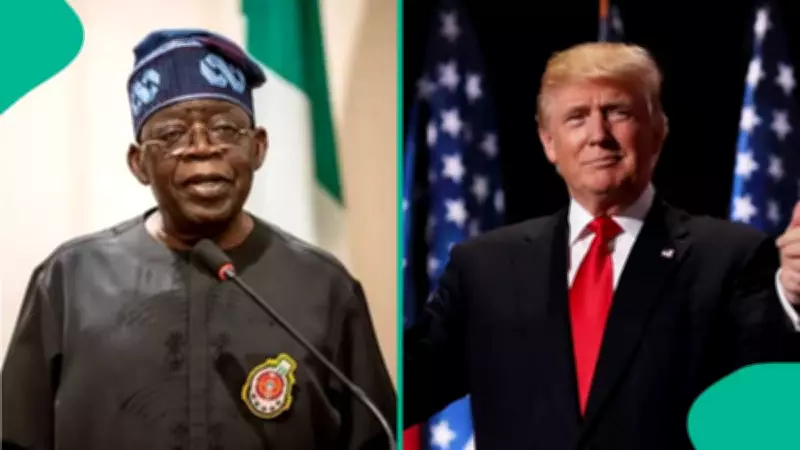
Trump Confirms US-Nigeria Coordinated Christmas Day Air Strikes Against ISIS
Former United States President Donald Trump has publicly revealed that the air strikes conducted in Sokoto, Nigeria, on Christmas Day were a coordinated effort between the American and Nigerian governments, specifically targeting ISIS terrorists operating in the region.
The disclosure was made during an address to guests at the National Prayer Breakfast in Washington, D.C., on Thursday, February 5. Trump elaborated that the strikes were ordered with the explicit intention to "decimate the ISIS terrorists who have been slaughtering Christians in that country by the thousands."
Strategic Timing and Execution
President Trump emphasized the deliberate timing of the operation, stating, "We hit them so hard they still don't know what the hell happened. And we were going to do it on a different day. I said no, do it on Christmas. So they understand it." This statement underscores the symbolic and tactical considerations behind the Christmas Day execution of the strikes.
Defence Headquarters Clarifies Security Partnership
In response to growing speculation and reports about US military presence in Nigeria, the Defence Headquarters has provided clarification on the nature of the bilateral security relationship. According to official statements, the partnership is founded on several key pillars:
- Capacity building initiatives
- Strategic dialogue mechanisms
- Professional military education programs
- Logistic support systems
- Intelligence sharing protocols
The primary objective of this collaboration remains addressing Nigeria's security concerns, particularly terrorism. Major General Samaila Uba, the Director of Defence Information, has assured that Nigeria's sovereignty is fully protected in all engagements with the United States, with all operations conducted under existing bilateral frameworks.
Senatorial Criticism of Military Alliance
The joint military operation has faced significant criticism from Nigerian lawmakers, most notably from Senator Abdul Ningi representing Bauchi Central Senatorial District. The Peoples Democratic Party (PDP) member has characterized the operation as a violation of Nigeria's territorial sovereignty and a breach of United Nations Charter provisions.
Speaking during plenary through a motion of personal explanation on Wednesday, January 28, Senator Ningi argued that such military operations should not proceed without:
- Approval from the National Assembly
- Coordination with local security agencies
This criticism highlights the ongoing debate about the balance between international security cooperation and national sovereignty preservation.
Background of US-Nigeria Security Engagement
The recent developments follow earlier statements from US military officials about strengthening security ties with Nigeria. On Tuesday, February 3, General Dagvin R.M. Anderson, head of US Africa Command, confirmed meetings with President Bola Tinubu where both parties agreed to enhanced cooperation.
One significant outcome was the agreement to deploy a small US team with unique capabilities to complement Nigeria's security efforts. This deployment was later confirmed by General Christopher Musa (retd), Nigeria's Minister of Defence, marking a tangible step in the evolving security partnership between the two nations.
The disclosure of coordinated Christmas Day strikes represents a significant moment in US-Nigeria counter-terrorism cooperation, even as it raises important questions about sovereignty, parliamentary oversight, and the future of international military collaborations in addressing security challenges in West Africa.




