
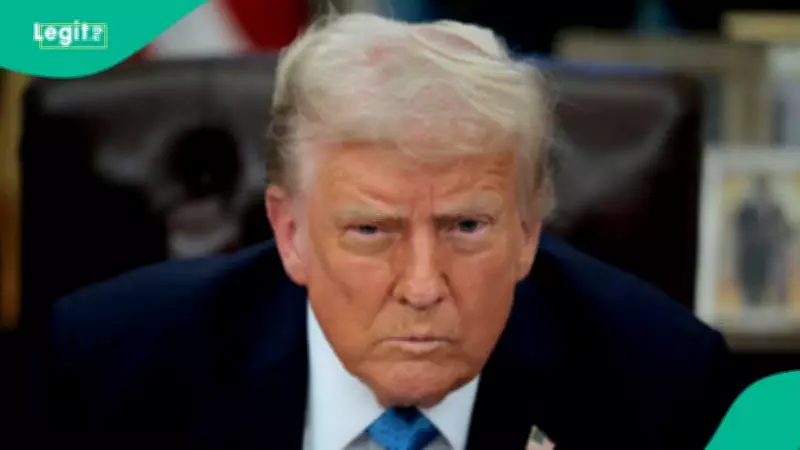
Trump Delivers Strong Warning to Terrorists Targeting Nigerian Christians
Former United States President Donald Trump has issued a stern warning to terrorist groups and bandits operating in Nigeria, declaring that attacks against Christian communities will face severe consequences. The remarks came during his address at the National Prayer Breakfast in Washington, DC, where he emphasized his administration's commitment to protecting religious minorities worldwide.
Direct Warning to Perpetrators of Violence
Speaking on Thursday, February 5, Trump framed his message as part of a broader international effort to safeguard Christian populations. "When Christians come under attack, terrorists know they are going to be attacked violently and viciously by President Trump," he stated during the event. "I know it is not a nice thing to say, but that is the way it is."
The former president asserted that those responsible for religiously motivated violence understand his approach and the potential responses they might encounter if such attacks persist. His comments specifically referenced Nigeria's ongoing security challenges, where various armed groups have been active across multiple regions.
Claims About ISIS Activity in Nigeria
Trump also addressed the presence of Islamic State group affiliates in Nigeria, claiming his administration had significantly weakened their operations during his presidency. "When I was out of office for four years, ISIS rebuilt again," he explained. "We had a bit of ISIS again, but we knocked the hell out of them the other day in Nigeria because they were killing Christians."
The former commander-in-chief maintained that ISIS elements had been responsible for killing Christians in Nigeria and insisted such actions would not be tolerated under his watch. He vowed that any continued attacks would attract a strong and decisive response from his administration.
International Scrutiny of Nigeria's Security Situation
Trump's remarks came amid renewed international focus on Nigeria's complex security landscape. The former president and some United States lawmakers have repeatedly claimed that Christian communities in Nigeria face targeted violence, though these assertions have generated considerable debate within diplomatic and policy circles.
Earlier reports indicated that Trump had designated Nigeria as a "country of particular concern" regarding alleged attacks on Christians. However, Nigerian authorities have consistently rejected this characterization, arguing that insecurity affects people of all faiths and ethnic backgrounds equally.
Nigerian Government's Response to External Claims
The Nigerian government has described the violence within its borders as a multifaceted challenge involving terrorism, banditry, and communal conflicts rather than a campaign targeting any single religious group. Officials have expressed concern that external characterizations risk inflaming religious tensions within the country's diverse population.
Meanwhile, former Chief of Army Staff Lieutenant-General Abdulrahman Dambazau has suggested that the United States might be pursuing strategic interests in Nigeria, potentially including establishing military presence. These comments reflect ongoing discussions about international involvement in addressing Nigeria's security challenges.
Broader Implications for Nigeria-US Relations
Trump's statements highlight continuing international attention on Nigeria's internal security matters and the complex dynamics of religious violence allegations. As Nigeria continues to address multiple security threats across its territory, external commentary from global figures like Trump adds another layer to the ongoing national conversation about protection of all citizens regardless of religious affiliation.
The former president concluded his remarks by reaffirming his administration's commitment to confronting extremist violence wherever it occurs, with particular emphasis on locations where Christian communities report being affected. This position continues to shape discussions about international responses to Nigeria's security situation.




