
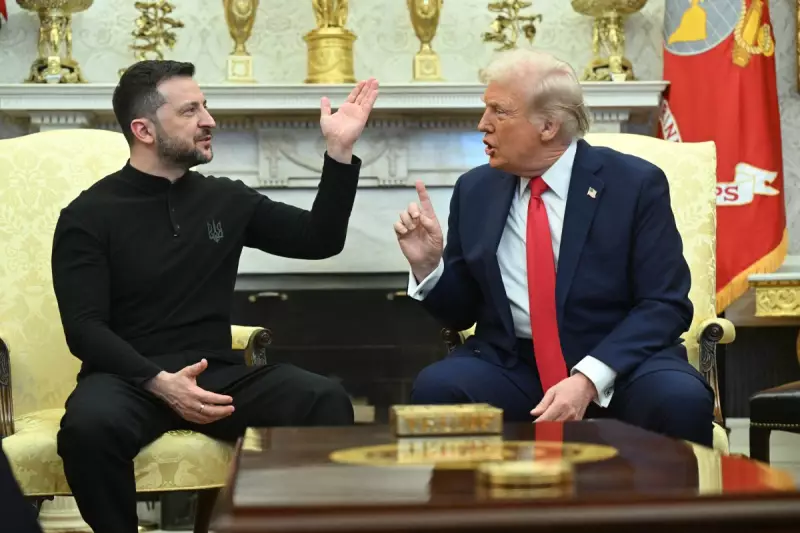
United States President Donald Trump has indicated his administration's proposed peace plan for Ukraine remains open for negotiation, setting the stage for crucial talks in Switzerland this Sunday. The development comes as Kyiv and its European allies express significant concerns about the 28-point proposal that would require Ukraine to make substantial concessions to Russia.
Diplomatic Tensions Escalate Ahead of Geneva Meeting
The White House has given Ukraine until November 27 to approve the comprehensive plan aimed at ending the nearly four-year conflict. However, Ukrainian officials are actively seeking modifications to a draft that incorporates several of Moscow's hardline demands. Washington officials strongly defended the proposal on Saturday, insisting it represents official US policy and denying claims from US senators who characterized the document as a Russian "wish list."
Secretary of State Marco Rubio took to social media to clarify the proposal's origins, stating: "The peace proposal was authored by the US. It is offered as a strong framework for ongoing negotiations. It is based on input from the Russian side. But it is also based on previous and ongoing input from Ukraine."
Key Elements of the Controversial Peace Plan
The comprehensive 28-point proposal contains several contentious provisions that have drawn criticism from multiple quarters:
- Ukraine would be required to cede territory currently occupied by Russian forces
- Significant reductions to Ukraine's military capabilities
- A permanent pledge never to seek NATO membership
President Trump addressed reporters on Saturday, emphasizing that the current proposal does not represent his final offer. He expressed hope to stop the fighting "one way or the other" while maintaining flexibility in negotiations.
International Response and European Concerns
Ukraine's European allies, who were notably excluded from the drafting process, have voiced serious reservations about the US proposal. At the G20 summit in South Africa, Western leaders described the plan as requiring "additional work" as they scrambled to develop a counter-proposal that would strengthen Kyiv's negotiating position.
The leaders of key European countries, Canada, and Japan issued a joint statement highlighting their concerns: "We are clear on the principle that borders must not be changed by force. We are also concerned by the proposed limitations on Ukraine's armed forces, which would leave Ukraine vulnerable to future attack."
French President Emmanuel Macron noted that several aspects of the proposal needed broader discussion, particularly those affecting European security interests such as Ukraine's potential NATO membership and the status of frozen Russian assets within the EU.
Preparations for Geneva Negotiations
Ukrainian President Volodymyr Zelensky has formally appointed his delegation for the Geneva talks, led by top aide Andriy Yermak. The decree notably mentions that negotiations would include "representatives of the Russian Federation," though Moscow has not immediately confirmed its participation.
Zelensky addressed the nation on Friday, describing this as one of the most challenging moments in Ukraine's history. He warned that "The pressure on Ukraine is one of the hardest. Ukraine may face a very difficult choice: either the loss of dignity or the risk of losing a key partner," referencing the potential breakdown in relations with Washington.
Meanwhile, US officials confirmed that Secretary of State Marco Rubio and diplomatic envoy Steve Witkoff would arrive in Geneva on Sunday for the talks. US Army Secretary Daniel Driscoll had already reached the city following meetings with President Zelensky in Kyiv.
British Prime Minister Keir Starmer emphasized the importance of the Geneva meeting, stating that senior officials would convene "to take things further forward" while stressing the necessity of solid security guarantees for Ukraine in any settlement.
The diplomatic activity comes as Russian President Vladimir Putin suggested the US blueprint could "lay the foundation" for a final peace settlement, though he simultaneously threatened further territorial seizures if Ukraine walked away from negotiations.




