
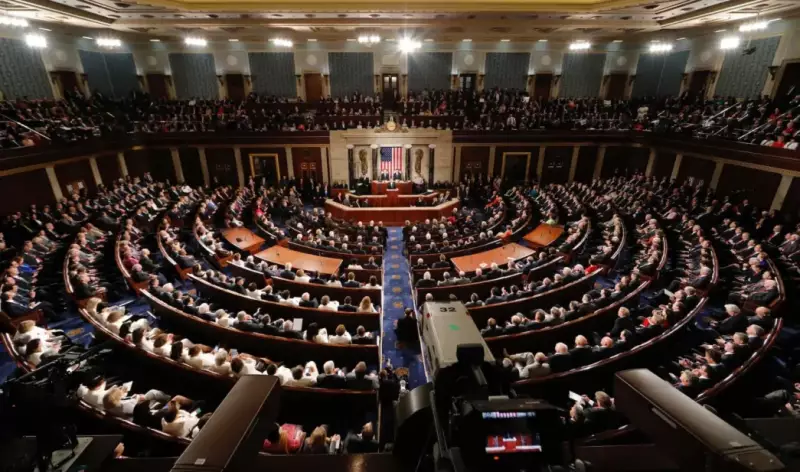
In a significant development that could reshape US-Nigeria relations, American lawmakers have introduced legislation targeting prominent Nigerian groups over alleged religious violence. The proposed bill specifically names Miyetti Allah and associated Fulani militias for their purported role in ongoing conflicts in Nigeria's Middle Belt region.
Congressional Action Against Religious Persecution
The legislation, currently moving through the US Congress, seeks to impose visa bans on leaders and members of these organizations. Lawmakers behind the bill cite numerous reports of religiously motivated violence against Christian communities in Nigeria's central states.
According to congressional sources, the bill represents the most direct US intervention yet in addressing the complex security situation in Nigeria's Middle Belt. The region has witnessed escalating violence between nomadic herders and farming communities, with religious dimensions increasingly coming to the forefront.
Allegations and Accusations
The proposed legislation points to what sponsors describe as "systematic patterns of religious persecution" against Christian populations. Supporters of the bill argue that Fulani militias have been involved in attacks that specifically target religious communities, destroying churches and displacing thousands of believers.
Miyetti Allah, a prominent Fulani socio-cultural organization, has consistently denied these allegations, maintaining that their members are often unfairly blamed for complex land and resource conflicts that have historical roots in the region.
Potential Impact on US-Nigeria Relations
This congressional move could have far-reaching implications for diplomatic relations between Washington and Abuja. The Nigerian government has traditionally approached the Middle Belt conflicts as internal security matters rather than religious persecution.
Security analysts suggest that the US legislation might pressure the Nigerian government to adopt more robust measures in addressing the security challenges in conflict-affected areas. However, some experts warn that external pressure could complicate already delicate inter-communal relations.
Regional and International Reactions
The proposed visa bans have generated mixed reactions across Nigeria and internationally. Human rights organizations have largely welcomed the move, seeing it as necessary international attention to what they describe as overlooked religious violence.
Meanwhile, some Nigerian political leaders have expressed concern about foreign intervention in domestic affairs, arguing that the situation requires nuanced understanding of Nigeria's complex ethnic and economic dynamics.
As the bill progresses through congressional committees, all eyes remain on how both the Nigerian government and the affected organizations will respond to these potentially game-changing developments in international pressure regarding Nigeria's security challenges.




