
US Congress Condemns Nigeria's $9 Million Lobbying Contract in Washington
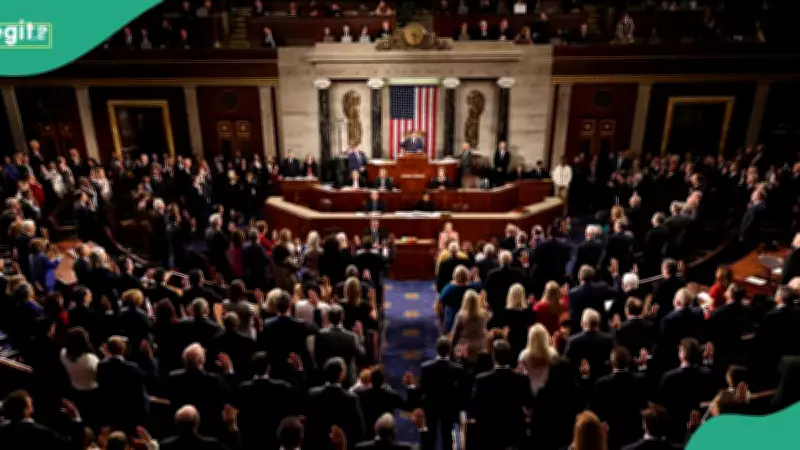
The United States Congress has issued strong criticism against Nigeria's reported $9 million lobbying agreement in Washington, D.C., expressing concerns that the contract appears designed to minimize serious human rights and religious freedom issues within the country. This condemnation emerged during a joint hearing of the House Subcommittee on Africa and the Subcommittee on the Western Hemisphere, held on Wednesday, February 4, under the title Defending Religious Freedom Around the World.
Lawmakers Question Lobbying Efforts and Violence Against Christians
During the session, testimony was provided by former US Ambassador-at-Large for International Religious Freedom, Sam Brownback, and former chair of the US Commission on International Religious Freedom (USCIRF), Dr. Stephen Schneck. Chairman of the Africa Subcommittee, Chris Smith, emphasized Nigeria's designation as a Country of Particular Concern (CPC) under the International Religious Freedom Act, describing this classification as long overdue given years of deadly attacks targeting Christian communities.
Smith detailed the financial aspects of the lobbying contracts, stating, I just want to say to my colleagues that I am deeply concerned that Nigeria has hired the lobbying firm DCI Group, to the tune of $9 million, $750,000 a month. And a Nigerian billionaire has entered into a $120,000-a-month contract with Washington-based consulting firm Valcour, to influence Congress and the Executive Branch. He warned that these agreements seem to produce very well-written talking points to say nothing to see here, potentially obscuring the true scale of violence and human rights abuses in Nigeria.
Debate Over Complexity of Violence and US Assistance Cuts
Ranking Member Sara Jacobs offered a nuanced perspective, criticizing what she termed an overly narrow focus on Christian persecution. She highlighted that US foreign assistance to Nigeria, including programs supporting faith leaders and conflict-affected communities, has faced significant reductions. Jacobs explained, Despite the administration's apparent interest in addressing conflict and religious tensions in Nigeria, it has cut hundreds of millions of dollars in foreign assistance to Nigeria, including assistance to faith leaders and to communities experiencing violence in the Middle Belt.
She cautioned against oversimplifying the crisis along religious lines, noting, The violence in Nigeria is complex, affecting both Christians and Muslims, and the drivers of this violence are multifaceted and cannot be reduced to a single framing. This statement underscores the intricate nature of the security challenges facing the nation.
Scrutiny of Military Actions and Lobbying Background
The hearing also examined recent US military strikes in Sokoto State, with Dr. Schneck criticizing the cost-effectiveness of such operations. He argued that the expense of Tomahawk missiles likely exceeded previous funding for interfaith relations and humanitarian aid in Nigeria, suggesting these actions may have inadvertently strengthened militant groups rather than protecting vulnerable communities.
Brownback further asserted that the CPC designation must be supported by tangible sanctions to have real impact, dismissing name and shame measures as insufficient without concrete consequences. He expressed distrust in the Nigerian administration, stating, This government has not given us any reason to trust them, and described it as failing to protect at-risk populations.
Background documents revealed that the Federal Government, through Kaduna-based Aster Legal and the office of National Security Adviser Nuhu Ribadu, engaged DCI Group on December 17, 2025, to advocate for Nigeria's efforts in protecting Christians. Separately, billionaire Matthew Tonlagha signed a six-month, $120,000-per-month contract with US lobbying firm Valcour to influence US media, Congress, and the Trump administration. Tonlagha serves as vice-president of Tantita Security Services, which has links to a former leader of the Movement for the Emancipation of the Niger Delta.
US Government Concerns and Ongoing Tensions
While US President Donald Trump has repeatedly claimed that Christians in Nigeria face genocide and threatened military intervention, the Federal Government has rejected these assertions, maintaining that Nigeria confronts serious security challenges but not genocide. Despite these tensions, US Africa Command, in collaboration with President Bola Tinubu's administration, conducted airstrikes on December 25 targeting terrorist positions in Sokoto State.
This hearing highlights the growing US scrutiny of Nigeria's human rights record and illustrates the complex interplay between security measures, religious freedom, and international lobbying efforts. It underscores ongoing diplomatic challenges as both nations navigate these sensitive issues.




