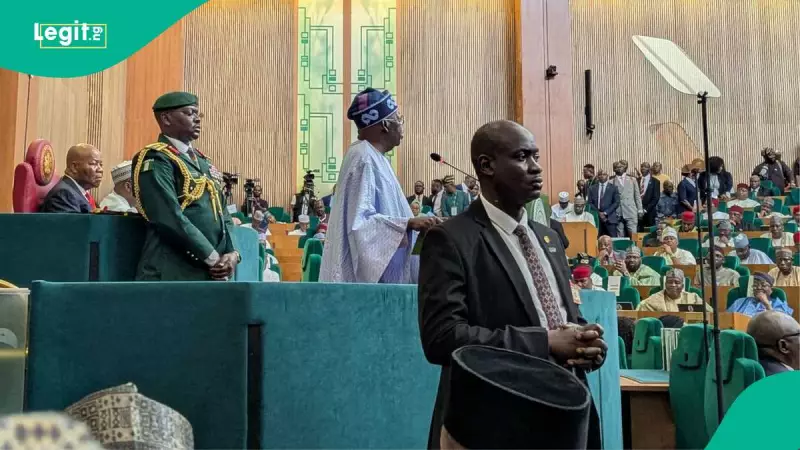
The proposed 2026 appropriation bill for Nigeria has sent shockwaves through the public sphere, drawing intense criticism from analysts and citizens alike over what they describe as strange and duplicated allocations across various Ministries, Departments, and Agencies (MDAs). The budget, presented by President Bola Tinubu to the National Assembly, is now under a microscope for potential transparency and accountability failures.
Questionable Allocations Raise Red Flags
Budget analysts have raised alarms over numerous line items in the spending plan that appear misaligned with the core mandates of the agencies involved. A significant point of contention is the allocation of N252.2 billion for "research and development" under the Federal Ministry of Agriculture and Food Security Headquarters. The concern is not solely the massive sum but the complete lack of a detailed breakdown specifying the programmes, timelines, institutions involved, or projected outcomes for this enormous expenditure.
This pattern repeats in the budget of the Federal Ministry of Finance, which has a similar N197.26 billion earmarked for research and development. Historically, such substantial R&D budgets are associated with science, health, and technology-driven agencies, not ministries whose primary mandates are fiscal policy coordination and revenue management. Experts warn that these broad, poorly explained allocations could severely weaken accountability and disrupt the effective use of public funds, especially amid the country's acute fiscal pressures.
A Breakdown of Key Sectoral Allocations
A summary of the budget, widely shared on social media by former presidential aide Bashir Ahmad, reveals the proposed spending across major sectors. The figures have sparked a wave of public reactions, highlighting mixed sentiments about the government's priorities.
The sectoral breakdown includes:
- Works – N3.4 trillion
- Defence – N3.2 trillion
- Education – N2.3 trillion
- Health – N2.1 trillion
- Agriculture – N1.4 trillion
- Police Affairs – N1.3 trillion
- Niger Delta – N1.3 trillion
- Power – N1.1 trillion
- INEC – N1 trillion
Public Reaction and Political Cross-Carpeting
Nigerians have taken to social media to express their views on the budget proposal. A user named Saviour questioned the massive defence allocation, stating, "Imagine we didn’t have Islamic terrorists disturbing the country, that 3.2 trillion would have been invested in other aspects." Another, Umar, lamented that such budgets often have minimal impact on the masses.
While some, like Muhammad Ibrahim, expressed optimism about the agriculture sector's allocation, others were deeply skeptical. Mefo Ekundayo commented on the health budget, asking, "Do you think this will improve the already disrupted health sector? We are in for a long 2026. Hospitals are grounded at the moment."
In a related political development, Abba Atiku Abubakar, the son of former Vice President Atiku Abubakar, has officially defected from the opposition Peoples Democratic Party (PDP) to the ruling All Progressives Congress (APC). He was received by Deputy Senate President Barau Jibrin and APC National Vice Chairman (North-East) Mustafa Salihu in Abuja on Thursday, January 15, 2026. His move is seen as an effort to mobilise support for President Tinubu's anticipated re-election campaign in 2027.
As the National Assembly begins its scrutiny of the 2026 appropriation bill, calls are mounting for clearer project descriptions, the elimination of duplicated expenditures, and greater alignment of allocations with the strategic mandates of MDAs to ensure public funds are used effectively for national development.