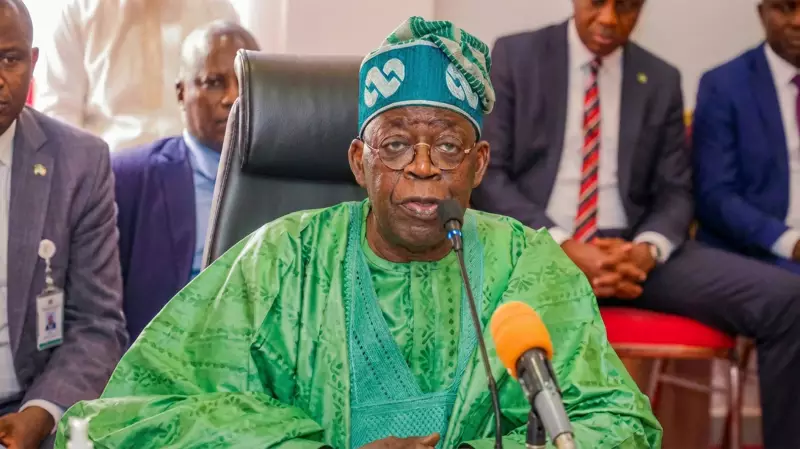
A Federal High Court sitting in the nation's capital has scheduled a crucial judgment for March 9, 2026, in a new legal battle questioning the extent of President Bola Ahmed Tinubu's authority during a state of emergency.
Legal Showdown Over Constitutional Powers
Justice James Omotosho of the Abuja Federal High Court announced the judgment date on Friday, January 17, 2026. This followed the conclusion of arguments from both sides in the suit. The plaintiff's counsel, Nnamdi Nwokocha-Ahaaiwe, and lawyers representing the defendants presented and adopted their final written submissions.
The case was initiated by a non-governmental organization, the Civil Society Observatory for Constitutional and Legal Compliance (CSOCLC). It directly challenges President Tinubu's decisions after he declared a state of emergency in Rivers State last year. The core argument is that while the President has the constitutional right to declare an emergency under Section 305, he overstepped by suspending elected officials and appointing an interim administrator.
Clash Over a "Spent" Law and Supreme Court Precedent
During proceedings, Justice Omotosho pointed out that this suit bears a strong resemblance to earlier cases he had dismissed, citing jurisdictional problems tied to the old Emergency Powers (Jurisdiction) Act of 1962. The judge also mentioned a Supreme Court ruling from December 15, 2025, which reportedly threw out a related case on procedural grounds.
However, the plaintiff's lawyer, Ahaaiwe, countered fiercely. He acknowledged the previous rulings but maintained they were based on an error. His central argument is that the 1962 Act is a "spent" law that was deliberately left out of the statute books before the 1999 Constitution came into effect. Therefore, he argued, a presidential order in 2025 that sought to modify this non-existent law is fundamentally "unconstitutional, null, and void."
"The constitution has fully covered the field on emergency powers," Ahaaiwe stated. He emphasized that "no executive proclamation can alter the express provisions of Section 305."
Defendants Seek Dismissal, Plaintiffs Seek 26 Reliefs
On the other side, counsel for the defendants—which include the President and the Attorney-General of the Federation—relied on the same 1962 Act and the modification order. They asserted that only the Supreme Court holds original jurisdiction over such disputes and urged Justice Omotosho to strike out the case for lack of jurisdiction.
The plaintiffs are seeking a total of 26 judicial reliefs. A key demand is a declaration that Rivers State cannot be lawfully governed by an appointed administrator, retired Vice Admiral Ibok-Ete Ekwe Ibas, outside the clear provisions of the constitution. This legal action has effectively reignited a major constitutional debate that many believed was settled.
All eyes will now be on the Federal High Court in Abuja come March 9, 2026, as its decision will have significant implications for the balance of power between the executive and the constitution during national emergencies.