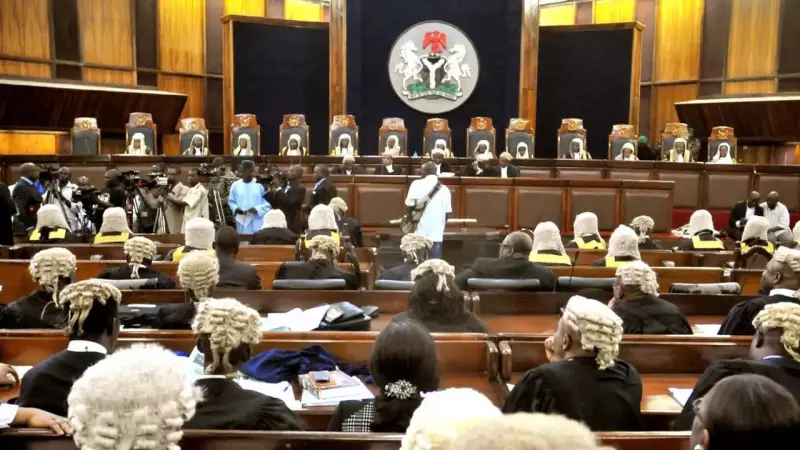
In a landmark ruling that continues to stir national debate, the Supreme Court of Nigeria has firmly upheld President Bola Tinubu's constitutional authority to declare a state of emergency in Rivers State. The verdict, delivered on December 15, 2025, has profound implications for Nigeria's democratic principles and the balance of power between the federal government and the states.
The Core of the Supreme Court Judgment
The legal challenge was initiated by the Attorneys-General of 11 states governed by the Peoples Democratic Party (PDP). They had approached the apex court on April 8, 2025, seeking clarity on Section 305 of the 1999 Constitution following the emergency declaration and the suspension of Rivers State Governor, Siminalayi Fubara, and 27 state legislators on March 18, 2025.
In a decisive six-to-one majority decision, the Supreme Court dismissed the suit. The majority found that the plaintiffs lacked the requisite locus standi (legal standing) to bring the case, thereby declining jurisdiction. However, in a significant move, the court proceeded to evaluate the case's merits. The justices affirmed that the President holds the constitutional power to declare a state of emergency where public safety or governance is threatened and can suspend elected officials for a limited period to restore normalcy.
Justice Mohammed Idris, delivering the lead judgment, emphasized that Section 305 grants the President discretion in deploying "extraordinary measures," which are not explicitly detailed in the constitution.
A Lone Voice of Dissent and Lingering Concerns
Justice Obande Ogbuinya provided a notable dissenting opinion. He argued that while the President's power to declare an emergency is valid, this power should not extend to suspending democratically elected officials like governors and legislators. This dissent underscores the central tension in the case: the conflict between executive authority during a crisis and the sacrosanct nature of the people's electoral mandate.
The court's decision has ignited concerns among observers and pro-democracy advocates. A key point of contention is the court's approach of first dismissing the case for lack of jurisdiction and then ruling on its substance, a move seen by some as a deliberate effort to set a precedent for future disputes.
Critics argue that vesting the President with the power to suspend a sitting governor and a state assembly risks overreaching the very foundations of democracy. The ruling tacitly endorsed the suspension of Governor Fubara and the lawmakers, actions that have exacerbated political tensions in Rivers State.
Broader Implications for Nigerian Democracy
The Supreme Court's verdict presents a complex conundrum. On one hand, it reinforces the legal framework for managing severe state crises. On the other, it raises alarm about the potential for such powers to be misused for political ends, especially in a federation where political rivalries can be intense.
The experience in Rivers State serves as a stark warning. It highlights the imperative for all political actors to operate strictly within the spirit and letter of the constitution. The judiciary's role in policing these boundaries remains a critical pillar of democracy.
This ruling may signal a need for constitutional clarification or amendment. Lawmakers at both state and national levels are now prompted to ponder how to address a severe breakdown of law and order without undermining democratic will. The fundamental question remains: How can a president intervene in a state crisis without trampling on the principles of democracy and the mandate of the ballot box?
Ultimately, while the Supreme Court's proclamation stands as a watershed moment, the long-term health of Nigeria's democracy must be the paramount consideration. The declaration of a state of emergency must never devolve into a weapon for coercive, self-serving politics. The lesson for all is clear: democratic endurance must triumph over short-term political exigencies.