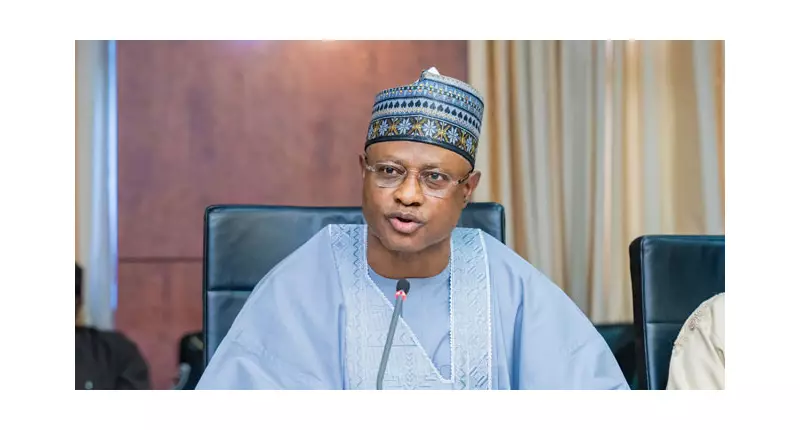
In a groundbreaking move that signals a major shift in governance approach, Kaduna State Governor Uba Sani has unveiled a massive ₦25.5 billion grassroots development package in the state's 2026 draft budget.
Direct Funding for Community Development
During a special town hall meeting held on Friday for the public presentation of the budget, Governor Sani announced that each of Kaduna's 255 political wards will receive ₦100 million for development projects. This represents the state's most direct grassroots funding intervention in decades.
The governor explained that this revolutionary decision emerged directly from citizens' complaints and community feedback gathered during last year's town hall sessions. Residents had highlighted the severe developmental gaps affecting rural communities across the state.
"It became clear in 2024 that 12 of the state's 23 Local Government Areas had not benefitted from even one kilometre of road construction in 12 years," Governor Sani revealed. This shocking discovery prompted the administration to abandon traditional top-to-bottom budgeting in favor of a ward-by-ward development model that prioritizes what communities actually need.
Community-Led Project Selection
The ₦100 million per ward allocation will empower local communities to identify, rank, and implement their most critical projects. These could include various infrastructure and social development initiatives such as:
- Feeder roads and transportation links
- Water supply schemes
- Health facilities and equipment
- Farm-to-market access roads
- Security infrastructure
- Community economic empowerment programs
Governor Sani emphasized that decisions on how each ward's allocation will be spent "will no longer be taken by people on the high table." He stressed that the money belongs to the communities and will be directed strictly by their priorities through structured citizen engagement mechanisms.
The administration has already demonstrated this principle at the state level by increasing the water sector budget from ₦10 million to ₦100 million after citizens demanded more investment during previous consultations.
Ongoing Infrastructure Transformation
The renewed focus on rural development began after residents exposed severe infrastructure neglect during last year's consultations, which prompted the government to launch an extensive road development program now active in every Local Government Area.
Governor Sani listed numerous ongoing road projects, many nearing completion, including:
- 24km inter-community links
- 35km road in Sanga LGA
- 22.5km road in Soba LGA
- 24.7km road in Zangon Kataf LGA
- 14.2km road in Igabi LGA
These projects will directly align with the new ward-based allocations to ensure comprehensive community development.
Multi-Sectoral Impact
The town hall inputs have also significantly shaped the state's health investments, making Kaduna the only state in Nigeria to upgrade 255 primary healthcare centres from level 1 to level 2. This achievement has earned Kaduna recognition as having the best primary healthcare system in the Northwest region.
Additionally, the renovation and equipping of 16 general hospitals is tied to ward-level needs assessments, with nine facilities already completed and commissioned.
In agriculture, wards with significant farming populations will receive targeted interventions from their ₦100 million allocations. This complements ongoing state efforts, including the distribution of nearly 900 trucks of fertilizer to smallholder farmers.
The governor also highlighted Kaduna's recent $250 million agro-industrial investment deal, supported by the Federal Government, as part of the strategy to ensure that ward-level investments translate into market access, value addition, and higher rural incomes.
Skills Development and Major Projects
Kaduna's skills development infrastructure, which currently enrolls 90,000 youths under the Federal Government's TX training initiative, will also benefit from the ward envelope. This will enable communities to sponsor targeted vocational and digital skills programs based on local economic needs.
Even major transportation projects, such as the planned BRT system and 44km light rail, are expected to boost ward economies by enhancing mobility, expanding markets, and improving security coordination across communities.
Philosophy of Inclusive Development
Governor Sani stated that the philosophy behind the ₦100 million per ward allocation is rooted in fairness, justice, and equity. He emphasized that development must reach every ward "irrespective of who they voted for, where they come from or what religion they practise."
"Kaduna's new budget model is built on trust and inclusivity," the governor declared. "No ward, no community, no LGA will be left behind. Kaduna must work for everyone. The 2026 budget is your budget, and the ₦100 million is for you to decide, not for government to dictate."
Stakeholders at the meeting, including representatives from Civil Society Organizations, religious leaders, traditional rulers, and youth groups, commended Governor Uba Sani for his innovative approach to citizen engagement in budgeting. They also acknowledged the significant strides his administration has made in improving security across Kaduna State.