In a functioning democracy, the parliament stands as the primary institution representing the people's voice, a voice that must never fall silent, even in times of crisis. When it does, the consequences are severe, leading to public suffering and a direct threat to democratic foundations. This is the critical backdrop against which a new, revealing book by an insider, Senator Effiong Bob, has been launched, offering a counter-narrative to widespread criticism of Nigeria's lawmakers.
The Crisis of Parliamentary Oversight in Nigeria
Recent years have seen growing concern from media commentators and observers about the performance of Nigeria's legislature at both federal and state levels. There is a prevailing assumption that the National Assembly, particularly the 10th Assembly, has ceded its constitutional power to the executive branch.
Critics point to a curious fusion of powers instead of the classic separation of powers. Evidence cited includes the swift passage of presidential bills without rigorous scrutiny and the routine clearance of ministerial and ambassadorial nominees. The symbolic naming of the National Assembly Library after the sitting President further fuels this perception.
This perceived lack of assertive oversight, a trend also noted in the preceding 9th Assembly, has tangible consequences. Analysts warn it can lead to executive impunity, corruption, and a dangerous erosion of public trust in democratic institutions. Many citizens already link the absence of parliamentary scrutiny to rising concerns over human rights violations and poor governance.
Inside the Legislative Burden: An Insider's Perspective
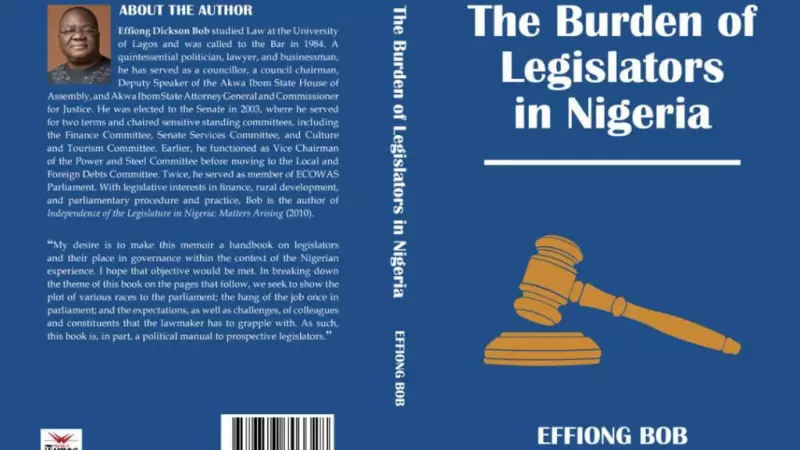
Challenging these assumptions is Senator Effiong Bob's 508-page book, 'The Burden of Legislators in Nigeria'. The work, published by Premium Times Books, provides an institutional analysis woven with political history and symposium interviews. It delves into the complex realities faced by representatives from a participant's vantage point.
The book argues that the task of a legislator is more burdensome than the public appreciates. It deconstructs the journey from party nomination—hindered by godfatherism, party subterfuge, and pre-election walls—to the constant pressure of securing and preserving a mandate. Bob highlights how influential political overlords often manipulate candidate selection and exert undue influence on legislators, subordinating them to personal over constituent interests.
A key burden explored is the expectation gap. Nigerian constituents, shaped by decades of military rule, often view their representatives as direct service providers for roads, schools, and jobs, rather than as lawmakers. This forces legislators into project-based and pork-barrel politics, diverting focus from essential long-term policy-making and lawmaking, which is a complex, research-intensive, and often thankless task.
Pathways to Reform and Stronger Democracy
Senator Bob's book serves not just as an exposé but as a manual and a call for reform. It features insights from former Senate Presidents like Anyim Pius Anyim, Ken Nnamani, David Mark, Ahmad Lawan, and Godswill Akpabio, shedding light on internal legislative dynamics. The author, a lawyer and former Deputy Speaker, Senator, and Commissioner, debunks the myth that legislative office is a shortcut to wealth, recounting stories of lawmakers who left office poorer, besieged by litigation and ceaseless constituent demands.
In his foreword, Professor Philip Afaha of the University of Abuja describes the book as an invaluable tool for reforming institutions and renewing minds about democracy. The core argument is that despite its flaws, democracy remains superior to autocratic alternatives. The book concludes as a seminal contribution to Nigeria's democratic literature, blending historical recall with practical recommendations to strengthen governance.
Ultimately, 'The Burden of Legislators in Nigeria' presents a compelling case for a comprehensive reform agenda to reset the legislature, protect its independence, and clarify its role—a necessary step to deliver the concrete dividends of democracy that Nigerians rightfully expect.