
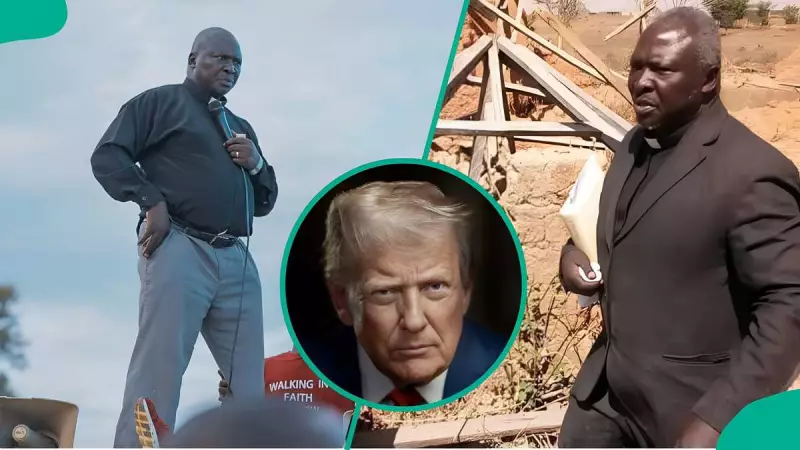
The Lone Voice in Nigeria's Wilderness
In the heart of Nigeria's Middle Belt, a clergyman's anguished cry has pierced through the nation's conscience. Reverend Ezekiel Dachomo has become the contemporary John the Baptist of our time, standing firm in Plateau State's blood-soaked landscape while shouting truths that many prefer to ignore.
The Plateau Mass Burial That Shook the Nation
On October 15th, 2025, during a somber mass burial for 13 victims in Rachas village of Heipang District and Rawuru village of Fan District, Reverend Dachomo unleashed a storm of controversy. Through a live video broadcast, his voice trembling with righteous anger, he accused Fulani militants of executing a systematic plan to eliminate Christian communities across Northern Nigeria.
The clergyman declared, "They want to wipe us out!" - a statement that resonated deeply with communities that have endured repeated attacks. Unlike many commentators, Dachomo speaks from direct experience, having witnessed his church members slaughtered and his community destroyed.
Trump's Unexpected Interest in Nigeria's Crisis
The situation gained international dimension when former US President Donald Trump began mentioning Nigeria's religious violence in his speeches. Within a single week, Trump referenced Nigeria three times, specifically raising concerns about "Christian genocide" in the country.
This unusual attention from the American political figure has triggered mixed reactions among Nigerians. Some fear potential US military intervention, while others - demonstrating the depth of their despair - openly welcome foreign involvement, seeing it as their only hope for protection.
The painful reality is that when citizens of a sovereign nation invite foreign soldiers onto their soil, it represents not bravery but the ultimate betrayal by their own government.
Government Response: Denial Over Action
For over a decade, successive Nigerian governments have treated the security crisis as a political commodity rather than a humanitarian emergency. Under President Goodluck Jonathan, the approach was characterized by denial and avoidance. During President Muhammadu Buhari's administration, the violence only escalated and diversified.
The current government's primary response to allegations of systematic violence against Christians has been denial. This defensive posture does little to address the underlying security failures or comfort grieving communities.
The United States Commission on International Religious Freedom (USCIRF) has recommended designating Nigeria as a "Country of Particular Concern" annually since 2009. Interestingly, it was Trump who acted on this recommendation in 2020, while President Joe Biden removed Nigeria from the list upon taking office.
The Geopolitical Dimensions of Nigeria's Crisis
America's sudden interest in Nigeria's religious violence raises important questions about international motives. As political analyst Oluwafemi Popoola notes, nations rarely act out of pure compassion. The United States, like other global powers, operates based on strategic interests - whether economic, political, or ideological.
Trump's previous characterization of African nations as "shithole countries" and his administration's visa restrictions on Nigerians contrast sharply with his current posture as a potential savior. This inconsistency suggests that Nigeria's crisis has become a geopolitical chessboard where larger international agendas are playing out.
The fundamental question Nigerians must confront is not whether America should intervene, but what price the nation might pay for such involvement. Are we prepared to exchange one form of domination for another?
The Church's Troubling Silence
Perhaps the most disturbing aspect of this crisis is the relative silence from prominent religious leaders in Southern Nigeria. While northern Christians bury their dead under open skies, many influential southern pastors continue with business as usual, filling stadiums for crusades but offering little substantive support to their beleaguered brethren.
This silence raises uncomfortable questions about the Nigerian church's priorities and its relationship with political power. Have religious leaders become so entangled with government interests that they cannot speak truth to power?
Reverend Dachomo stands in stark contrast to these silent shepherds - a lone figure refusing to be intimidated into silence, even facing potential arrest for his outspokenness.
A Nation at the Crossroads
Nigeria stands at a critical juncture where domestic failure has invited international scrutiny. The cries from Plateau State represent more than religious persecution; they signal the complete breakdown of the social contract between the Nigerian state and its citizens.
As philosopher Hannah Arendt observed, "The moment we stop thinking in moral terms, we lose the capacity to be shocked." Reverend Dachomo's voice serves as a crucial reminder that we must reclaim our moral compass before we become completely desensitized to the violence consuming our nation.
Until the wilderness of bloodshed and betrayal stops echoing, courageous voices like Dachomo's must continue to shout, demanding the decency and truth that every Nigerian deserves.




