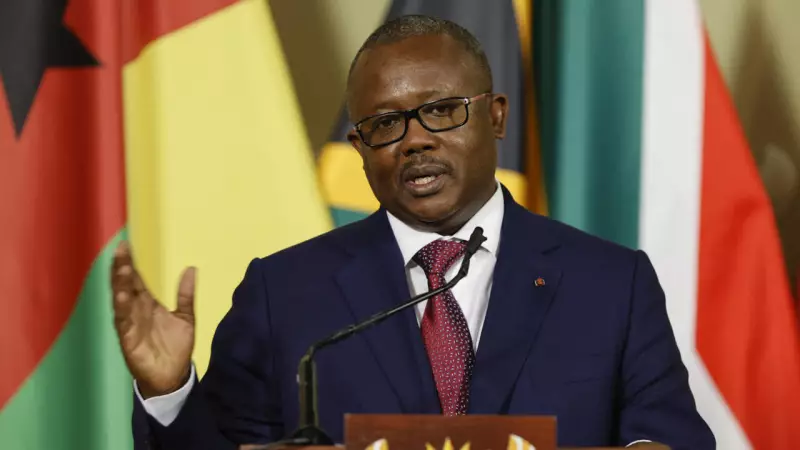
In a dramatic development that has sent shockwaves through West Africa, Guinea-Bissau's President Umaro Sissoco Embaló has reportedly been detained by armed men in what appears to be a military-led coup attempt.
Details of the Detention
The incident unfolded on Wednesday at approximately 1 pm local time, according to reports. President Embaló was reportedly arrested while at his office inside the presidential palace in the nation's capital, Bissau. The timing is highly significant, occurring just three days after the country held presidential elections, which were already mired in controversy due to the disqualification of the main opposition from participating.
In a statement provided to the publication Jeune Afrique, President Embaló himself described the event as a "coup d'état". He explicitly pointed the finger at the country's army chief of staff as the orchestrator of the move against his government. Notably, the president stated that no physical force was used against him during the detention.
Widespread Arrests of Top Officials
The reported crackdown was not limited to the president. The arrests extended to several of the nation's top security and government figures, indicating a coordinated effort to seize control.
General Biaguê Na Ntan, the armed forces' chief of staff, was also reportedly taken into custody. Furthermore, the deputy chief of staff, General Mamadou Touré, and the Interior Minister, Botché Candé, were also named among those detained. This sweeping action against the highest echelons of power suggests a severe and calculated political crisis.
Implications and Regional Instability
This event plunges Guinea-Bissau into a state of deep uncertainty and raises serious concerns about stability in a region that has recently experienced several military takeovers. The reported coup attempt directly challenges the democratic process, coming on the heels of a disputed electoral period. The situation remains fluid, with the international community closely monitoring for further developments and the potential impact on the citizens of Guinea-Bissau and the wider Economic Community of West African States (ECOWAS) region.