Military Deployment Sparks Coup Fears in Guinea-Bissau
Heavy gunshots erupted near the presidential palace in Guinea-Bissau on Wednesday, leading to a major military deployment and raising serious concerns about a potential coup in the politically volatile West African nation. The incident occurred as the country anxiously awaits the official results of a presidential election where both leading candidates have already declared victory.
Soldiers Take Control Amid Election Tensions
Soldiers from the presidential guard and an elite gendarmerie unit took control of the main road leading to the presidential palace following intense gunfire that sent hundreds of civilians fleeing for safety. AFP journalists at the scene reported that the area remained deserted as calm gradually returned, with shooting ceasing for the time being.
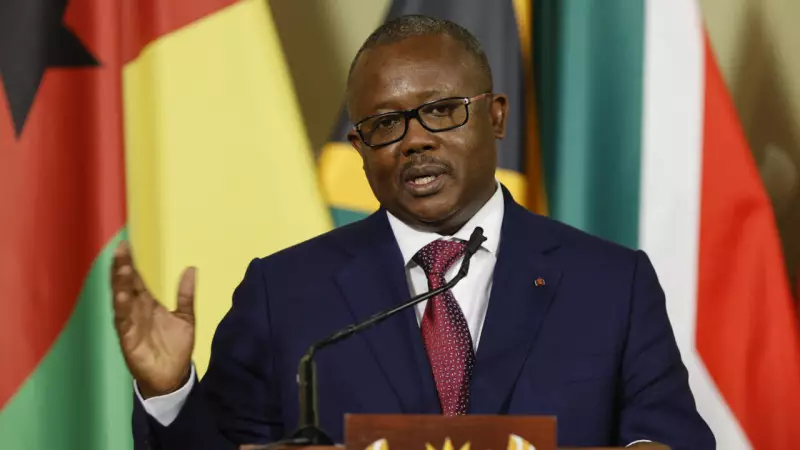
The whereabouts of incumbent President Umaro Sissoco Embalo, who was widely expected to win re-election, remained unknown by midday Wednesday. Both Embalo and his main opponent, opposition candidate Fernando Dias, had prematurely declared victory in the election, which had proceeded peacefully until Wednesday's dramatic developments.
A Nation Familiar with Political Turmoil
A local passerby captured the grim reality of the situation, telling AFP that "we're used to it in Bissau," reflecting the country's long history of political instability. Guinea-Bissau has experienced four successful coups since gaining independence, along with numerous attempted power grabs, making such military interventions a recurring feature of its political landscape.
The country, ranked among the world's poorest nations, also serves as a major hub for drug trafficking between Latin America and Europe, a trade that has been facilitated by its persistent political chaos.
Election Controversy and Constitutional Crisis
The current political crisis has been brewing for months. Both candidates made bold victory claims with little evidence to support them. Embalo's campaign spokesperson Oscar Barbosa declared there would be no second round, insisting the president would secure a second mandate directly.
Meanwhile, opposition candidate Fernando Dias posted a video on social media claiming: "This election has been won, it has been won in the first round." This scenario mirrors the 2019 presidential election, which triggered a four-month post-election crisis when both main candidates declared victory.
The current election has been particularly controversial after the Supreme Court excluded the main opposition party PAIGC and its candidate Domingos Simoes Pereira from the final list, citing late application filings. President Embalo further escalated tensions in 2023 by dissolving the opposition-dominated legislature and has since ruled by decree.
The opposition maintains that Embalo's term actually expired on February 27, five years after his inauguration, and describes PAIGC's exclusion from elections as political manipulation.
Official provisional vote results are expected on Thursday, with more than 6,780 security forces, including personnel from the ECOWAS Stabilisation Force, deployed to maintain order during this critical period.