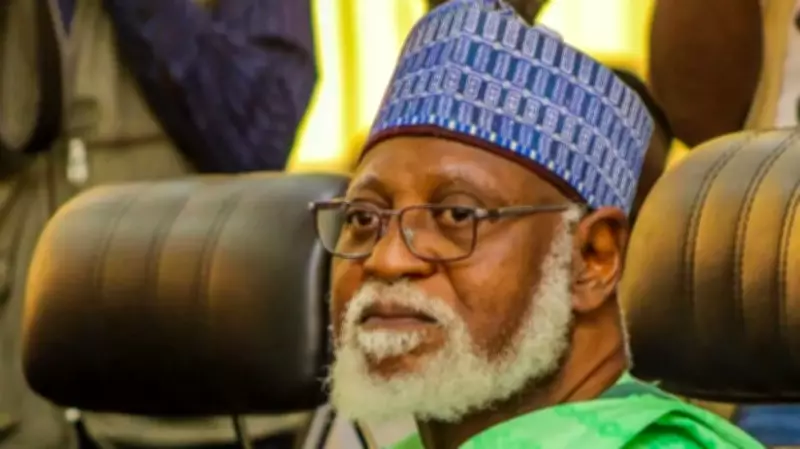
General Abdusalami A. Abubakar's autobiography, 'Call of Duty,' set for public presentation on June 13, 2026, to mark his 84th birthday, offers revealing insights into Nigeria's transition to democracy. The former military head of state, who handed over power to President Olusegun Obasanjo on May 29, 1999, has since served as a global peace ambassador for ECOWAS and the United Nations.
Transition to Democracy
Before General Sani Abacha's death, he had announced a transition to democracy by October 1, 1998. Legislative elections were held, but no presidential election was scheduled. Abacha was adopted as joint presidential candidate by all five political parties, though he had not declared his intentions. Upon Abacha's death on June 8, 1998, Abubakar assumed power. He found the transition programme lacked credibility and decided to reset the system, making the October 1 handover date unfeasible.
After consultations with civilians and the military, Abubakar proposed a six-month transition plan, targeting March 1999. However, Chief Justice Muhammadu Lawal Uwais requested at least 60 days after elections to resolve judicial matters, leading to the May 1999 handover. Abubakar emphasized that this timeline was the fastest possible to organize elections and allow political parties to prepare.
Pressure to Extend Rule
Abubakar faced intense pressure from colleagues, West African heads of state, and some international community members to delay the transition. Surprisingly, some NADECO members also urged him to stay longer. Initially wary due to past broken promises, they later realized Abubakar's sincerity and felt they had missed opportunities to politick. They requested more time, but Abubakar demanded a written request and a press conference to announce their stance. They never complied, and the transition proceeded as planned.
Some foreign leaders believed Abubakar's administration brought stability and peace, with sanctions relaxed and protests easing. They wanted him to remain in power. Within the military, some colleagues were hostile to ceding power, but Abubakar was determined to honor his promise. He noted that Nigeria was on the edge, with pressure from NADECO, G-34, and other groups for the military to exit.
Military's Loss from Politics
Abubakar argued that the military was the biggest loser in political involvement. Best brains were deployed to administer the country while the profession was neglected. Discipline eroded, with junior officers appointed as military administrators lording over senior officers. This contradicted military tradition and caused polarization along ethnic and religious lines, which was dangerous for the country. The military needed to re-professionalize and return to its core duties.
Victor Malu's Party and Vatsa Coup Plot
In December 1985, Major-General Mamman Vatsa, a classmate of Abubakar and Ibrahim Babangida, was arrested for plotting a coup. Abubakar, then Commander of the 9th Brigade, was interrogated due to his presence at a party hosted by Brigadier Victor Malu in Port Harcourt. The party included naval officers, and coup plotters were also in town finalizing their plans. Abubakar attended briefly and left early. He was summoned before a Special Investigation Panel but was not worried as he knew nothing of the plot.
The autobiography 'Call of Duty' will be presented at the Banquet Hall, State House Conference Centre, Asokoro, Abuja. General Yakubu Gowon will chair the event, and former South African President Thabo Mbeki will be the keynote speaker.