The political landscape in Nigeria is set for significant changes as the Peoples Democratic Party (PDP) has declared its willingness to form a broad coalition with other opposition parties ahead of the 2027 general elections. This development comes as the African Democratic Congress (ADC) has outlined specific conditions for any potential alliance, setting the stage for intense political negotiations in the coming years.
New PDP Leadership Signals Openness to Collaboration
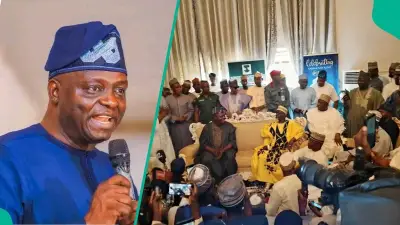
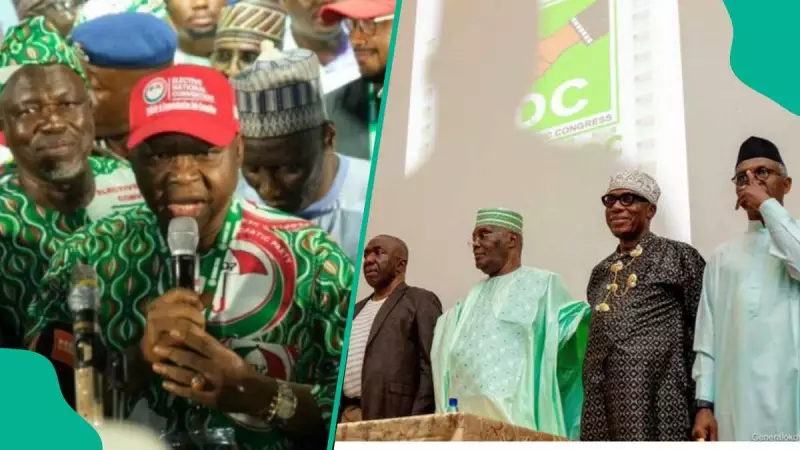
Following his election as the new national chairman of the PDP, Kabiru Tanimu Turaki announced that the party would consider all options to strengthen democracy in Nigeria. The former minister of special duties and intergovernmental affairs made this declaration during an exclusive interview with Daily Trust after securing victory at the PDP national elective convention held in Ibadan, Oyo state.
Turaki emerged victorious in the early hours of Sunday, polling more than 1,516 delegate votes to become the party's new chairman. During his acceptance speech and subsequent interviews, he emphasized that rescuing Nigeria from its current challenges would be the primary focus of his leadership.
"I do not know what will happen. But I assure you we will be open to all options, provided they strengthen democracy in Nigeria and are acceptable to our people," Turaki stated. He further explained that whatever political strategy the party adopts must align with the demands of its members and the aspirations of Nigerians.
ADC Responds with Conditions for Alliance
Reacting to Turaki's coalition position, the African Democratic Congress has expressed willingness to work with the PDP but only under strict conditions. The ADC's National Publicity Secretary, Bolaji Abdullahi, clarified that his party would collaborate with the PDP only if the latter agrees that "it will not be business as usual."
Abdullahi emphasized that the ADC is not merely interested in winning power for the sake of it but is committed to resetting politics in Nigeria. He insisted that all opposition parties must unite in 2027 if they hope to defeat the All Progressives Congress (APC), but warned that any partnership must prioritize the interests of Nigerian citizens.
"We absolutely believe that all opposition parties need to come together to defeat and remove this government that has threatened everything that we know to be good about our country," Abdullahi stated. "So, we are willing to work with them if they are willing to subscribe to our principles, which is that it is not going to be business as usual and that politics must be to the service of the people."
APC Dismisses Coalition Talks Amid Internal PDP Changes
Meanwhile, the ruling All Progressives Congress has expressed indifference toward the proposed opposition coalition. APC's Publicity Director, Bala Ibrahim, dismissed the talks, insisting that no reasonable Nigerian would want to return to what he described as the "years of PDP misrule."
"We are not worried. Nigerians know what they suffered under the PDP. No responsible person will vote for them again," Ibrahim declared. He also mocked the PDP's internal disagreements, expressing confidence about the APC's prospects in the 2027 elections.
The PDP convention also witnessed significant internal changes, including the expulsion of several prominent party members. Nyesom Wike, the Minister of the Federal Capital Territory (FCT), and former Ekiti state governor Ayodele Fayose were among those expelled from the party. The motion for their expulsion was moved by Olabode George, the former national vice chairman of the PDP, and supported by Samaila Burga, the PDP chairman in Bauchi state.
As Nigeria's political parties position themselves for the 2027 general elections, these developments signal potentially significant realignments in the country's political landscape. The coming months will reveal whether opposition parties can overcome their differences to present a united front against the ruling party.