The recent violent clashes between rival factions at the Peoples Democratic Party's national headquarters in Abuja may be exactly what the opposition party needs to rebuild itself for the 2027 general elections, according to a political analyst.
Violent Scenes at PDP Secretariat
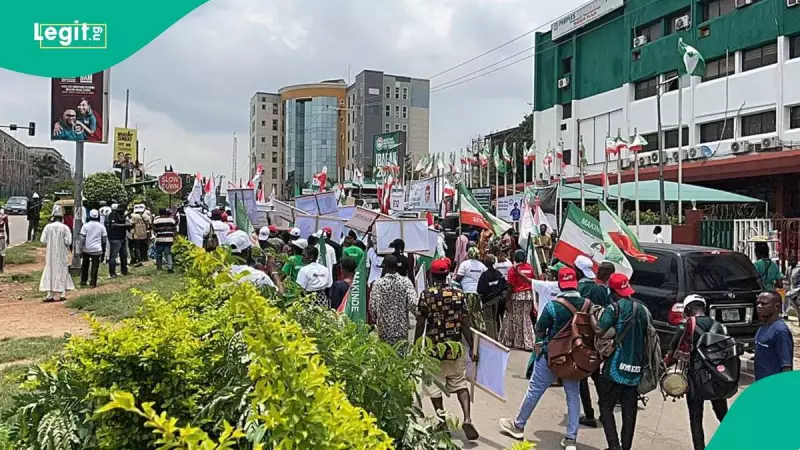
Political tension turned physical on Tuesday, November 18, when supporters of competing PDP factions clashed at the party's Wadata Plaza secretariat in Abuja. The confrontation escalated to the point where police officers deployed teargas to disperse the crowds as the situation intensified dramatically.
This physical confrontation represents the latest chapter in the ongoing leadership crisis that has plagued Nigeria's main opposition party since its loss of power at the national level.
Expulsions and Internal Divisions
The party recently announced the expulsion of several high-profile members, including Nyesom Wike, the Minister of the Federal Capital Territory and former Rivers State governor. Also shown the exit door were former Ekiti State governor Ayodele Fayose and former national secretary Samuel Anyanwu.
The motion for expulsion was moved by Olabode George, the former national vice chairman of the PDP, and supported by Samaila Burga, the party chairman in Bauchi State. Other expelled members include the party's national legal adviser Adeyemi Ajibade (SAN) and several other prominent figures.
However, the expulsions have not been universally accepted within the party. Governors Ahmadu Fintiri of Adamawa and Caleb Mutfwang of Plateau State have publicly rejected the removal of Wike and other party leaders.
Analyst's Perspective: Necessary Crisis
In an exclusive interview with Legit.ng, political analyst Omotayo Yusuf argued that the internal rancor might be precisely what the PDP requires to heal properly.
"The recent face-off among the people, I would say it is necessary to help the party to heal," Yusuf stated. "The party has been going through internal strife but for some reasons, they've not been handling it as though it is a big problem."
Yusuf emphasized that the PDP, which once dominated Nigerian politics for 16 years and was considered Africa's largest party, has become "worse than a shadow of its former self." He pointed to the party's recent electoral performance in Anambra State as evidence of its struggles.
The analyst specifically highlighted the complicated situation with Nyesom Wike, who remains a PDP member according to some factions while having accepted an appointment from the ruling APC after apparently working for their success in Rivers State, where he previously served as governor under the PDP banner.
"The party has been behaving as if it doesn't have enormous problems to solve," Yusuf observed. "For PDP to return to its glory days, I think this rancour has to happen; they need to build from the bottom up. They need to collapse in order to rebuild, so this is a necessary phase in that rebuild."
Additional Party Setbacks
The PDP's challenges extend beyond the Abuja clashes and leadership expulsions. In a separate development, Abubakar Bawa, the chairman of the PDP in Taraba State, resigned from his position and withdrew his membership from the party entirely.
Although Bawa did not provide specific reasons for his departure, party insiders suggest his exit may be connected to rumors that Governor Agbu Kefas might defect to the APC, dealing another blow to the opposition party's stability and nationwide presence.
As the 2027 general elections approach, the PDP faces the monumental task of rebuilding its internal structures, reconciling warring factions, and presenting a united front capable of challenging the ruling party. According to analysts like Yusuf, this painful period of internal conflict may be the necessary catalyst for that rebuilding process.