Two prominent former presidential candidates have launched scathing criticisms against the Bola Ahmed Tinubu administration, accusing the Federal Government of demonstrating insufficient political will to combat the escalating security crisis gripping Nigeria.
Political Leaders Sound Alarm on Security Failures
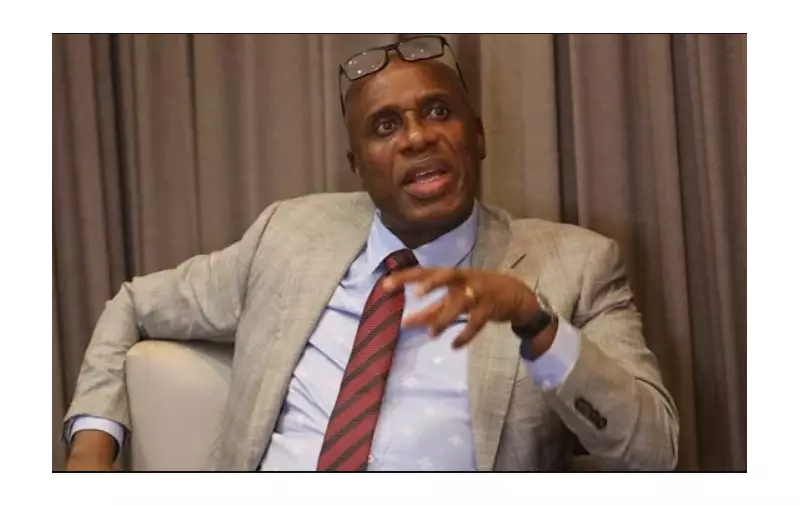
Rt. Hon. Chibuike Rotimi Amaechi, a former Minister of Transportation and presidential aspirant, has directly charged the current government with failing to provide adequate protection for citizens. In a strongly worded statement, Amaechi emphasized that the recent surge in violent attacks has exposed critical weaknesses in Nigeria's security infrastructure and severely damaged public trust.
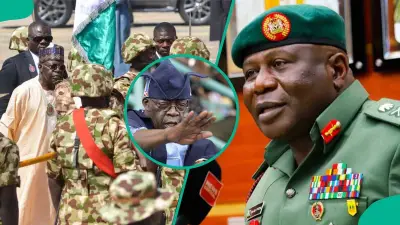
The former Rivers State governor highlighted a disturbing series of security incidents that occurred within a single week, painting a grim picture of the nation's security situation. These included the brutal killing of innocent citizens in Plateau State, the reported abduction of secondary schoolgirls in Kebbi State, and a deadly ambush on military personnel in Borno that resulted in the abduction and killing of Brigadier General M. Uba.
Additional incidents cited by Amaechi included an attack on a church in Kwara State and the kidnapping of Catholic priest Rev. Fr. Bobbo Paschal in Kaduna State.
Specific Criticisms and Proposed Solutions
"These incidents are too many to be ignored," Amaechi declared. "The government needs to step up its game, sharpen its response to terrorist activities, strengthen military intelligence and tactical operations, and live up to the expectations of its people."
Pointing to his own track record, Amaechi referenced the security turnaround achieved during his tenure as Governor of Rivers State as evidence that progress is achievable through decisive action. "We did it in Rivers State; it can be done in the country," he asserted, adding a significant offer: "We are prepared to help if you request help."
Obi's Scathing Assessment of National Security
Meanwhile, Peter Obi, the former Labour Party presidential candidate, delivered an equally damning assessment, describing Nigeria as a "disgraced nation" and blaming the government for both worsening insecurity and actively undermining opposition parties.
Obi's comments came in response to multiple violent attacks across the country, including recent terrorist incidents in Kwara and Kebbi states, and the killing of a one-star general by Islamic State West Africa Province (ISWAP) terrorists in Borno State.
In a post on his X social media platform, Obi questioned why the administration appears more focused on weakening opposition parties than addressing the country's pressing security challenges.
"A few weeks ago, when President Trump described our country as 'now disgraced,' many were outraged," Obi wrote. "Yet, how can we dispute it when, within a single week, 25 people were kidnapped, and one of our generals, along with other officers, was killed?"
He continued with growing concern: "Today, we witness another troubling terror attack in Kwara State. Rather than uniting in this critical moment, we are consumed by internal wrangling, party squabbles, and distractions."
Contrast With Past Democratic Practices
Obi went further to accuse the government of deliberately creating crises within major political parties including the PDP, Labour Party, and SDP to weaken them. He contrasted this approach with that of former President Umaru Musa Yar'Adua, who had emphasized that the stability of all political parties was essential for a healthy democracy.
"In democratic nations, opposition is respected, elections reflect the will of the people, and governance involves carrying everyone along for peace and prosperity," Obi stated, concluding with a note of cautious optimism: "A New Nigeria is possible."
The coordinated criticisms from these prominent political figures, delivered on November 20, 2025, represent a significant challenge to the Tinubu administration's handling of national security and democratic governance.