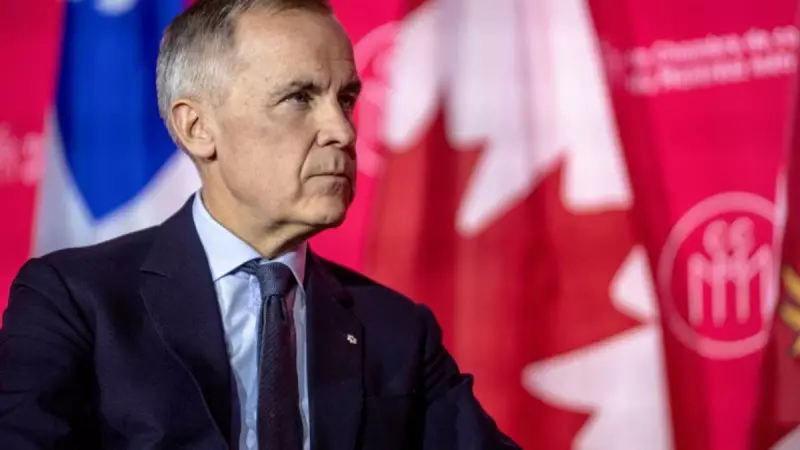
Canadian Government Faces Moment of Truth in High-Stakes Budget Vote
The political future of Canadian Prime Minister Mark Carney's Liberal government hung in the balance on Monday as parliament prepared for a crucial budget vote that could determine whether the country heads to snap elections or continues its economic recovery plans.
Carney, who led the Liberals to victory in April 2025 elections following Justin Trudeau's resignation, has staked his government's survival on this spending package. The former central bank chief insists the budget is essential to revitalize Canada's economy, which has been battered by protectionist tariffs from the United States.
Political Mathematics: The Numbers Game
Despite the high stakes, Liberal lawmakers expressed optimism hours before the decisive parliamentary vote. The government needs support from at least two opposition lawmakers or abstentions to pass the budget, having fallen just short of a majority in the April elections.
The Liberals received a significant boost when Green Party lawmaker Elizabeth May confirmed she would vote with the government. This commitment came after Carney promised that Canada would meet its commitments under the Paris Climate Accords, addressing one of the Green Party's key concerns.
Justice Minister Sean Fraser voiced confidence, stating he was "optimistic" about the outcome. Sean Casey, representing a constituency in Prince Edward Island province, went further, declaring, "I don't see any universe in which the government falls. I'm pretty confident we're still going to be here later this week."
Budget Battle: Bold Vision Versus Fiscal Caution
Carney has positioned the budget as a "generational" opportunity to transform Canada's economic future. The plan focuses on bolstering self-reliance and reducing dependence on trade with the United States, responding directly to the challenges posed by the Trump administration's trade policies.
"Now is not the time to be cautious, because fortune favors the bold," Carney declared last week, defending his ambitious economic vision.
However, Opposition leader Pierre Poilievre has strongly criticized Carney's proposals, particularly the expansion of the deficit. Poilievre has vowed that his entire Conservative caucus will vote against what he terms a "credit card budget," arguing it places too much financial burden on future generations.
The budget has faced scrutiny from multiple quarters, with the deficit nearly doubling from last year to reach Can$78.3 billion (US$55.5 billion). The left-wing New Democratic Party has raised concerns about insufficient support for workers, while the Bloc Quebecois dismissed the package as "a Liberal deficit with Conservative ideas."
Economic Imperative: Responding to Trump's Tariffs
Carney has maintained that aggressive deficit spending is necessary to counter the economic damage caused by the Trump administration's trade policies. While the vast majority of bilateral trade remains tariff-free under existing North American trade agreements, Trump's levies targeting key sectors like autos, aluminum, and steel have significantly impacted Canada.
The Prime Minister revealed that estimates indicate US tariffs and associated uncertainty will cost Canadians around 1.8 percent of GDP, underscoring the urgency of government intervention.
Carney, leveraging his background as a former central banker, has emphasized that investments in Canada's military and infrastructure will enhance economic sovereignty. He has repeatedly cautioned that relations with the United States are unlikely to return to pre-Trump normalcy, making domestic economic resilience paramount.
Political Calculus: The Election Question
Beyond the immediate budget concerns, the vote represents a test of Canada's political appetite for another election. Recent polls suggest most Canadians prefer stability over returning to the polls so soon after the April elections.
A November survey from Leger indicated that only one in five Canadians wanted an election immediately or "as soon as possible." The same poll showed Carney maintaining a 52 percent job approval rating, with the Prime Minister comfortably leading Poilievre in head-to-head matchups.
The New Democratic Party's potential reluctance to force an election adds another layer to the political dynamics. The party performed poorly in April's election, currently lacks a permanent leader, and faces financial challenges, making another electoral contest particularly unappealing.
As parliamentarians prepared to cast their votes, the atmosphere in Ottawa remained tense yet hopeful among government supporters. The outcome would not only determine the immediate fate of Carney's government but also shape Canada's economic direction for years to come.