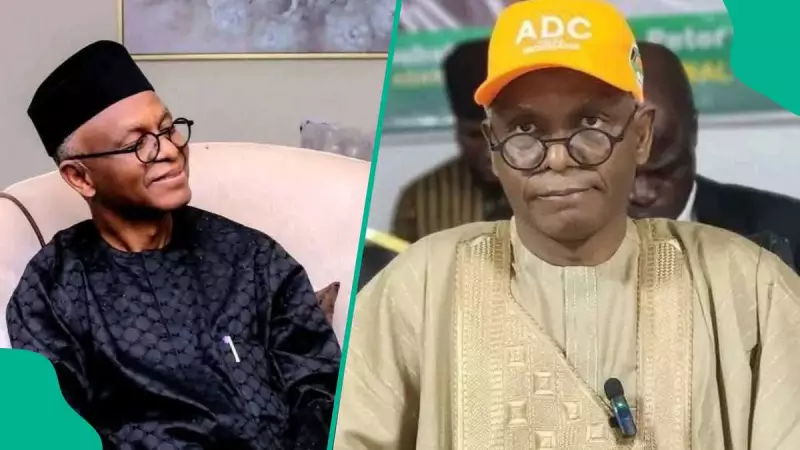
Former Kaduna State Governor Nasir El-Rufai has revealed a deeply personal connection to Plateau State that dates back four decades, sharing that his weekly visits to Jos were motivated by love rather than politics.
The Love Story Behind El-Rufai's Jos Connection
During the unveiling of the African Democratic Congress National Contact and Mobilisation Office in Jos on Wednesday, November 19, El-Rufai disclosed that forty years ago he made weekly trips to Plateau State to visit his then-fiancée who was serving in the National Youth Service Corps program in Jos.
"Forty years ago, I was visiting Plateau every week because my fiancée did her National Youth Service here in Jos," the former governor stated. "Even after marriage, we visited regularly for weekends."
What began as a personal commitment to his relationship eventually evolved into a cherished family tradition, with the El-Rufais maintaining strong ties to the Plateau State capital throughout their marriage.
Lamenting Plateau's Lost Peace and Unity
El-Rufai expressed profound disappointment at the transformation Jos has undergone since those earlier years, noting the significant decline in the peace and unity that once characterized the region.
"But since then, things have gone in the wrong direction in Jos, Plateau," he lamented during his address. The former governor emphasized his hope that better leadership at both state and national levels could help restore the area's former glory.
He called for leadership that would "unite people across ethnic and religious lines so Plateau can return to the Home of Peace and tourism we knew."
Political Shift: Nigerians Seeking Alternatives
Beyond personal reflections, El-Rufai used the platform to comment on Nigeria's evolving political landscape, asserting that citizens are increasingly looking beyond the two dominant political parties ahead of the 2027 elections.
The former governor, now a chieftain of the African Democratic Congress, argued that Nigerians have lost confidence in both APC and PDP and are actively seeking credible alternatives.
"I know that everyone is tired of this APC and PDP government across the country," El-Rufai stated. "Nigerians have decided that in 2027, they will vote for the ADC."
He downplayed the significance of recent political defections, suggesting that voter decisions would be based primarily on candidate performance rather than party switching among governors.
El-Rufai's revelations provide both a nostalgic look at Plateau State's peaceful past and a pointed commentary on Nigeria's current political trajectory, blending personal history with political analysis during the ADC office unveiling event.