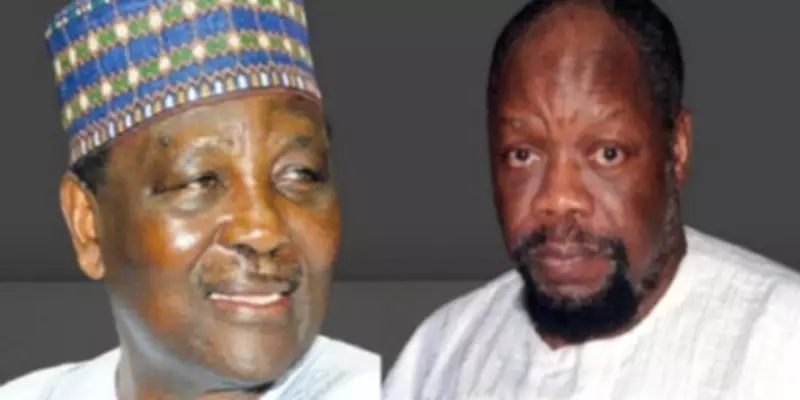
Former Head of State Yakubu Gowon has reopened some of the most controversial moments of the Nigerian Civil War, revealing how late nationalist leader Obafemi Awolowo intervened to save late military ruler Murtala Mohammed from losing his command during the war. The revelations are contained in Gowon’s autobiography, 'My Life of Duty & Allegiance', where he reflected on key military decisions, rivalries among commanders, and the political tensions that shaped the 1967–1970 civil war.
Failed River Niger Crossing
One of the major incidents discussed in the memoir involved the failed federal military operation to cross the River Niger into Onitsha, a mission Gowon described as extremely dangerous from the beginning. “As the C-in-C, I considered his plan quite suicidal,” Gowon wrote. According to him, military headquarters warned that Biafran forces could destroy the bridge and trap federal troops during the crossing, but Murtala allegedly ignored those concerns because of rivalry with another commander, Colonel Shuwa. “His pride did not allow him to wish to pass through 1 Division area owing to his rivalry with Colonel Shuwa,” Gowon stated.
Gowon said he advised Murtala to approach Onitsha through safer routes already controlled by federal forces, but the commander refused and pushed ahead with the river crossing operation. “Murtala did not accept my advice and did exactly as he had proposed, to cross the River Niger by boats and barges, but with catastrophic consequences of the loss of men and equipment during the failed river crossing,” he wrote. Despite the failed operation, Gowon acknowledged Murtala’s bravery during the conflict. “Despite the disaster, his audacious exploit showed his courage as the Field Commander,” he added.
Insulting Signal and Awolowo’s Intervention
Gowon also revealed that tensions between both men nearly led to Murtala being removed from command after the military officer allegedly sent him an insulting message from the battlefield. “In a fit of anger, he went beyond the bounds of reason or military decorum to send me, his Commander-in-Chief, an impertinent signal that I should get my fat butt off my chair to sort out things in the battlefield instead of giving orders from the comfort of my office in Dodan Barracks,” Gowon wrote. The former leader admitted he was furious and strongly considered dismissing Murtala immediately. “His unconscionably rude signal to me from the war front made me angry enough to consider removing him from command with immediate effect,” he stated.
However, Gowon said Awolowo stepped in to calm the situation before disciplinary action was taken. “Chief Awolowo noticed the depth of my anger with Murtala after I received the signal. He promptly intervened on his behalf and pleaded that I should not respond the way I had intended,” he recalled. Gowon explained that due to the shortage of experienced military officers during the war, he eventually overlooked Murtala’s behaviour and allowed him to continue commanding troops.
Spared Ojukwu and the ‘No Victor, No Vanquished’ Policy
The memoir also revisited the final collapse of Biafra and the escape of late Biafran leader Chukwuemeka Odumegwu Ojukwu into exile. According to Gowon, despite the bitterness of the war, he never wanted Ojukwu captured or killed outside the battlefield. “I always thank God we did not capture him before or during the war. But to kill him? Never, except in the battlefield where whoever got the first lucky shot survives!” he wrote. Gowon rejected claims that the federal government wanted personal revenge against Ojukwu, insisting that the objective of the war was to preserve Nigeria’s unity rather than destroy any individual or ethnic group.
“There were people who wanted him crushed completely. But I believed there had to be a future after the war,” he noted. He said this belief later influenced the federal government’s famous “No Victor, No Vanquished” declaration after the war ended in January 1970. “We needed reconciliation, reconstruction and rehabilitation. That was the only way Nigeria could move forward,” Gowon wrote.