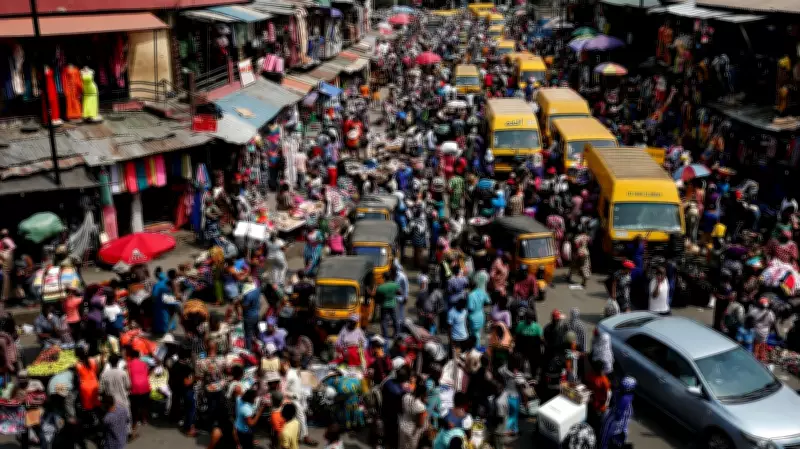
Africa's Path to Sovereignty: Empowering Citizens and Communities
Africa's political independence in the twentieth century marked a monumental achievement, yet today, fragile institutions and global crises reveal a deeper truth. Nations achieve true strength not merely through self-governance but when their citizens and communities possess the capacity to sustain and protect their own development. The question across the continent is evolving from how nations gained independence to how societies build the internal resilience necessary to safeguard their futures.
The Foundation in African Traditions
At the core of this strength lies a principle deeply rooted in Africa's own traditions but often overlooked in modern development practice: citizens' self-reliance and community resilience. For decades, development has been organized through state-led initiatives and externally supported programs, delivering progress in health, education, and infrastructure. However, this approach has sometimes positioned communities as recipients rather than drivers of development.
Africa's social history tells a different story. Long before modern institutions, societies built systems of cooperation, solidarity, and collective responsibility that enabled survival and thriving amid uncertainty. Across cultures, these traditions recognized that resilient societies emerge when citizens have the capacity and responsibility to contribute to the common good.
Among the Yoruba, the philosophy of Àjose emphasizes collective responsibility and shared action, closely related to Àjoje, which reflects shared contribution and benefit. In Southern Africa, the philosophy of Ubuntu reminds us that "I am because we are." These traditions capture a foundational African understanding: community strength is the cornerstone of societal stability.
Pillars of Sustainable Development
Today, these long-standing values are gaining renewed relevance in contemporary conversations about development and governance. Scholars and practitioners increasingly recognize that sustainable development requires more than institutional reform at the national level. It necessitates systems that connect citizens, communities, and institutions in mutually reinforcing relationships.
Citizens' self-reliance represents the first pillar of this shift. Properly understood, self-reliance does not imply isolation from the global community or rejection of international cooperation. Rather, it signifies strengthening local capabilities—knowledge, skills, financial inclusion, and civic participation—that enable individuals and communities to shape their own well-being. When citizens have these capabilities, development becomes participatory rather than transactional.
The second pillar is community resilience. Resilient communities can anticipate shocks, absorb disruptions, adapt to change, and recover while continuing to function and grow. They are characterized by strong social networks, inclusive local institutions, and access to resources supporting livelihoods and well-being. Evidence worldwide shows that societies with robust community systems respond more effectively to crises, such as disease outbreaks, climate disasters, or economic disruptions, often recovering more quickly and protecting vulnerable populations.
Integrating Resilience into National Agendas
For Africa, strengthening community resilience must become a central element of national development thinking, especially as the continent advances major agendas like the African Union's Agenda 2063, aimed at economic transformation and social inclusion. Achieving these ambitions requires more than macroeconomic reform; it demands strong foundations at the community level where citizens live their lives.
Emerging policy frameworks are beginning to reflect this understanding. Development thinkers are exploring integrated approaches that place communities at the center of resilience planning, linking citizen capabilities, institutional accountability, and inclusive financing systems. Ideas such as resilience readiness frameworks help societies strengthen preparedness for social, economic, and environmental shocks while promoting long-term stability.
Similarly, new thinking around community-centered blended financing models explores how philanthropic capital, institutional investment, and community contributions can combine to support locally driven development priorities. By aligning financial innovation with traditions of mutual support, these models seek to modernize Africa's historic culture of collective contribution.
Harnessing Africa's Potential
Africa has immense potential in this regard. The continent's youthful population, expanding digital connectivity, and vibrant networks of community organizations provide powerful foundations for building resilient systems. Harnessing these strengths requires deliberate investment in community capabilities—strengthening local governance, expanding digital and financial inclusion, supporting women and youth leadership, and developing financing systems that allow communities to participate directly in building their own resilience.
Such investments can transform development from a model dependent on external resources to one anchored in domestic agency and collective responsibility. Sovereignty in the modern era cannot be defined solely by political authority or territorial integrity. It must also be measured by a nation's ability to secure citizen well-being, manage shocks without systemic collapse, and pursue development pathways reflecting its own priorities.
Strategic Safeguards for the Future
From this perspective, citizens' self-reliance and community resilience are not merely social ideals but strategic safeguards. They strengthen democratic accountability, deepen social cohesion, and expand the domestic foundations of economic growth. They also help reduce vulnerability to external volatility by building stronger internal systems.
As Africa pursues the aspirations of Agenda 2063 and reform initiatives seek to renew governance, economic inclusion, and social protection systems, the importance of citizens and communities cannot be overstated. Development rooted in the strength of people and communities will prove more durable than development depending solely on institutions or external resources. Indeed, Africa's sovereignty in the decades ahead may well depend on how effectively its nations nurture citizen capabilities and community resilience.
When citizens are self-reliant and communities are resilient, nations become stronger, development is more secure, and sovereignty evolves from a political achievement into a living foundation for the future. Dr. Lola Dare, a global health and development leader with over 30 years of experience, advocates for these principles as foundations of sustainable development and African sovereignty.