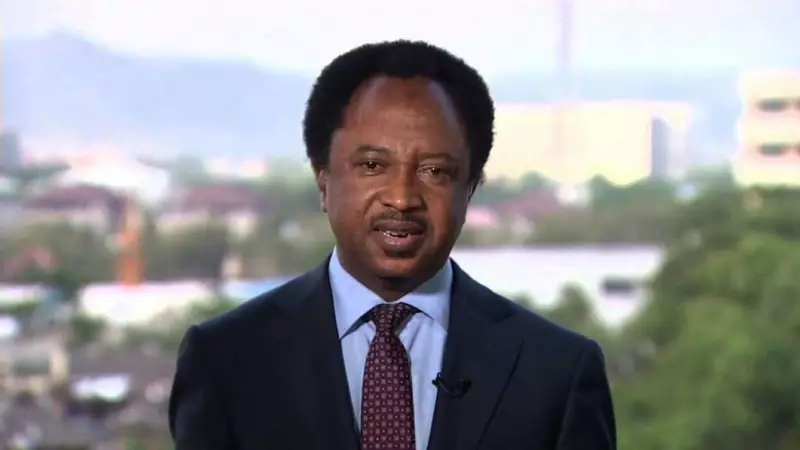
Former Senator Shehu Sani has launched a scathing attack against Northern political leaders, accusing them of exploiting the region's security crisis for political gain ahead of the 2027 general elections.
Northern Leaders Accused of Political Exploitation
During a courtesy visit by the Open Heart Foundation and Women Empowerment Centre in Kaduna on Tuesday, the former lawmaker who represented Kaduna Central delivered a sweeping critique of what he called the political hypocrisy of Arewa failed leadership. He emphasized that the deepening insecurity has plagued the northern region for more than a decade.
Sani identified almajiri, mass illiteracy, poverty and underdevelopment as the fundamental causes of insecurity in the North. He urged Northern leaders to confront these issues directly without further excuses.
"The terrorists in the North-East are northerners. The bandits in the North-West speak Hausa, Fulfulde and Kanuri, not Mandarin or French. This is our problem. Only we can solve it," Sani stated emphatically.
Fifteen Years of Bloodshed and Political Silence
The civil rights activist revealed that northern Nigeria has been a theatre of bloodshed for 15 years, with terrorists and bandits attacking schools, churches, mosques and villages without restraint since 2013.
He accused some political actors of celebrating attacks to weaken the government, particularly as the 2027 elections approach. "Some are celebrating attacks because it weakens the government," Sani alleged, adding that "some of the loudest voices today were silent when thousands were kidnapped under a government they called 'our own'."
Sani expressed moral outrage at the situation, stating: "Now they attempt to weaponise insecurity as 2027 approaches. Some even rejoice when soldiers fall. This is immoral."
Specific Criticisms and Security Warnings
The former senator specifically criticized former Kaduna State governor Nasir El-Rufai, who recently alleged that the current administration of Uba Sani had paid over a billion naira to bandits.
"It is on record that Nasir El-Rufai admitted that he once appeased bandits. Under his watch, Kaduna witnessed some of its worst divisions. He even withdrew his own son from a nearby school due to insecurity. The irony is loud," Sani countered.
While acknowledging that Kaduna is not yet completely safe, Sani credited Governor Uba Sani's administration with reducing religious tension and improving security in flashpoints like Birnin Gwari. He also noted that President Bola Tinubu's government has made measurable progress in addressing the crisis.
Sani dismissed expectations that external powers would solve Nigeria's security challenges, asserting: "The United States will not save us. Europe will not. Our salvation lies in strengthening our armed forces and uniting as citizens."
He warned that as elections draw nearer, attacks on schools, churches and mosques may increase because "some actors view bloodshed as a route to power."
Civil Society Groups Express Anguish
The leadership of the visiting civil society organizations expressed deep pain over the persistent kidnapping of students and general insecurity across the country.
Acting Chairperson of Open Heart Foundation, Hassan Abdullai Zubairu, and Chairperson of Women Skill Empowerment Centre, Rabiatu Nasiru, declared: "It is with heavy hearts that we visit you today. We are saddened as mothers that our children are kidnapped, and they are suffering in the bush in the hands of bandits."
The women groups called on government and well-meaning Nigerians to ensure the safe return of all kidnapped victims, particularly appealing to Senator Sani as a human rights activist to take their concerns to appropriate authorities.
Sani urged civic organizations to continue holding government accountable while cautioning them against becoming tools in political battles. "Continue to speak out, but never allow yourselves to be used to undermine our security agencies," he advised.
He concluded with a poignant question: "The future of the North depends on courage, honesty and unity. The question remains: When will the North sit down and confront its problems sincerely?"