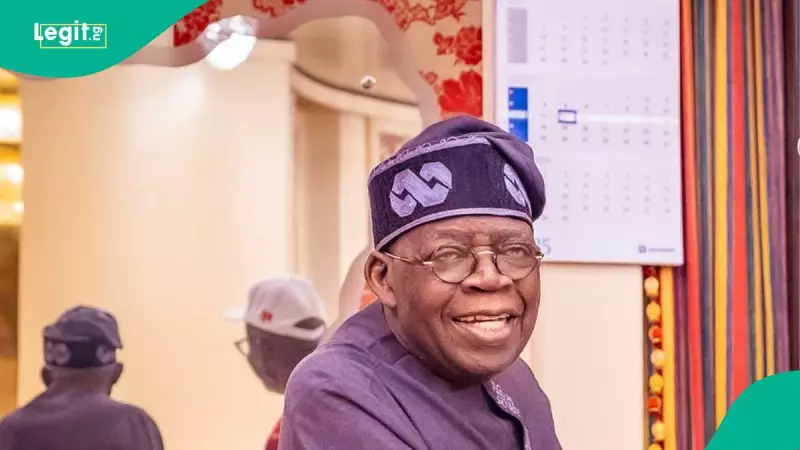
President Bola Ahmed Tinubu on Saturday, November 29, warmly received his predecessor, former President Goodluck Jonathan, at the Presidential Villa in Abuja. This significant meeting followed Jonathan's safe return to Nigeria after his diplomatic mission to Guinea-Bissau was thrown into uncertainty by a military takeover.
A Warm Reception After a Tense Situation
The Presidency confirmed the encounter, sharing a photograph that captured the two leaders in a firm, cordial handshake. According to a statement from the presidential spokesman, Bayo Onanuga, the meeting was convened specifically to welcome Jonathan back to the country. The former president had travelled to the West African nation as part of an election monitoring delegation.
Concerns for his safety had mounted on Saturday, November 29, when a faction of military officers in Guinea-Bissau declared they had seized "total control" of the country. The coup unfolded just a day before the nation's electoral commission was scheduled to announce the results of the presidential election held on Sunday, November 23.
Jonathan's First-Hand Account of the Events
Addressing journalists upon his return, the 68-year-old former president provided a startling analysis of the incident. Goodluck Jonathan stated that he would not categorise the event as a conventional military coup. He suggested that the situation appeared to be a staged attempt to derail the announcement of the election results.
Jonathan pointed to the behaviour of the ousted president, Umaro Embalo, as evidence. He noted that President Embalo was able to freely communicate with international media via telephone and immediately declared he had been "arrested." Jonathan argued that in a genuine coup, military leaders would not permit a detained leader such open access to the press, casting significant doubt on the plausibility of the entire claim.
The military officers, who appeared on state television, suspended the electoral process. They claimed their action was necessary to thwart a plot by unnamed politicians, allegedly supported by a "well-known drug baron," to destabilise the nation. They subsequently closed the country's borders and imposed a night-time curfew.
Regional and International Reactions
The United Nations strongly condemned the takeover, warning that the overthrow of elected authorities just days after a national election represents a grave violation of constitutional order and democratic principles. The event has sent ripples across the Economic Community of West African States (ECOWAS), where President Tinubu is a prominent figure.
Adding his voice to the discourse, former APC deputy national publicity secretary, Timi Frank, condemned the coup as a "dangerous assault on democracy." He called for the immediate release of the Guinea-Bissau election results, alleging that the military intervention was a coordinated political plot to prevent a transition of power after indications suggested President Embalo had lost the vote.
The safe return of former President Jonathan and his subsequent meeting with President Tinubu highlights the ongoing political instability in the region and Nigeria's continued role in mediating and responding to such crises.