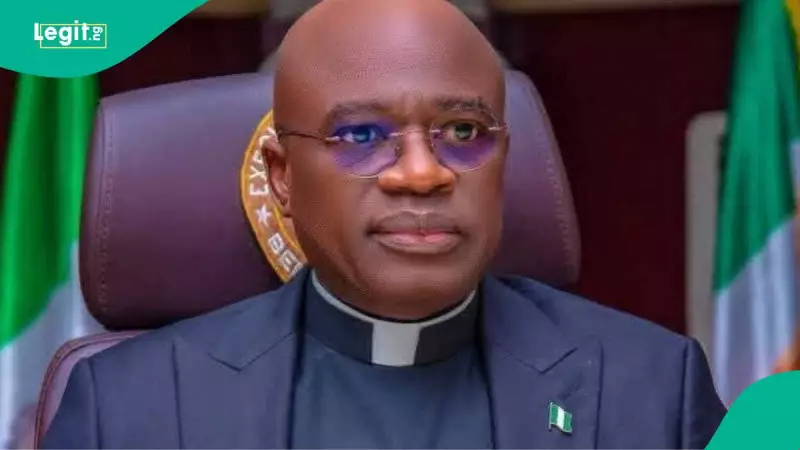
Governor Hyacinth Alia of Benue State has moved to clarify his recent controversial statements about the security situation in the state, emphasizing that his comments were not intended to minimize the severity of attacks or the suffering of affected communities.
Controversial Remarks Spark Public Outcry
The governor faced significant public backlash following his appearance at a National Human Rights Commission policy consultation in Abuja on Wednesday, November 19. During the event, Alia had stated that the violent attacks in Benue State do not meet the legal definition of genocide, explaining that the situation should not be characterized as religious or ethnic extermination.
"In my State of Benue, we don't have any religious, any ethnic, any racial, any national, or state genocide. We don't have that. Do we have a number of insecurities in the State? Yes, we do, but it is not genocide," the governor had declared at the forum.
Official Clarification Issued
In response to the growing criticism, the Benue State government issued an official statement on Friday, November 21 through the Commissioner for Information and Orientation, Dr. Peter Oboh Egbodo. The clarification sought to contextualize the governor's remarks and address concerns that he was downplaying the security crisis.
According to the statement, Governor Alia's primary concern was ensuring accurate characterization of the conflict. The administration warned that incorrectly labeling the violence as genocide could potentially hinder effective policy solutions and distort security assessments needed to address the root causes.
Multifaceted Nature of Benue Conflict
The government described the security challenges in Benue as a "multifaceted conflict" driven by various factors including criminal activities, land-use disputes, and sporadic targeted attacks. This complex situation requires coordinated intelligence-led interventions rather than religious or ethnic profiling, according to the administration's assessment.
Despite the clarification on terminology, the government reaffirmed its commitment to addressing the security crisis through multiple approaches. These include strengthening collaboration with security agencies, intensifying support for displaced persons, advocating for increased federal presence, and pursuing long-term strategies to curb violence.
"Governor Alia remains committed to protecting all affected communities, regardless of religion or ethnicity," Commissioner Egbodo emphasized in the statement.
Broader Context and International Scrutiny
The governor's original comments came amid increased international attention on Nigeria's security situation. The United States recently designated Nigeria as a "Country of Particular Concern" with specific worries about alleged persecution of Christians, adding significance to discussions about religious and ethnic violence in regions like Benue.
The policy consultation where Alia made his initial remarks was organized by the National Human Rights Commission focusing on the protection of rights for Internally Displaced Persons and Forcibly Displaced Persons, highlighting the humanitarian dimensions of the security challenges.
The state government has urged the public to interpret the governor's statements within the context of his broader efforts to restore peace and implement sustainable solutions to the persistent security threats facing Benue communities.