The recent confrontation between Federal Capital Territory Minister Nyesom Wike and naval officer Lieutenant AM Yerima has sparked nationwide debate about who exactly has the legal authority to command military officers on duty in Nigeria.
The incident occurred when Minister Wike attempted to access a construction site in Abuja guarded by military personnel. In a viral video, Wike was seen ordering soldiers to move aside, but Lieutenant Yerima stood firm, insisting they were acting on superior orders and would not permit unauthorized access.
Military Hierarchy and Chain of Command Explained
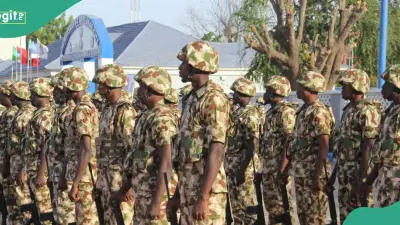
Retired Navy Captain Umar Bakori provided crucial insights into how military command structures operate in Nigeria. He explained that the military worldwide functions on strict hierarchy, discipline, and absolute obedience to orders from superiors.
According to military law and constitutional provisions, there are only four individuals whose directives every military officer must obey while on duty. This system ensures clear lines of authority and prevents confusion in command structures.
The Four Authorities with Command Power
The President of Nigeria serves as Commander-in-Chief of the Armed Forces under constitutional provisions. Even as a civilian, the President holds ultimate authority to issue orders to all military officers, and such orders must be obeyed at all times and in all locations.
Superior Officers within the military chain of command represent the second category. Navy Captain Bakori emphasized that military law requires officers to obey anyone superior in rank directly. When a superior gives an order, it must be carried out without hesitation, and even if problems are identified later, junior officers cannot cancel orders directly but must seek amendment from the original issuer.
The Minister of Defence can issue commands that military officers must obey, though this authority derives from constitutional provisions designating the Minister as the President's representative on the National Security Council.
The Acting President holds the same command authority as the President when serving in that capacity. The law explicitly empowers an acting president to issue directives to military officers that must be obeyed without question.
Why Wike's Order Was Legally Invalid
The confrontation between Minister Wike and Lieutenant Yerima highlighted the clear legal boundaries of military command. Navy Captain Bakori explained that the naval officer refused to obey Wike's order because the FCT Minister does not fall among the four authorities recognized by military law.
Military officers are legally bound to follow only the orders they were originally given by authorized superiors. Any soldier who issues an order outside their legal authority or refuses to comply with proper chain of command faces severe consequences, including charges of negligence, insubordination, or violation of military regulations.
Professor Farooq Kperogi, a US-based scholar, analyzed the confrontation, describing Lieutenant Yerima as embodying calm courage and representing the immovable object that finally stopped what many perceive as Wike's unstoppable force. The professor also addressed Nigeria's culture of reverse ageism, noting that older leaders often resort to age-based arguments when logic fails them.
The incident has raised important questions about civilian-military relations in Nigeria and the need for all public officials to understand and respect established chains of command within the armed forces.