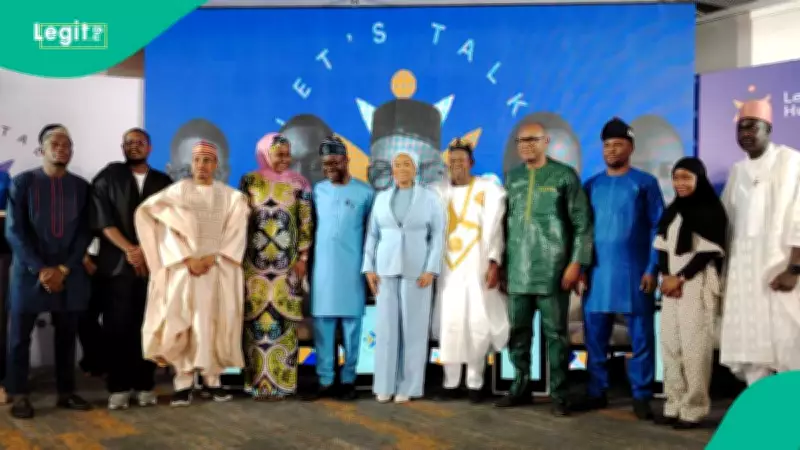
Let's Talk Humanity, a non-profit organization focused on disability inclusion, has announced plans to establish a national resource centre for Nigerians living with sensory impairments. The announcement was made on Friday, April 24, in Abuja, following what the organization described as a decade-long intervention in special needs education in Kano state.
Founder Unveils Vision for National Centre
Fatima Ganduje Abiola-Ajumobi, the founder of Let's Talk Humanity and daughter of former Kano governor Abdullahi Umar Ganduje, revealed that the proposed centre would provide access to global knowledge, assistive technology, and specialized resources for people who are blind or deaf across Nigeria. She spoke during the premiere of a documentary highlighting the organization's work since its launch in 2015.
Decade of Impact at Tudun Maliki Special School
Fatima stated that the group has spent the last ten years supporting students at Tudun Maliki Special School in Kano through the donation of technological devices aimed at improving learning outcomes for blind and deaf students. According to her, the intervention has reached more than 1,000 students annually at the school, which caters to pupils from primary to senior secondary levels.
"Over the last 10 years, we have continued to train students and teachers, and the impact has continued to grow," she said. She added that beyond education, the organization has also introduced entrepreneurship support to help beneficiaries become financially independent. "To be educated is to be productive, and to be productive means having financial stability," she explained.
Next Phase: National Resource Centre
Fatima said the next phase of the organization's work would be the creation of a national centre that could connect Nigerians with disabilities to international best practices in special needs education. "Our projection is to build a National Resource Centre for those with sensory impairment and tap into international knowledge and resources available in more advanced countries," she said.
Documentary Reflects Decade of Impact
Reflecting on the organization's journey, Fatima said seeing former students, teachers, and supporters at the documentary screening reminded her of its early beginnings. "Ten years ago, you trusted me with something very important — the future of your education and the possibility of change through technology," she said. She called on governments, development partners, and private organizations to support the initiative in expanding its reach across the country.
Minister Advocates for Accessibility by Design
Also speaking at the event, Bernard M. Doro, the Minister of Humanitarian Affairs and Disaster Management, said inclusion of people living with disabilities should be considered from the planning stage of technological development. He emphasized that accessibility should be built into products and systems from the outset rather than introduced as an afterthought. "Inclusion is not optional, it is an obligation," the minister said. "We must move towards a future where accessibility is built by design. Technology should empower people to navigate the world independently."
Ganduje Urges Northern Governors to Support Initiative
Speaking at the event, former Kano governor Abdullahi Umar Ganduje praised the project and urged state governments, particularly in northern Nigeria, to adopt similar initiatives for people living with disabilities. He said many physically challenged people in the region had been neglected and forced into street begging due to limited opportunities. "They can grow to become employers of labour and excel in different fields if given the right support," he said.