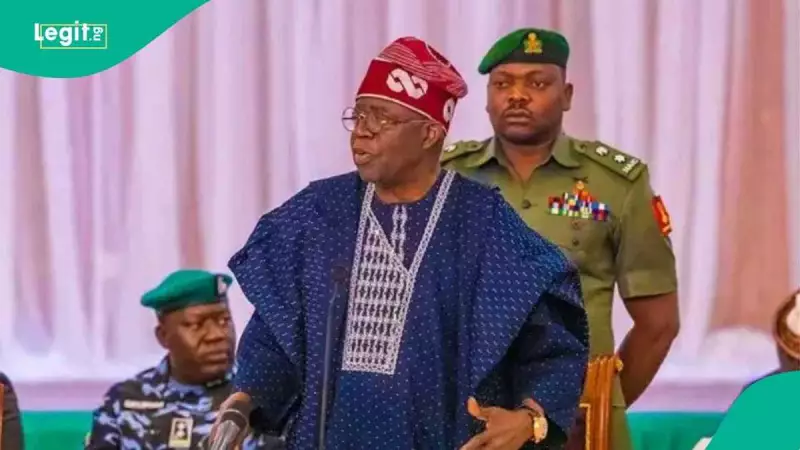
A prominent security expert has clarified a crucial point of Nigerian law, stating that the power to officially declare an organization a terrorist group rests solely with the judiciary, not with the President or members of the executive branch.
Legal Authority Rests With the Courts
Kabiru Adamu, the Managing Director of Beacon Consulting Ltd, made this clarification during an appearance on Channels Television's Politics Today program on Monday, December 22, 2025. His comments were a direct reaction to statements from the Minister of Information and National Orientation, Mohammed Idris, who reiterated President Bola Tinubu's declaration that kidnappers and bandits would be treated as terrorists.
Adamu firmly insisted that the current Nigerian legal framework allows only the courts to make such a formal designation. He referenced the Terrorism (Prohibition and Prevention) Act, as amended in 2022, as the governing law.
The Terrorism Act and Its Procedures
"The law that determines who a terrorist is in Nigeria is the Terrorism (Prohibition and Prevention) Act, as amended in 2022," Adamu explained. He detailed that this legislation not only defines what constitutes terrorism but also outlines the specific procedures for determining which groups qualify as terrorist organizations, or who is involved in supporting and financing such activities.
He emphasized the clear division of responsibilities under the Act: "That law assigns the responsibility for such determinations to a competent court of jurisdiction and places the duty of petitioning for these determinations on the Attorney General of the Federation."
Adamu concluded unequivocally, "So, even the president does not have the power to determine whether a group is a terrorist organization, nor does any member of the executive arm. That authority resides with the judiciary, through a competent court of jurisdiction."
Public Reaction and Context
The expert's clarification sparked varied reactions from Nigerians on social media, highlighting a public debate on the semantics versus the substance of security declarations.
Some users questioned the focus on legal procedures in the face of urgent security threats, while others pointed out perceived inconsistencies, referencing the previous administration's declaration of the Indigenous People of Biafra (IPOB) as a terrorist group. Another user cited Section 54 of the Terrorism Prevention Act 2022, which indicates the President may designate a group as terrorist on the recommendation of the National Security Adviser, suggesting a potential executive role that is then subject to judicial affirmation.
This discussion arises amidst a renewed focus on Nigeria's counter-terrorism efforts. Recall that President Tinubu recently unveiled a major security doctrine classifying armed groups, kidnappers, and their enablers as terrorists under state law. Furthermore, in 2024, the Nigerian government publicly named 21 individuals and six Bureau de Change entities as terrorism financiers, a list that regained attention in 2025 following remarks from international figures like former US President Donald Trump.