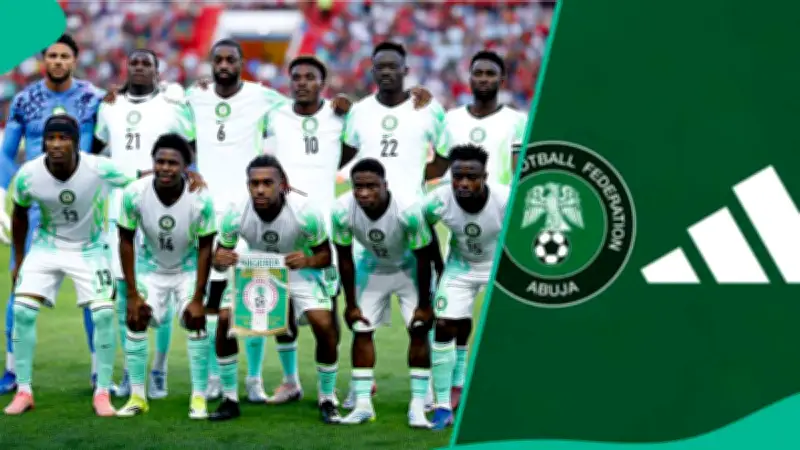
The Nigeria Football Federation (NFF) has formally ended its 11-year partnership with Nike and signed a new kit sponsorship agreement with Adidas, a deal that outgoing federation president Ibrahim Musa Gusau described as the largest ever between an African football federation and an equipment manufacturer. The new agreement, which takes effect immediately, guarantees the NFF $4.5 million in annual cash payments and $4 million in equipment, a dramatic increase from the frozen terms of the previous Nike contract.
Gusau Resigns, Reveals Nike Contract as 'Slavery'
Gusau made the disclosure at a press briefing tied to his resignation at the NFF's national headquarters in Abuja. He said his predecessor had locked the federation into financial terms that never changed across more than a decade of football administration, calling the arrangement a 'slavery' contract.
Under the Nike agreement signed in 2015, the NFF received $500,000 in cash annually and kits worth $1 million per year, according to Sporting Sun. Both figures remained frozen for 11 years, even as the cost of running national teams, travelling to international competitions and sourcing equipment climbed steadily.
"If somebody is giving you $500,000 in 2015 and still giving you the same amount in 2026, it is like having nothing. And somebody gives you kits worth $1 million in 2015 and now still gives you the same," Gusau said. He added that the stagnant kit allocation had grown so inadequate that his administration was forced to buy Super Eagles jerseys directly from the open market. "As president of the NFF, if you come to my house now, I can't bring out a set of jerseys because we had a contract that was signed for 11 years on the same terms," he said.
Adidas Deal: A Financial Leap for the NFF
According to reports by Afrik-Foot, the new Adidas agreement is structured very differently from the Nike deal. The German sportswear company will pay the NFF $4.5 million in cash every year, equivalent to roughly ₦6.1 billion, alongside an annual equipment package valued at $4 million, or about ₦5.4 billion.
The NFF will also receive 20% of revenue generated through Adidas store sales of Nigerian merchandise, giving the federation a direct stake in the commercial performance of its football brand. This revenue-sharing clause could prove particularly valuable, as the Super Eagles' Nike kit became one of the most widely discussed strips in world football during the 2018 World Cup, selling out across multiple markets.
The equipment component is also expected to ease the financial pressure of supplying Nigeria's full national team structure, which includes the Super Eagles, Super Falcons and various youth sides competing in international tournaments across the year.
Leadership Change and Future Implications
Gusau's resignation comes amid mounting pressure from Nigeria's failure to qualify for major international football tournaments. As national pride dwindles, the implications of this leadership change could resonate deeply within the future of Nigerian football and its governance, raising concerns about financial oversight and the direction of the sport in the country.
The new Adidas deal, with its significantly higher guaranteed sums and revenue-sharing potential, is expected to provide a more stable financial foundation for the NFF as it navigates this period of transition.